智慧调度系统

Search documents
第一船到港 货运开门红
Xin Lang Cai Jing· 2026-01-01 21:51
Core Viewpoint - The first cargo ship of the year, the "Magnus," arrived at Tangshan Port, marking a strong start for freight operations in 2023, with a cargo of 114,000 tons of iron ore [1][2]. Group 1: Operational Efficiency - The smart scheduling system at the port allows for real-time monitoring of ship information, cargo distribution, machinery status, and operational progress, enhancing overall efficiency [2]. - The port aims to complete the intelligent transformation of 39 large port machinery units by 2025, enabling remote control and autonomous operation [2]. - The implementation of smart ecological robots, online detection systems for stackers, and inspection drones is part of the comprehensive application of intelligent facilities [2]. Group 2: Future Goals - By 2025, the Tangshan Port's mineral terminal is projected to achieve a cargo throughput of 69.31 million tons, with a year-on-year increase in ship operation efficiency of 15.92% [2]. - The company is focused on upgrading the terminal's intelligence and establishing a comprehensive, detailed operational control system to further enhance operational efficiency [2].

供水保障更“聪明” “科技+服务”一“键”满足盛夏生产生活用水激增需求
Yang Shi Wang· 2025-07-22 06:03
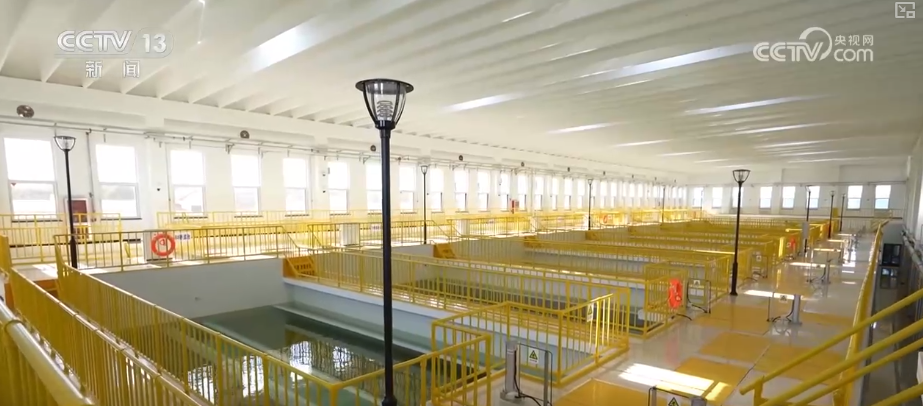
Group 1 - The article highlights the increasing water demand across various regions in China due to persistent high temperatures, prompting local authorities to implement measures to ensure water supply safety [1][4][5] - In Tianjin, the highest daily water supply reached 2.17 million cubic meters, a 15% increase compared to the average of 1.9 million cubic meters in other seasons [4] - Beijing's average daily water supply since June has been 298,300 cubic meters, with 32 water plants having a combined supply capacity of 4.9 million cubic meters to meet peak demand [5] Group 2 - Zhengzhou's daily water supply is around 1.95 million cubic meters, with efforts made to manage water sources from the South-to-North Water Diversion Project and Yellow River reserves [7] - The water quality monitoring has been intensified, with nearly 1,500 water samples tested covering over 70,000 indicators to ensure 100% compliance with urban water quality standards by 2025 [8] - In Shandong, water plants have increased operational capacity to meet rising demand, with Jinan's water supply increasing by 50,000 tons daily by adjusting the number of operational units from 2 to 4 [12][14] Group 3 - Jinan's water supply primarily relies on Yellow River and local surface water, with the daily water usage in Dezhou rising from 370,000 cubic meters to 480,000 cubic meters [17] - The Dingdong Reservoir in Dezhou, with a total capacity of 52.6 million cubic meters, currently holds 47 million cubic meters, sufficient for 100 days of urban water needs [20]