智慧供水

Search documents
趋势研判!2026年中国城市供水行业政策、综合生产能力、城市供水总量、重点企业及发展趋势:城市供水管道长度不断增加,供水总量持续扩大[图]
Chan Ye Xin Xi Wang· 2026-01-28 01:17
Core Insights - The Chinese urban water supply industry is entering a mature phase, with total water supply expected to reach 704.88 billion tons in 2024, a year-on-year increase of 2.52% [1][13]. Industry Overview - Urban water supply is a vital municipal infrastructure system consisting of water source extraction facilities, water treatment plants, and distribution networks, adhering to principles of water source development and conservation [3]. - The industry is closely linked to urbanization, with the urbanization rate in China increasing from 58.52% in 2017 to 67% in 2024, driving demand for both domestic and industrial water [8]. Supply Scale - The total length of urban water supply pipelines in China has grown from 710,200 kilometers in 2015 to 1,199,500 kilometers in 2024, with a compound annual growth rate of 6% [9][10]. - The comprehensive production capacity of urban water supply is projected to be 34.418 million cubic meters per day in 2024, with a utilization rate of 56.11%, an increase of 0.08 percentage points year-on-year [11][12]. Demand Scale - The urban water user population in China increased from 451 million in 2015 to 564 million in 2023, with a compound annual growth rate of 2.85%. However, it is expected to slightly decline to 564 million in 2024 [15]. Competitive Landscape - The urban water supply industry features a diversified competitive landscape characterized by state-owned dominance, the rise of private enterprises, and foreign investment penetration. Major players include Beijing Enterprises Water Group, Beijing Capital Eco-Environmental Protection Group, and others [16][17]. Development Trends - The industry is shifting from a focus on quantity expansion to ensuring quality and safety in water supply, emphasizing comprehensive water quality monitoring and risk management [18]. - Business models are evolving from traditional water supply to integrated water service providers, offering a range of value-added services [19]. - Value creation is transitioning from cost control to leveraging data assets and smart operations, utilizing IoT and AI for enhanced efficiency and decision-making [20].


汇中股份:与安富利公司续签战略合作协议 深化海外超声测流产品市场布局
Sou Hu Cai Jing· 2026-01-08 01:35
Core Viewpoint - The partnership between the companies focuses on global market sales of the full range of products and joint development of customized products, indicating a strong commitment to collaboration and innovation in the industry [1] Group 1: Partnership Details - The agreement allows for comprehensive cooperation in two main areas: global market sales and joint R&D of customized products [1] - Avnet will continue to act as the global sales agent for the company's products, with exclusive agency rights in Australia and New Zealand for a period of two years starting January 1, 2026 [1] - The collaboration will also involve technical upgrades of data collection and transmission devices, optimization of supply chain management, and deep cooperation in market channel development and core technology innovation [1] Group 2: Company Performance - The renewal of the agreement reflects the recognition of the performance and quality of the company's ultrasonic flow measurement products by overseas customers [1] - The company achieved a total operating revenue of 345 million yuan in the first three quarters, representing a year-on-year increase of 30.98% [1] - The net profit attributable to the parent company reached 69.92 million yuan, with a year-on-year growth of 27.98% [1] Group 3: Strategic Implications - The partnership is expected to provide strong support for the long-term stable growth of the company's overseas market sales [1] - It will help the company further expand its business scope, increase product export scale, and enhance new profit growth points [1] - The collaboration is seen as a positive and far-reaching impact on the company's long-term sustainable development, reinforcing the dual circulation development pattern [1]

水润万家,服务同行友情链接
Xin Lang Cai Jing· 2026-01-04 06:36
Core Viewpoint - Baoding Water Supply Company has significantly improved its water supply guarantee capabilities, service models, and management systems since the 14th Five-Year Plan, focusing on urban water supply safety, service optimization, infrastructure improvement, and smart transformation [1][10]. Group 1: Community Engagement and Service Improvement - The company emphasizes community service by organizing outreach activities to gather user feedback and educate on water usage, enhancing user satisfaction [2][11]. - A "Party Building +" integration model is implemented to drive high-quality development in safety production, pipeline construction, and service quality [2][11]. - The company has developed an online water application system, reducing the processing time for water service applications from 20 days to 4 days [4][13]. Group 2: Water Supply Security and Quality Control - Baoding Water Supply has completed over 4.5 billion cubic meters of water supply and conducted more than 13,000 water quality tests, reflecting its commitment to water safety [3][12]. - The company has established a four-level water quality monitoring system and implemented a regular testing mechanism to ensure water quality [3][12]. - Over the past five years, the company has repaired over 1,300 leaks, reducing the pipeline leakage rate by more than 5 percentage points compared to the previous five-year period [3][12]. Group 3: Infrastructure Development - The company is actively involved in urban renewal projects, focusing on shutting down self-supplied wells and upgrading old pipelines [6][15]. - Innovative construction techniques, such as horizontal directional drilling, have been employed to enhance water supply capabilities in complex urban environments [6][15]. - A total of over 300 kilometers of new pipelines have been laid, significantly improving the urban water supply network [6][15]. Group 4: Market Expansion and New Projects - Baoding Water Supply is expanding into new markets, including direct drinking water and testing projects, leveraging its unique qualifications in municipal engineering [7][16]. - The company has established a public drinking water station and is collaborating on direct drinking water projects in residential areas to enhance community access to quality water [7][16]. - The company is also focusing on flood control and drainage projects, marking a new area of development [7][16].
应急抢修、指挥调度……副中心供水保障“智慧大脑”将于明年竣工
Xin Jing Bao· 2025-10-29 06:24
Core Insights - The Beijing Urban Sub-center's water supply security project, referred to as the "smart brain," has made significant progress with the completion of the excavation for the foundation pit, allowing for the commencement of underground structural engineering [1][2] - The project aims to enhance water supply management and emergency response capabilities in the urban sub-center, ensuring a reliable water supply for residents and supporting urban development [1][2] Group 1: Project Overview - The project is constructed by Beijing Construction Urban-Rural Group and encompasses a total building area of 8,682.56 square meters, with four floors above ground and two underground [1] - The center will integrate functions such as emergency repair, command dispatch, operational maintenance, customer service, water quality monitoring, and smart water supply assurance [1] Group 2: Project Timeline and Impact - The command center is scheduled for completion in 2026 and will serve as the "hub" for water supply security in the urban sub-center [2] - It is expected to optimize water supply dispatch, enhance residents' water usage experience, and improve the regional emergency response system for water supply incidents [2]
汉嘉设计子公司:用科技筑牢城市供水安全防线
Zhong Zheng Wang· 2025-07-31 07:17
Core Insights - The article discusses the importance of urban water supply systems and the innovative solutions provided by Hanjia Design's subsidiary, Futai Technology, to enhance safety and resilience in water supply through digital technologies [1][2] Group 1: Technology and Innovation - Futai Technology has developed a smart water supply system that integrates GIS, monitoring and early warning systems, and AI models to improve urban water supply services [1] - The system employs a comprehensive sensing network for risk early warning, with real-time monitoring at water intake points to capture risks such as algae [1] - Multi-parameter monitoring devices track indicators like residual chlorine and turbidity around the clock, ensuring timely risk alerts [1] Group 2: Operational Efficiency - The intelligent control system can automatically initiate emergency plans in response to fluctuations in raw water quality, providing recommendations for chemical dosing adjustments based on real-time data [1] - GIS visualization modules present clear pipeline information and dynamic models predict pollution paths to prevent risks at the source [1] - The system includes unified supervision of secondary water supply, with real-time monitoring of water tank status and automatic cleaning prompts to ensure safety at the end-user level [1] Group 3: Data Integration and Public Engagement - The system integrates multi-source data and connects cross-departmental information to support scientific decision-making through big data analysis [1] - A closed-loop work order system is established, expanding the "water quality health code" service to enhance public communication channels [1] - The solution is currently implemented in multiple provinces including Fujian, Shanxi, Zhejiang, Jiangsu, Shaanxi, Guangxi, and Hebei, with plans for further development of intelligent management across the entire supply chain [2]

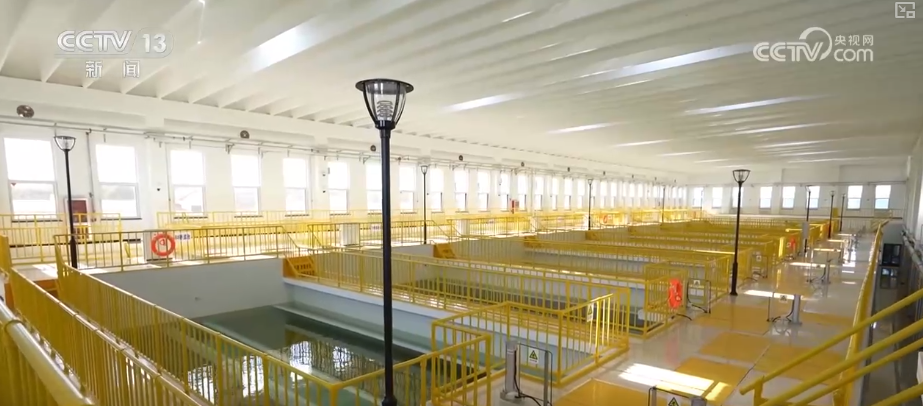
供水保障更“聪明” “科技+服务”一“键”满足盛夏生产生活用水激增需求
Yang Shi Wang· 2025-07-22 06:03
Group 1 - The article highlights the increasing water demand across various regions in China due to persistent high temperatures, prompting local authorities to implement measures to ensure water supply safety [1][4][5] - In Tianjin, the highest daily water supply reached 2.17 million cubic meters, a 15% increase compared to the average of 1.9 million cubic meters in other seasons [4] - Beijing's average daily water supply since June has been 298,300 cubic meters, with 32 water plants having a combined supply capacity of 4.9 million cubic meters to meet peak demand [5] Group 2 - Zhengzhou's daily water supply is around 1.95 million cubic meters, with efforts made to manage water sources from the South-to-North Water Diversion Project and Yellow River reserves [7] - The water quality monitoring has been intensified, with nearly 1,500 water samples tested covering over 70,000 indicators to ensure 100% compliance with urban water quality standards by 2025 [8] - In Shandong, water plants have increased operational capacity to meet rising demand, with Jinan's water supply increasing by 50,000 tons daily by adjusting the number of operational units from 2 to 4 [12][14] Group 3 - Jinan's water supply primarily relies on Yellow River and local surface water, with the daily water usage in Dezhou rising from 370,000 cubic meters to 480,000 cubic meters [17] - The Dingdong Reservoir in Dezhou, with a total capacity of 52.6 million cubic meters, currently holds 47 million cubic meters, sufficient for 100 days of urban water needs [20]