
智能巡检车

Search documents
开启智慧交通与绿色能源融合新篇章
Zhong Guo Jing Ji Wang· 2025-12-29 02:33
Core Viewpoint - The third Transportation and Energy Integration Development Technology Forum was held in Lu'an, Anhui, showcasing the integration of smart transportation and green energy, with the launch of the "Jiao Neng Zhi Hui Tong" product brand by China Energy Construction Gezhouba Group [1] Group 1: Product Launch and Features - The "Jiao Neng Zhi Hui Tong" brand represents a systematic layout in the field of smart transportation and green energy, featuring over ten products and technologies aimed at promoting smart highway construction [1] - A multifunctional smart pole, referred to as the "smart road pole," integrates various technologies such as high-definition cameras, millimeter-wave radar, and 5G base stations, enhancing traffic detection and management capabilities [2] Group 2: Technological Integration and Benefits - The smart road pole serves as a "nerve terminal" and "energy micro-hub," capable of operating under all weather conditions, thus improving highway safety and operational efficiency [2] - The energy system of the smart pole is designed to be self-sufficient, utilizing small-scale solar and energy storage devices to provide clean energy for its operations, contributing to the green development of smart highways [2] Group 3: Future Development and Vision - The "Jiao Neng Zhi Hui Tong" brand is part of a broader initiative to drive industry upgrades through technological innovation, with plans to expand into a diverse brand system that includes smart devices, digital platforms, and green materials [3] - The company aims to become a pioneer in the integration of smart transportation and green energy, continuously injecting innovation and solutions into the industry for high-quality development [3]
国庆长假走进农大实验室,机器人点亮少年科创梦
Bei Jing Ri Bao Ke Hu Duan· 2025-10-09 03:10
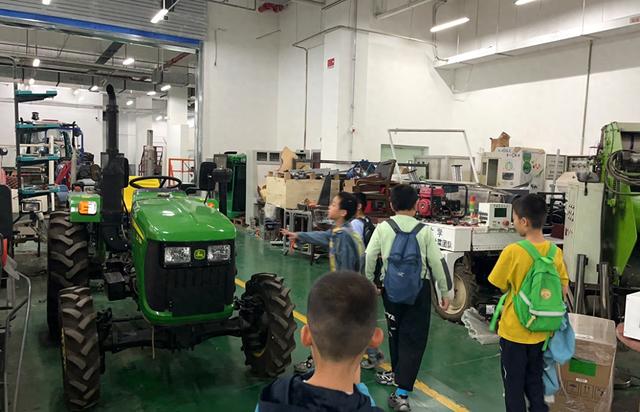
Core Points - The event organized by China Agricultural University College of Engineering and China Volunteer Service Foundation aimed to inspire children through robotics and technology [1][6] - The program included hands-on activities, lectures, and interactive sessions to engage students in learning about agricultural machinery and robotics [3][5] Group 1: Event Overview - The event was titled "Touch Technology, Imagine the Future" and involved 20 children from various primary schools [1] - Activities included visiting laboratories, learning about agricultural machinery, and building their own "smart inspection vehicle" [3][5] Group 2: Educational Activities - Students learned about the principles of numerical control technology and its innovative applications in smart agricultural equipment [3] - The interactive robot football match allowed children to experience artificial intelligence in a fun and engaging way [5] Group 3: Impact and Significance - The event highlighted the academic strengths and research capabilities of China Agricultural University in the field of robotics [5] - It aimed to instill a spirit of exploration and collaborative innovation in the participating children [5]


工信部印发通知 加速人工智能赋能中小企业创新发展
Zhong Guo Chan Ye Jing Ji Xin Xi Wang· 2025-08-28 00:34
Core Viewpoint - The Ministry of Industry and Information Technology has initiated a collection of typical application scenarios for AI empowerment of small and medium-sized enterprises (SMEs) for the year 2025, aiming to accelerate innovation and development through AI technology [1]. Group 1: AI Empowerment for Innovation - The first focus area is on "innovative products and services," where SMEs are encouraged to leverage AI for breakthrough innovations, developing forward-looking new products and services that fundamentally upgrade business models and open new commercial spaces [2]. - Examples of innovative products include intelligent industrial robots, smart inspection vehicles, smart logistics equipment, smart home devices, wearable smart devices, and AI-driven software and tools [2]. Group 2: AI Empowerment for Business Process Optimization - The second focus area is on "optimizing business processes," where SMEs can apply AI technology in various operational aspects such as R&D design, production control, quality inspection, equipment maintenance, and supply chain management to significantly enhance efficiency and resilience [3]. - Specific applications include intelligent design in product development, AI-driven production operations, and smart management practices that automate and enhance business processes [3]. Group 3: Additional Application Paths - In addition to the two main focus areas, applicants are encouraged to summarize and propose other innovative paths and models for utilizing AI technology in their specific contexts [4].