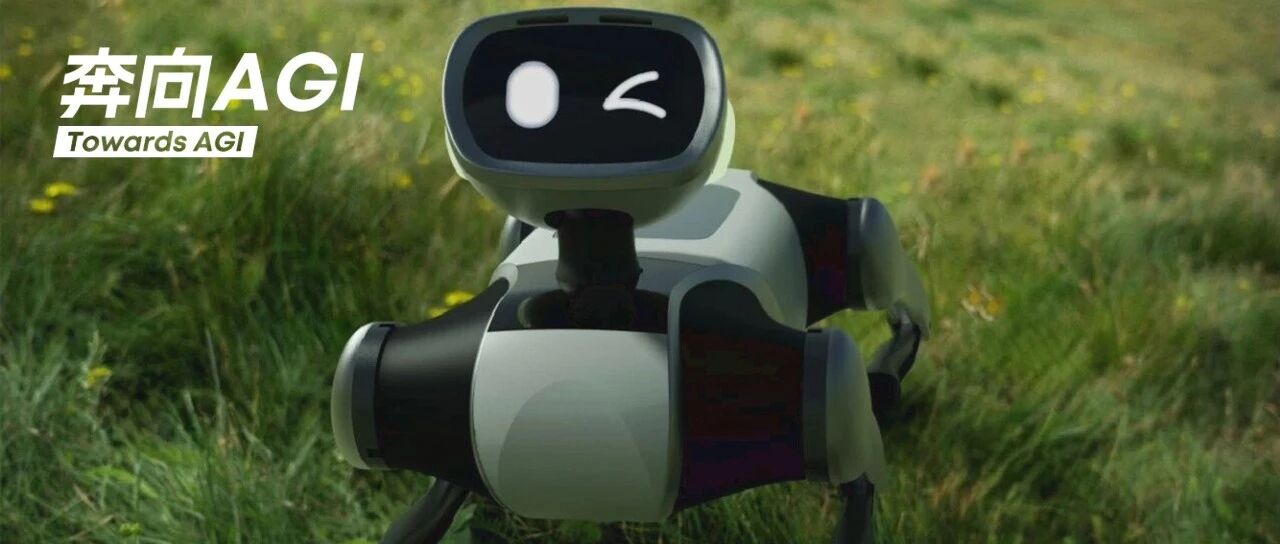
智能机器狗Vbot大头BoBo

Search documents
地平线+理想“老兵”集结,造出一只抛弃遥控器的机器狗
创业邦· 2025-12-24 03:25
Core Viewpoint - The article discusses the emergence of VITADYNAMICS, a company founded by former automotive experts, focusing on consumer-grade robotic dogs, specifically the Vbot "Big Head BoBo," which aims to integrate advanced AI and autonomous capabilities into everyday life [2][3][6]. Group 1: Company Background and Founders - VITADYNAMICS was established in December 2024 by three founders with extensive experience in intelligent driving systems, recognizing a gap in the consumer robotics market [2][9]. - The founders include Yu Yinan, a PhD in deep learning and former key member of Horizon Robotics, Zhao Zhelun, who has a strong background in product and market understanding from his time at Li Auto, and Song Wei, an expert in engineering systems [8][9]. Group 2: Product Development and Market Strategy - The first product, the Vbot "Big Head BoBo," is priced at 12,988 yuan, with a launch price of 9,988 yuan, and aims to be a user-friendly, intelligent companion without the need for remote control [2][14]. - The product is designed to address practical household needs, with a focus on safety and usability, targeting a market segment that values technology and quality [17][24]. Group 3: Market Potential and Competition - The consumer-grade robotic dog market in China is projected to grow from 470 million yuan in 2023 to 660 million yuan in 2024, with an expected CAGR of 37.5% over the next five years [17]. - VITADYNAMICS aims to differentiate itself in a competitive landscape, where existing players have established market presence, by focusing on practical applications and user experience rather than just advanced capabilities [24][25]. Group 4: Technological Innovations - The Vbot integrates advanced technologies such as 360° high-precision LiDAR, dual-camera systems, and a powerful AI computing platform, leveraging the founders' experience in autonomous driving [18][20]. - The company emphasizes a "computational density" approach, optimizing sensor use to enhance the robot's environmental understanding and decision-making capabilities [18][27]. Group 5: Challenges and Industry Outlook - The company faces challenges in proving the value and user experience of consumer robots, as many potential customers remain skeptical about their practical utility [29][30]. - The industry is expected to evolve towards providing comprehensive solutions for specific scenarios, with a focus on emotional interaction and user engagement becoming critical for long-term success [32][33].