
智能结算系统

Search documents
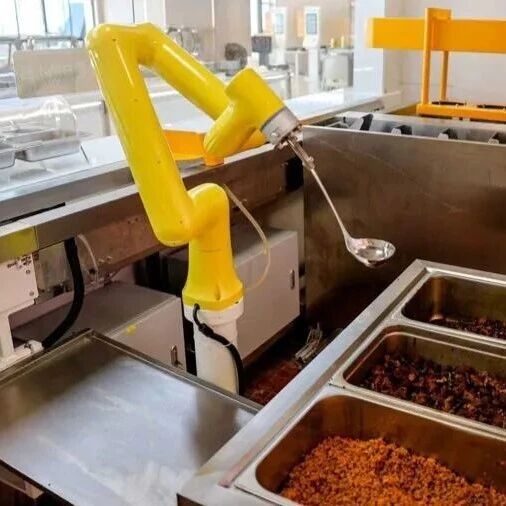
中国食堂也逐渐不是“人”了
机器人大讲堂· 2026-01-04 10:34
Core Viewpoint - The article discusses the ongoing transformation of school canteens through the integration of AI and robotics, enhancing efficiency, food safety, and student experience in dining [1][12]. Group 1: Robot Transformation in Canteens - In Shanghai, a fully automated noodle-making system allows students to receive a bowl of beef noodles in just two to three minutes without human intervention, significantly reducing wait times [3][5]. - The AI-driven canteen features four smart food stations, including a noodle shop and a spicy hot pot, where the entire process from selection to cooking is automated, ensuring consistent quality and taste [5][7]. Group 2: Efficiency and Capacity - A smart canteen in Beijing serves 700 students in just 167 square meters, with meal preparation time reduced from three hours to one hour, efficiently catering to 1,500 meals [9][11]. - The use of intelligent cooking equipment allows for precise ingredient measurements, with errors controlled within ±1 gram, ensuring uniformity in taste and portion sizes [7][11]. Group 3: Data-Driven Management - The integration of AI enables data collection on student dining habits, allowing for targeted assistance for economically disadvantaged students and enhancing overall health management through nutritional tracking [9][11]. - AI systems optimize supply chain management, predicting meal demand and reducing food waste by over 40%, while also achieving a monthly savings of over 20% on raw materials [11][12]. Group 4: Future Implications - The rapid implementation of smart canteens, completed in just over 60 days, signifies a shift towards a more transparent and efficient food safety management system in schools [12][13]. - The article emphasizes that this technological advancement not only improves kitchen efficiency but also contributes to the health and well-being of the next generation, addressing long-standing issues in school dining [13].

数字食堂10元吃好,邻里中心成“社区客厅”
Xin Lang Cai Jing· 2025-12-24 19:51
Core Insights - The article discusses the implementation and effectiveness of key livelihood projects in Changsha, focusing on the "Digital Canteen" and "Neighborhood Center" initiatives that aim to enhance community welfare and engagement [1][2][3][4]. Group 1: Digital Canteen - The "Digital Canteen" in the Guanyu Community features a smart payment system that allows residents to register and use facial recognition for meal payments, significantly improving dining efficiency and reducing food waste [2]. - The canteen offers a variety of dishes at affordable prices, with vegetarian options starting at 1 yuan and meat dishes ranging from 2 to 4 yuan, ensuring that residents can enjoy nutritious meals for around 10 yuan [2]. - Special discounts are available for residents over 60 years old, and the canteen prioritizes hiring local residents, including individuals with disabilities, to foster community support [2]. Group 2: Neighborhood Center - The "拾光集" Neighborhood Center, opened in October 2025, serves as a multifunctional community space for leisure, entertainment, and learning, covering approximately 600 square meters with an investment exceeding 1 million yuan [3]. - The center features various functional areas, including a large communal space for socializing, a creative workshop for family activities, and a marketplace for showcasing local crafts and cultural products [3]. - A "main operator" system is implemented to engage local talents in managing the center, promoting community involvement in governance and offering affordable courses and free community events [3][4].