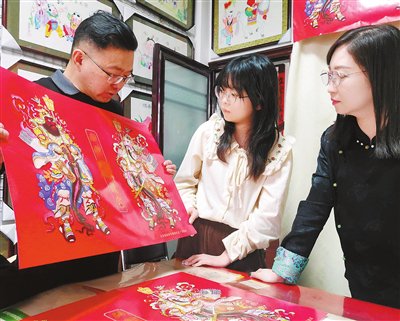
杨柳青尚氏绒喜花

Search documents
在天津非遗里感受浓浓年味
Xin Lang Cai Jing· 2026-01-29 22:57
Core Insights - The article highlights the revival of traditional Chinese New Year customs in Tianjin through various intangible cultural heritage projects, emphasizing the importance of these practices in enhancing the festive atmosphere as the Spring Festival approaches [3][4][5][6][7] Group 1: Yangliuqing Shanshi Ronghua - The tradition of wearing Ronghua (floral hairpins) during the New Year is significant for women in Tianjin, symbolizing good fortune and the welcoming of the new year [4] - Su Xiulan, the representative inheritor of the Ronghua making technique, has innovated the designs to include modern accessories like hairpins and brooches, appealing to a broader audience [4] - There are over 100 varieties of Ronghua, each with different symbolic meanings, catering to various age groups and preferences [4] Group 2: Liu Shangdao Village Box Flower - The Box Flower tradition in Liu Shangdao Village is a cherished aspect of the New Year, with villagers eagerly anticipating the return of this collective memory through festive displays [5] - The Box Flower features 6 to 8 different lantern designs hidden within a lantern box, showcasing a blend of various artistic techniques [5] - The technique has a rich history of over 260 years and was originally introduced by palace craftsmen, symbolizing the creativity and aesthetic values of ancient laborers [5][6] Group 3: Yangliuqing Woodblock New Year Paintings - The practice of pasting door gods, a significant New Year ritual, is being revived by Huo Shulin, a seventh-generation inheritor of Yangliuqing woodblock painting [7] - Huo Shulin has created innovative door god paintings that are easier to apply, aiming to rekindle the tradition in modern households [7] - The initiative also includes transforming traditional door god images into contemporary home decor items, integrating cultural heritage into everyday life [7]