核污染水

Search documents
日本一停运核反应堆发生泄漏 或有数人遭辐射
Xin Lang Cai Jing· 2025-12-23 20:11
Core Viewpoint - A radioactive water leak occurred at the "Puxian" nuclear reactor in Fukui Prefecture, Japan, which is currently undergoing decommissioning, potentially exposing several individuals to radiation [1][3]. Group 1: Incident Details - The leak involved water containing tritium, with a reported leakage volume of approximately 20 milliliters and a high concentration of radioactive material [3]. - No internal radiation exposure has been confirmed for the workers involved, but investigations are ongoing to determine if external radiation exposure occurred due to splashes [3]. - Monitoring stations in the facility and surrounding areas have not detected any abnormal radiation levels, indicating that the radioactive material has not leaked outside the management area [3]. Group 2: Related Nuclear Water Discharge - Tokyo Electric Power Company (TEPCO) reported that the 17th discharge of contaminated water from the Fukushima Daiichi Nuclear Power Plant was completed, with a total discharge volume of approximately 133,000 tons since the process began in August 2023 [4]. - The 17th discharge, which started on the 4th of the month, involved the release of 7,833 tons of contaminated water containing about 24 trillion becquerels of tritium [4]. - TEPCO plans to conduct a total of seven discharges in the fiscal year 2025, with an estimated total discharge volume of approximately 54,600 tons [4].
突发!日本一核反应堆泄漏,可能有数人遭辐射!
Xin Lang Cai Jing· 2025-12-23 11:52
Group 1: Nuclear Incident - A radioactive water leak occurred at the "Puxian" nuclear reactor in Fukui Prefecture, Japan, which is currently undergoing decommissioning, potentially exposing several individuals to radiation [1][2] - During the dismantling operations, the concentration of tritium in the water increased, with approximately 20 milliliters of radioactive water leaking, although no internal radiation exposure among workers has been confirmed [3] Group 2: Fukushima Nuclear Wastewater Discharge - Tokyo Electric Power Company reported that the cumulative discharge of nuclear contaminated water from the Fukushima Daiichi Nuclear Power Plant has exceeded 133,000 tons, with the 17th discharge operation completed on December 22, 2023 [4] - The 17th discharge involved the release of 7,833 tons of contaminated water, containing approximately 24 trillion becquerels of radioactive tritium [4] - Plans for the 2025 fiscal year include seven additional discharges, totaling approximately 54,600 tons [4] Group 3: Nuclear Power Plant Restart Controversy - The Niigata Prefectural Assembly approved a budget to restart the Kashiwazaki-Kariwa Nuclear Power Plant, Japan's largest, despite significant public opposition [5] - A survey indicated that about 60% of local residents believe the conditions for restarting the plant are not yet met, and approximately 70% express concerns about the operating company, Tokyo Electric Power Company [5] - The Kashiwazaki-Kariwa Nuclear Power Plant has a total installed capacity of approximately 8.212 million kilowatts and was shut down following the Fukushima disaster in 2011 [5]
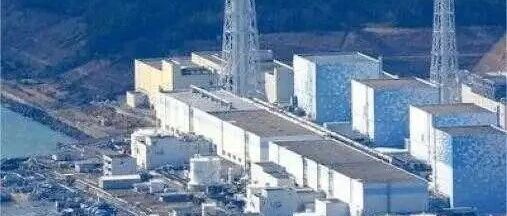
福岛第一核电站暂停核污水排海
第一财经· 2025-12-09 01:07
Core Viewpoint - A 7.5 magnitude earthquake occurred off the eastern coast of Honshu, Japan, on December 8, 2025, with a depth of 50 kilometers, causing significant tremors in regions like Aomori and Hokkaido during the winter ski season [3][4]. Earthquake Impact - The earthquake prompted the Japanese government to establish a crisis management center and maintain communication with local authorities for information gathering [4]. - The earthquake may trigger localized tsunamis, but it is not expected to affect China's coastline [4]. Nuclear Power Plants Status - The earthquake caused a tremor of intensity 2 at the Tomari Nuclear Power Plant, which is currently in a long-term shutdown, with no abnormal radiation levels reported [5]. - The Higashidori Nuclear Power Plant experienced a stronger tremor of intensity 5, but also reported no abnormalities, with its reactors in long-term shutdown [5]. - The Onagawa Nuclear Power Plant reported no abnormalities, with two of its three reactors in operation and one undergoing decommissioning [5]. - The Fukushima Daiichi and Daini Nuclear Power Plants reported no abnormalities, but operations were temporarily suspended due to tsunami warnings [5]. Nuclear Waste Water Discharge - Tokyo Electric Power Company began its 17th round of discharging nuclear contaminated water on December 4, 2025, with an expected discharge of approximately 7,800 tons by December 22, 2025 [6]. - Cumulative discharge has exceeded 125,000 tons as of the 16th round, with the 18th round planned for March 2026 [6].

俄罗斯一地8.8级强震引发海啸,预计影响上海等地,抵达时间公布
21世纪经济报道· 2025-07-30 04:10
Core Viewpoint - A significant earthquake of magnitude 8.8 occurred off the eastern coast of the Kamchatka Peninsula, leading to tsunami warnings across multiple regions, including China, the United States, and Japan [1][2][9][10]. Tsunami Warnings and Impact - The earthquake triggered a tsunami, with expected impacts on various coastal areas in China, including Shanghai and Taiwan, with maximum wave heights forecasted between 30-100 cm [2]. - The tsunami has been reported to reach heights of 3 to 4 meters along parts of the Kamchatka Peninsula [6][7]. - Multiple countries, including the U.S., Japan, and Canada, issued tsunami warnings, advising residents in coastal areas to evacuate to higher ground [9][10][12]. Nuclear Safety Measures - Tokyo Electric Power Company suspended the discharge of nuclear contaminated water from the Fukushima Daiichi Nuclear Power Plant due to tsunami concerns, issuing evacuation instructions to employees [11]. Market Reactions - Following the earthquake and tsunami warnings, gold prices surged, briefly exceeding $3,330 per ounce before settling at approximately $3,328.61 [13][14].