栾树

Search documents
全城再迎“落叶不扫”景观 以乌桕为特色的宾南路首次加入名单
Jie Fang Ri Bao· 2025-11-25 01:33
Core Insights - The annual "fallen leaves carpet" event in Shanghai has seen a delay in the announcement of the "no sweeping" roads list, which is now one week later than last year [1] - The timing of leaf color change and drop has been affected by climate changes, with many plants showing delayed leaf changes concentrated in late November to December [1][2] - The management of "no sweeping" roads has been adjusted to address information asymmetry, with dynamic updates based on feedback from sanitation workers and green management departments [2] Group 1 - The list of 44 "no sweeping" roads was announced later than usual, with the earliest activation on December 1 for some roads, while others will not start until mid-December [1] - The phenomenon of delayed leaf color change and drop is attributed to recent climate conditions, including extreme summer heat and insufficient cold air in autumn [1] - The responsibility for managing the "no sweeping" roads primarily lies with sanitation departments, which have faced challenges in timing the activation and deactivation of these roads [1] Group 2 - The management mechanism for "no sweeping" roads has been revised in Yangpu District to better reflect actual conditions and professional predictions [2] - The selection of "no sweeping" roads now considers regional characteristics, historical context, and current road conditions, leading to a more tailored approach [2] - The variety of tree species designated for "no sweeping" roads has expanded from primarily sycamore to include multiple species such as ginkgo, maple, and others [2][3] Group 3 - The introduction of the "no sweeping" road featuring the native tree species, the Chinese tallow tree, marks a significant addition to the program, highlighting the focus on local flora [3] - The increased presence of colorful leaf species like the Chinese tallow tree in urban landscaping reflects a shift towards incorporating diverse and visually appealing tree varieties [3]
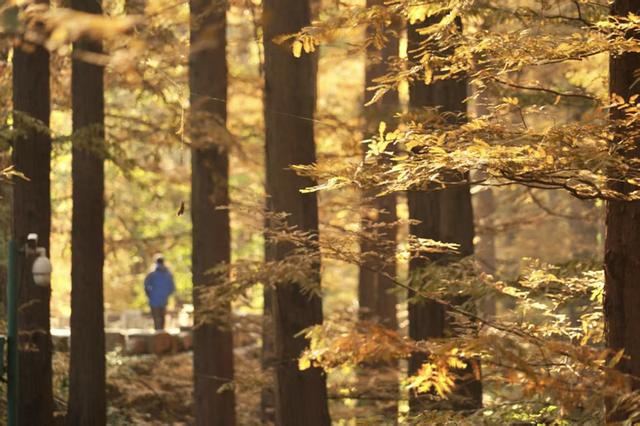
暮光森林里的秋日童话!国家植物园进入彩叶最佳观赏期
Bei Jing Ri Bao Ke Hu Duan· 2025-10-28 05:51
Core Points - The National Botanical Garden's Cherry Valley scenic area is currently at its best for viewing autumn foliage, attracting numerous visitors [1][17] - The area features one of the largest artificial Metasequoia forests in North China, which serves as both a beautiful autumn landscape and an important educational resource [3][6] Group 1: Scenic Features - The Metasequoia trees change color from green to orange and yellow, creating a rich tapestry of autumn hues [3] - The landscape includes soft fallen leaves, bird songs, and the sound of streams, forming a picturesque autumn ecological scene [4] - The North Lake area, known for its diverse autumn foliage, draws many visitors with its vibrant colors and tranquil atmosphere [10][11] Group 2: Educational Aspects - The National Botanical Garden has installed educational signage along the Metasequoia forest, providing information on the growth habits, conservation value, and ecological roles of these rare plants [6] - The garden aims to enhance visitors' understanding of biodiversity conservation while they enjoy the scenic beauty [6] Group 3: Additional Attractions - Other ideal spots for autumn viewing include the Colorful Autumn Garden and the Tree Garden, which also showcase a variety of colorful trees [8] - The unique shape and vibrant colors of the hybrid Liriodendron tulipifera add a dynamic element to the autumn scenery [13]

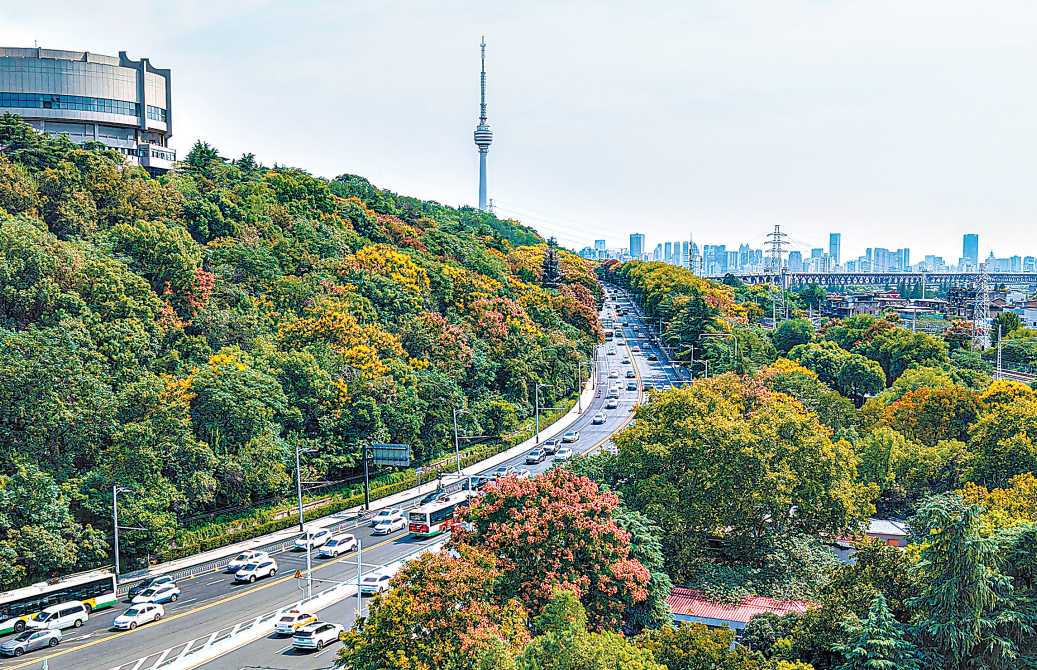
武汉景观路成市民爱走的花路
Chang Jiang Ri Bao· 2025-09-19 01:15
Core Points - Wuhan has approximately 120,000 goldenrain trees (Koelreuteria paniculata) entering their flowering and fruiting period, transforming the streets into beautiful flower roads [1][4] - The flowering trees are attracting many citizens who are capturing the beauty of the scenery, with various colors of flowers and fruits creating a vibrant display [2][4] - The city has been actively planting colorful tree species to enhance urban aesthetics, with the goldenrain tree being a key species for this purpose [4] Summary by Sections - **Tree Statistics**: Wuhan has around 800,000 street trees, with goldenrain trees being the third most common species, following camphor and plane trees [4] - **Planting Areas**: The largest concentration of goldenrain trees is in the Wuhan Economic and Technological Development Zone, with approximately 23,000 trees, followed by the East Lake New Technology Development Zone with about 14,000 trees [4] - **Urban Beautification Efforts**: The city has created over 100 scenic roads featuring goldenrain trees, enhancing the visual appeal of various districts [4] - **Tree Characteristics**: Goldenrain trees are noted for their tall and beautiful shape, making them a rare and attractive species in Hubei [7] - **Pest Management**: The city has implemented measures to manage aphid infestations that can occur in warm winters, using early warnings and biological control methods [7]
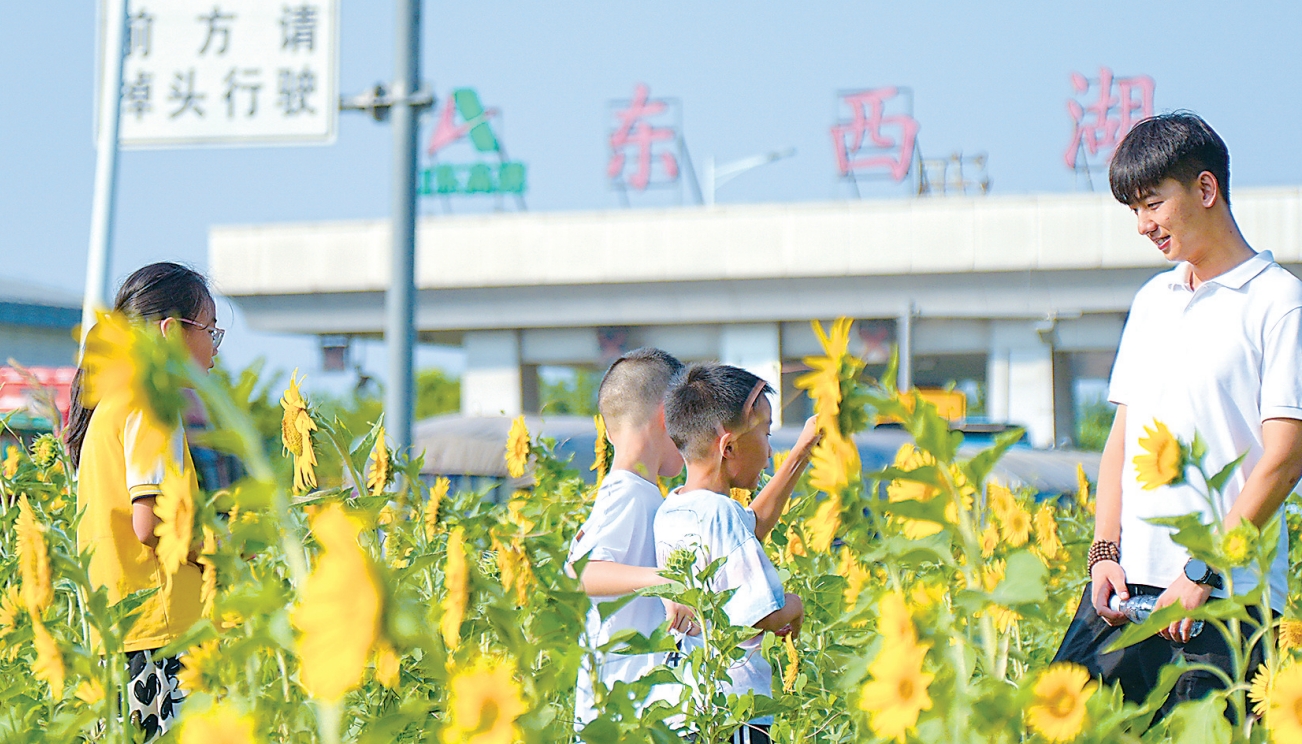
武汉“西大门”40亩向日葵迎宾
Chang Jiang Ri Bao· 2025-07-21 00:24
Core Points - The transformation of the area around the Dongxihu toll station has significantly improved the local environment, with the introduction of a sunflower field and other greenery [1][2] - The project involved collaboration between various local authorities and organizations to enhance the landscape and promote ecological restoration [1][2] Group 1 - The Dongxihu toll station area has been transformed from a barren landscape to a vibrant sunflower field covering approximately 40 acres, along with the planting of around 2,300 trees of 20 different species [1] - The local government and the toll station management have actively engaged in maintaining cleanliness and improving the aesthetics of the area, including regular garbage collection and planned renovations [2] Group 2 - The initiative reflects a broader trend of enhancing urban landscapes along major transportation routes, which can positively impact local communities and attract visitors [1][2] - The collaboration between the Dongxihu toll station and local authorities demonstrates a proactive approach to environmental management and community engagement [2]