
桑叶双瓜茶

Search documents
浙江省消保委消费体察发现:短视频带货虚假宣传成顽疾
Xin Lang Cai Jing· 2026-02-09 14:06
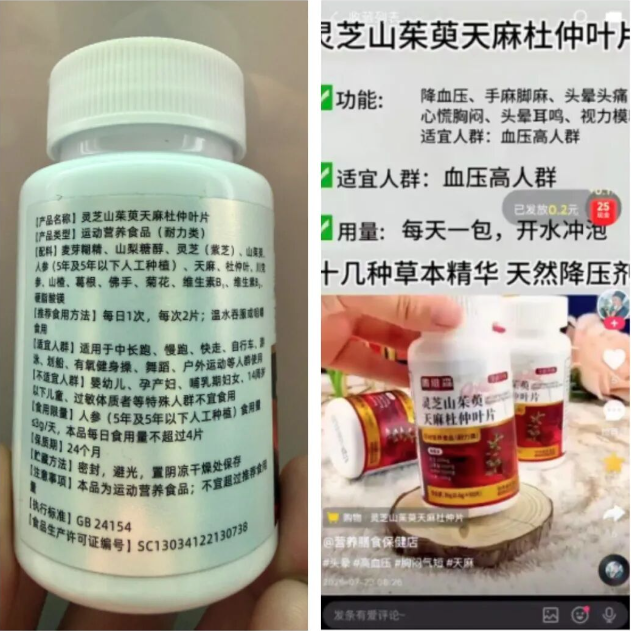
Core Viewpoint - A recent survey by the Zhejiang Consumer Protection Committee indicates that over 70% of elderly consumers have made purchases on short video platforms based on claims of "curing diseases" [1] Group 1: Survey Findings - The survey involved 300 short videos related to various categories such as food, beauty, and daily necessities, with a focus on the elderly consumer group [1] - The investigation revealed significant issues with false advertising and discrepancies between advertised and actual products, with 80% of beauty products tested failing to show the claimed efficacy ingredients [2][12] Group 2: Issues Identified - **Misleading Health Claims**: Some ordinary and special dietary foods were promoted on short video platforms as having health benefits or disease treatment capabilities, such as claims of regulating blood pressure and cholesterol [3][5] - **Cosmetic Claims Mismatch**: Certain cosmetics exaggerated or falsely advertised their effects, such as anti-wrinkle and whitening properties, which were not supported by the actual product labels [6] - **Product Discrepancies**: Many products received did not match the brand, name, packaging, or ingredients as advertised, with some products having expired licenses [8] Group 3: Testing Results - Out of 15 batches of beauty products tested, 12 batches (80%) did not contain the efficacy ingredients listed on their labels, indicating either very low levels or no actual addition of these ingredients [12] - Specific examples include products purchased from various accounts that failed to show the advertised whitening ingredients like niacinamide and α-arbutin [12] Group 4: Platform Responses - Following the findings, the Zhejiang Consumer Protection Committee invited relevant platforms to discuss the issues, and all platforms reported taking action to remove or address problematic products [14] - Platforms are enhancing monitoring of short video content, standardizing product advertising, and increasing compliance awareness among merchants [14]

短视频带货虚假宣传问题突出
Xin Lang Cai Jing· 2026-02-05 22:20
Core Viewpoint - A recent survey by the Zhejiang Consumer Rights Protection Committee revealed that over 70% of elderly consumers have made purchases on short video platforms based on claims of "treatable diseases" [1] Group 1: Issues Identified - The experience found that some ordinary and special dietary foods were misleadingly advertised as having health or disease treatment functions, such as claims of regulating hypertension and lowering blood lipids [2] - Certain products sold through short video platforms had discrepancies between their branding, names, packaging, and the actual products received by consumers, with some products having expired licenses [2] - 12 out of 15 batches of beauty and whitening products tested did not contain the active ingredients listed on their labels, indicating a significant issue with product efficacy [3] Group 2: Consumer Guidance - Consumers are advised to verify product registration and filing information before making purchases through short video platforms, ensuring transactions are conducted through official channels [4] - It is recommended that consumers retain key evidence during the shopping process, such as recording videos of promotional content and saving order details and communication with customer service [5] - In case of issues, consumers should first contact the seller and, if unresolved, escalate the matter to platform customer service or relevant authorities for complaint [5]