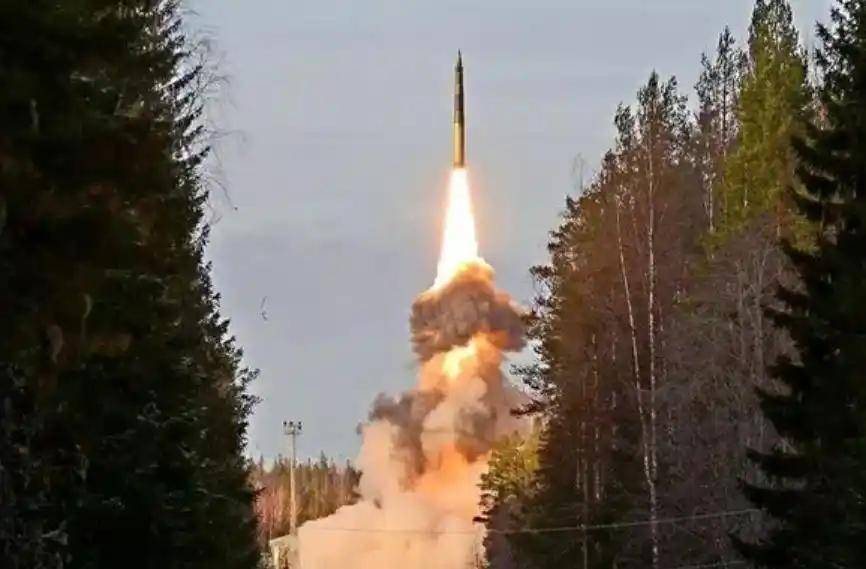
榛树导弹系统

Search documents
白俄罗斯高官称正在加强包括核武器在内的战略威慑
Xin Hua She· 2026-01-28 14:51
Core Viewpoint - Belarus is enhancing its strategic deterrence in response to aggressive Western policies and military actions, including the deployment of tactical nuclear weapons and the "Iskander" missile system [1] Group 1 - Belarus is strengthening its strategic deterrence capabilities [1] - The focus includes the deployment of tactical nuclear weapons within Belarus [1] - The "Iskander" missile system is part of the arsenal aimed at preventing aggression [1]
俄国防部:“榛树”导弹在白俄罗斯投入战斗任务
Xin Hua She· 2025-12-30 11:17
Core Viewpoint - The Russian Defense Ministry announced the operational deployment of the "Zircon" missile system in Belarus, marking a significant military development in the region [1] Group 1: Deployment and Training - The "Zircon" missile system has been officially deployed in Belarus, with a ceremony held for the troops equipped with the system [1] - Experts in launch, communication, security, and power supply, as well as missile system mechanics, have undergone relevant training prior to the system's combat operations [1] Group 2: System Specifications and Usage - The "Zircon" is a new type of hypersonic medium-range ballistic missile developed by Russia, capable of carrying nuclear warheads and attacking targets at speeds of 10 Mach [1] - The missile system is set to be used for the first time in November 2024 to strike military targets in Ukraine's Dnipro region [1] Group 3: Bilateral Agreements - In December 2024, the presidents of Russia and Belarus reached an agreement to deploy the "Zircon" missile system within Belarus [1]
俄国防部:列装“榛树”导弹的部队正在白俄罗斯执行任务
Yang Shi Xin Wen· 2025-12-30 08:42
Core Viewpoint - The Russian Ministry of Defense has announced the deployment of the "Zircon" missile system in Belarus, marking a significant step in military readiness and cooperation between Russia and Belarus [1] Group 1: Deployment and Training - A ceremony was held in Belarus to mark the "Zircon" missile system entering combat readiness [1] - Personnel responsible for missile launch, communication, and security have completed training using modernized equipment [1] - The Belarusian side has provided all necessary living conditions for the Russian military personnel involved in the readiness tasks [1] Group 2: Missile System Details - The "Zircon" is Russia's latest medium-range missile system, which successfully completed its first combat test in November 2024 [1] - In December of the previous year, Belarusian President Lukashenko requested the deployment of the "Zircon" missile system in Belarus, with Russian President Putin indicating that deployment could occur in the second half of 2025 [1] - The Belarusian Defense Minister announced that the "Zircon" missile would enter combat readiness status by the end of December [1]

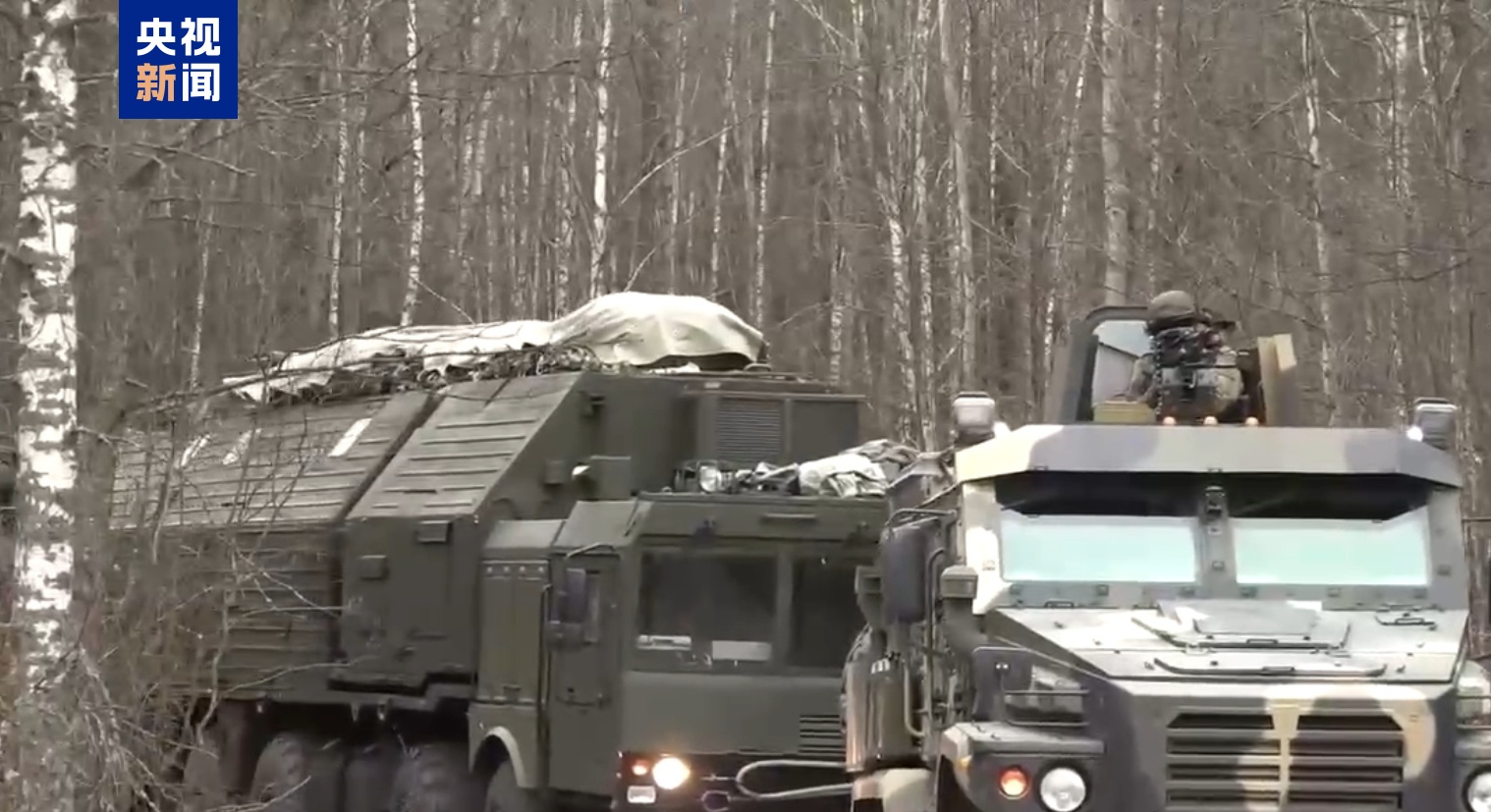
白俄罗斯军方:已划定“榛树”导弹系统作战巡逻区域
Yang Shi Xin Wen Ke Hu Duan· 2025-12-27 00:02
Core Viewpoint - The Belarusian Armed Forces Chief of Staff, Muraveiko, stated that it is not straightforward to determine when the "Iskander" missile system will be on combat duty [2] Group 1 - The Belarusian military has designated operational patrol areas for the "Iskander" missile system deployed within the country [2] - Ongoing training for crews is being conducted to ensure the missile system's deployment and launch capabilities, aiming to reduce missile launch times [2] - The term "combat readiness" refers to elevating the missile system's preparedness level to the highest state, maintaining a standby status for immediate task execution [2]
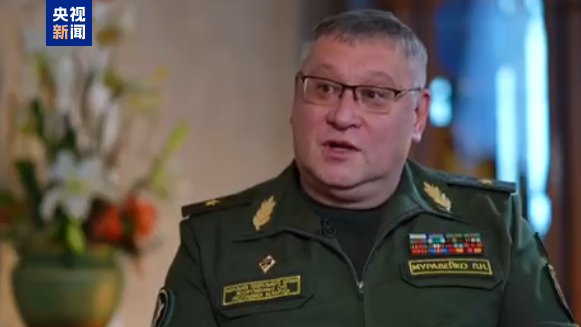
白俄罗斯防长:“榛树”导弹月底进入战斗值班状态
Xin Lang Cai Jing· 2025-12-23 04:36
Core Viewpoint - The deployment of the Russian "Iskander" missile systems in Belarus is limited to no more than 10 units, as stated by President Lukashenko, with the systems expected to be operational by the end of the month according to Defense Minister Khrelin [1] Group 1 - Belarusian President Lukashenko confirmed that the number of Russian "Iskander" missile systems stationed in Belarus does not exceed 10 units [1] - Belarusian Defense Minister Khrelin announced that the "Iskander" missiles will enter combat readiness by the end of December [1]
俄副外长:保证不进攻欧盟北约,准备以法律形式确认
Xin Lang Cai Jing· 2025-12-22 15:14
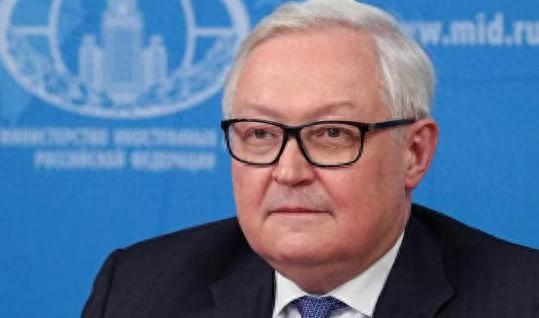
Group 1 - The core viewpoint of the article is that despite the significant risk of conflict between Russia and NATO due to hostile actions from Europe, Russia has no intention of attacking EU or NATO countries and is prepared to legally confirm this stance [1][3] - Russian Deputy Foreign Minister Sergey Ryabkov stated that Russia is analyzing Western countries' plans to deploy intermediate-range missiles, and the deployment of the latest "Iskander" missile system in Belarus will be one of Russia's countermeasures [3] - Ryabkov emphasized that if the United States initiates nuclear weapon tests, Moscow will take reciprocal measures [3] Group 2 - NATO's military activities near Russia's western borders have reached unprecedented levels, with military exercises simulating conflict scenarios with Russia [3] - NATO's military committee chairman, Admiral Giuseppe Cavò Dragone, suggested the possibility of a "preemptive strike" against Russia, which he framed as a defensive action [3] - Russian President Vladimir Putin has repeatedly stated that Russia does not intend to attack any country, accusing Western politicians of fabricating "Russian threats" to distract from domestic issues [3]
卢卡申科:“榛树”导弹系统已在白俄罗斯进入战斗值班状态
Zhong Guo Xin Wen Wang· 2025-12-18 23:33
Core Viewpoint - The Belarusian President Lukashenko confirmed that the "Zaliv" missile system has entered combat duty status within Belarus [1] Group 1: Deployment and Readiness - The first batch of the "Zaliv" missile system has been deployed and became operational on December 17 [1] - Lukashenko proposed to Russian President Putin the deployment of the latest Russian weapons, including the "Zaliv" system, on Belarusian territory in December 2024 [1] - Putin indicated that the "Zaliv" system could be deployed in Belarus by the second half of 2025 [1] Group 2: Future Plans - Lukashenko stated that the "Zaliv" missile system will be officially integrated into the military by December [1]
白俄罗斯总统说白境内已部署俄制“榛树”导弹
Xin Hua She· 2025-12-18 16:25
Group 1 - The Belarusian President Lukashenko announced the deployment of the Russian-made "Zircon" missile system within Belarus, which was completed on December 17 and is now on combat duty [1] - Belarus and Russia are implementing a series of strategic deterrence measures to enhance their defense capabilities, including the deployment of Russian regional military groups within Belarus [1] - Any acts of aggression against Belarus's borders will be viewed as a threat to the Russian-Belarusian alliance, with thousands of Russian armed forces ready to join military combat if the conflict escalates [1] Group 2 - In December 2024, the Russian and Belarusian presidents agreed on the deployment of the "Zircon" missile system in Belarus [2] - The "Zircon" is a new type of hypersonic medium-range ballistic missile developed by Russia, capable of carrying nuclear warheads and attacking targets at speeds of 10 Mach [2] - Russian President Putin stated that "this missile is currently impossible to intercept" [2]
普京宣布“重要消息”:“榛树”导弹系统将于今年年底前进入战斗值班状态
Huan Qiu Wang· 2025-12-17 11:53
Group 1 - The core message from President Putin is the announcement that the "Hazelnut" ballistic missile system will be operational by the end of this year, with preparations proceeding as planned [1] - The "Hazelnut" missile system has a range of up to 5,500 kilometers, as stated by Putin during a press conference [3] - Putin challenged Western experts to a "high-tech showdown" in response to their skepticism regarding the capabilities of the "Hazelnut" missile [3]
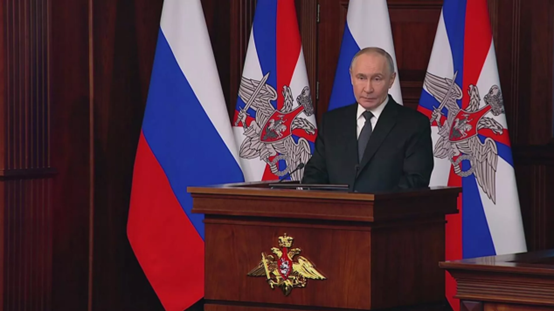
普京一句话让整个欧洲冷静下来!第一批榛树导弹系统,已列装军队
Sou Hu Cai Jing· 2025-08-04 02:20
Core Viewpoint - Europe is facing unprecedented tension due to the announcement of Russia's successful development of the "Zhuravlik" missile system, which has significant implications for European strategic choices [1][3]. Group 1: Missile Capabilities - The "Zhuravlik" missile has a range between 1,000 kilometers and 5,500 kilometers, putting nearly all European capitals within its striking distance [1]. - The missile can reach speeds exceeding 10 Mach and is equipped with advanced technology, making current European defense systems nearly ineffective against it [3]. - It features multiple independently targetable reentry vehicles (MIRVs), allowing it to strike multiple targets simultaneously and effectively penetrate fortified positions [3]. Group 2: European Defense Response - European nations are currently engaged in an arms race, with EU member states increasing defense spending to enhance their military capabilities [3]. - Despite an investment of €800 billion in defense, the threat posed by the "Zhuravlik" missile renders these efforts seemingly inadequate [3]. - Germany's ambition to build the strongest conventional military in Europe faces significant challenges in light of this new threat [3]. Group 3: Diplomatic Considerations - The situation calls for a reassessment of European relations with Russia, as ongoing confrontation and military buildup may lead to disastrous outcomes [5]. - There is a suggestion that seeking peaceful dialogue and diplomatic solutions could be a more effective approach to ensure long-term stability and prosperity in Europe [5]. - The announcement serves as a wake-up call for Europe, urging a reconsideration of military strategies in favor of cooperation and peace [5].