
导弹制造

Search documents
伊朗:导弹生产没有任何担忧
21世纪经济报道· 2026-03-20 08:01
Group 1 - Iran's missile industry is reported to be performing exceptionally well, with a spokesperson from the Islamic Revolutionary Guard Corps stating that it will receive a "full score" and expressing no concerns in this area [1] - The spokesperson highlighted that missile production continues even in a state of war, indicating a robust operational capacity and no significant issues with reserves [1] Group 2 - The Houthis in Yemen have announced the possibility of blocking the Bab el-Mandeb Strait, which could have significant implications for global oil supply routes [2] - Brent crude oil prices have surged nearly 50% over the past three weeks, leading the performance among global asset classes [2] - The Shanghai Composite Index has fallen below 4000 points, marking a new low for the year, while a major computing power company experienced a sharp decline, and silver prices also saw a significant drop [2]


伊朗:导弹生产“没有任何担忧”
财联社· 2026-03-20 07:41
Core Viewpoint - Iran's missile industry is reportedly performing exceptionally well, with no concerns regarding its production capabilities even in a state of war [1] Group 1 - The spokesperson for the Islamic Revolutionary Guard Corps stated that Iran's missile industry "will receive full marks" [1] - The production of missiles continues despite the ongoing conflict, indicating a robust operational capacity [1] - There are no significant issues regarding missile reserves, suggesting a stable supply chain [1]

伊朗,使用新武器
中国能源报· 2026-03-15 13:16
Group 1 - Iran launched the "Real Commitment-4" military operation on March 15, marking the 54th round of actions in the ongoing conflict with Israel, utilizing various missiles including the "Mudstone" ballistic missile for the first time [3] - The Iranian forces claimed that the strikes accurately hit multiple core strategic targets in Israel, focusing on command and decision centers affecting air operations, military industry, defense infrastructure, and troop assembly areas [3] - The Israeli Defense Forces confirmed that they detected missiles launched from Iran towards Israel, with their defense systems engaged in interception [4] Group 2 - The missile attacks from Iran resulted in at least 2 injuries in central Israel [5] - Fragments of the Iranian missiles struck the U.S. consulate building in Israel [6] - No responses have been reported from the involved parties regarding the missile strikes [7]

“战斧”首次交付日本,中方正告
第一财经· 2026-03-14 10:40
Core Viewpoint - Japan has begun the delivery of U.S.-made Tomahawk cruise missiles and Norway's Joint Strike Missiles (JSM) to its Self-Defense Forces, marking the first official delivery of foreign "standoff missiles" to Japan, which can be used for counter-strike capabilities against hostile nations [1][2]. Group 1 - The Tomahawk missiles are planned to be deployed on the Japan Maritime Self-Defense Force's Aegis destroyer "Kirishima," with delivery advanced to the fiscal year 2025 from the originally scheduled fiscal year 2026 [1]. - The JSM missiles are set to be equipped on the Japan Air Self-Defense Force's F-35A fighter jets, with initial delivery delayed from the fiscal year 2021 due to the pandemic [1]. - Japan's Defense Minister, Kishi Nobuo, emphasized that the country's defense capabilities, including standoff missiles, are maintained at a necessary minimum and do not pose a threat to other nations [1]. Group 2 - In response to Japan's deployment of long-range missiles, a spokesperson for the Chinese Ministry of Defense criticized Japan's right-wing forces for accelerating militarization, indicating a shift away from Japan's previous defensive posture [1]. - The spokesperson warned that Japan's militaristic path could lead to self-destruction, highlighting concerns over regional peace and security [2].

美军:击中伊朗无人机航母
第一财经· 2026-03-06 04:38
Core Viewpoint - The article discusses recent military actions involving the U.S. and Iran, highlighting significant developments in their military capabilities and engagements in the Middle East. Group 1: U.S. Military Actions - The U.S. military has reportedly sunk or destroyed over 30 Iranian naval vessels and struck an Iranian drone carrier, which is comparable in size to World War II aircraft carriers [3]. - U.S. Central Command claims that Iranian ballistic missile attacks have decreased by 90% and drone attacks by 83% since the onset of U.S. military operations [3]. - The U.S. aims to systematically destroy Iran's future missile production capabilities and has established complete air and sea dominance over Iranian naval forces [3]. Group 2: Iranian Military Developments - Iran's Islamic Revolutionary Guard Corps announced the launch of the "Khoramshahr-4" super-heavy missile, which carries a 1-ton warhead targeting multiple locations in Israel, including Tel Aviv and Ben Gurion Airport [4][5]. - The "Khoramshahr-4" missile is reported to have a length of approximately 13 meters, a diameter of about 1.5 meters, and a weight of around 30 tons, capable of reaching speeds of up to 16 Mach outside the atmosphere and 8 Mach upon re-entry [6]. - This missile has a range of 2,000 kilometers and can be equipped with various warheads, making it a significant threat to regional security [7].

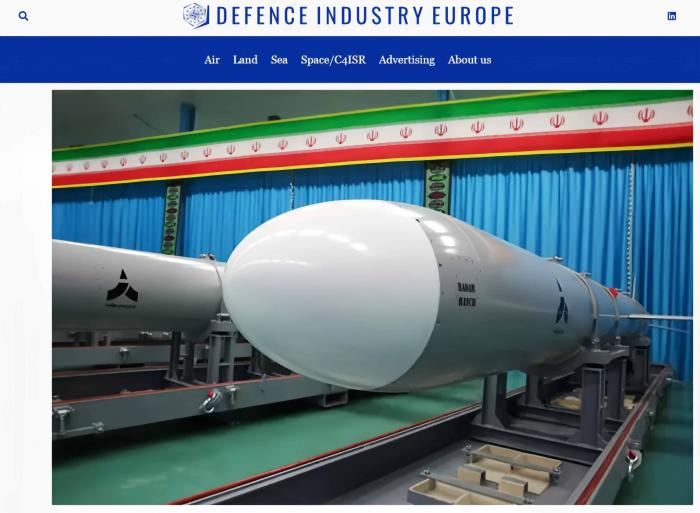
号称两枚可击沉9000吨美舰 伊朗展示射程1000公里导弹
Zhong Guo Xin Wen Wang· 2026-02-03 03:18
Group 1 - The article highlights the unveiling of a secret missile facility in Iran, showcasing hundreds of "Abu Mahdi" anti-ship cruise missiles, which are considered a strong weapon against the U.S. Navy [1] - The missile facility is located approximately 500 meters underground and features exits to the surface, indicating a strategic military capability [1] - The "Abu Mahdi" missile is designed for both sea and land attacks, with its development starting in 2020 and expected to be officially deployed by early 2025 [3] Group 2 - The "Abu Mahdi" missile has a warhead weighing over 400 kilograms, capable of penetrating the armor of warships, with two missiles theoretically able to sink a U.S. Aegis destroyer weighing around 9,000 tons [4] - The missile boasts a range exceeding 1,000 kilometers, allowing it to cover the entire Gulf region and target multiple key U.S. military installations in the Middle East [4] - The emergence of the "Abu Mahdi" missile may force U.S. aircraft carriers to operate at greater distances from Iranian waters, significantly impacting their operational effectiveness [4]
执匠心赴征程 以平凡铸锋芒
Xin Lang Cai Jing· 2026-01-23 04:26
Core Viewpoint - The articles highlight the dedication and commitment of the aerospace industry, particularly in missile manufacturing, as they work towards achieving the goals set in the "14th Five-Year Plan" (十五五) for building a strong aviation nation [1][7]. Group 1: Commitment and Dedication - The concept of "forging arrows" symbolizes the loyalty and dedication of workers in the aerospace sector, with a focus on the mission of national defense [1][4]. - The historical context of the industry is emphasized, showcasing the evolution from humble beginnings in 1961 to a modern, technologically advanced sector [1][3]. - The average age of the party members in the research teams is 31, indicating a youthful and dynamic workforce committed to overcoming technological challenges [1][2]. Group 2: Technological Advancements - Young skilled workers are embracing change and improving efficiency through innovative management techniques, such as "sticky note management" [2]. - The production process is enhanced by automation and robotics, merging traditional craftsmanship with modern technology to achieve "zero defects" [2][3]. - Collaborative efforts across units are crucial for overcoming technical challenges, with teams working tirelessly to ensure the success of new model validations [2][3]. Group 3: Training and Knowledge Transfer - The "master-apprentice" model is being implemented to ensure knowledge transfer from experienced workers to new employees, fostering a culture of continuous learning and improvement [6]. - Older craftsmen are actively sharing their expertise, ensuring that traditional skills are preserved and adapted to modern requirements [6]. Group 4: Community Engagement and Inspiration - The aerospace industry is not only focused on production but also on inspiring the next generation, with initiatives aimed at educating children about aerospace technology [5]. - The commitment to nurturing interest in aviation and national defense among youth is seen as a vital part of the industry's future [5]. Group 5: Future Aspirations - The articles conclude with a strong belief in the potential of every individual in the industry to contribute to the overarching goals of national defense and technological advancement [7]. - The spirit of "forging arrows" is portrayed as a continuous journey, with a collective effort to achieve the ambitious targets set forth in the "14th Five-Year Plan" [7].
13马赫撕裂夜空!俄罗斯“榛树”导弹突袭利沃夫,乌克兰能源命脉遭精准斩首
Sou Hu Cai Jing· 2026-01-14 13:18
Core Insights - The article highlights the strategic implications of Russia's "Hazel" hypersonic missile strike on Ukraine's energy infrastructure, marking a significant escalation in the conflict and a shift in warfare dynamics [2][5][9]. Group 1: Military and Strategic Implications - The "Hazel" missile, traveling at speeds of 10 to 13 Mach, successfully targeted Ukraine's largest natural gas storage facility in Lviv, crippling the region's energy supply and causing widespread power outages in Kyiv [2][5]. - The missile's ability to evade Western defense systems, which were unable to detect its trajectory, underscores a critical vulnerability in NATO's air defense capabilities against hypersonic threats [3][5]. - The successful deployment of the "Hazel" missile demonstrates Russia's advancements in hypersonic technology, raising concerns about its potential nuclear compatibility and the implications for future conflicts [5][9]. Group 2: Economic and Energy Impact - The destruction of the Lviv facility exacerbates the energy crisis in Europe, with warnings that natural gas prices could surge by 300%, threatening industrial operations across the continent [7]. - Ukraine's inability to serve as Europe's "backup gas reservoir" could lead to significant economic repercussions, particularly for countries reliant on its energy supplies [7]. - The attack has revealed fractures within NATO, as Eastern European countries call for increased defense measures while Western nations express concerns about escalating tensions [7][11]. Group 3: Geopolitical Consequences - The incident has prompted a reevaluation of global geopolitical alignments, with non-Western countries observing the shifting power dynamics and some beginning to reassess their positions [7][11]. - The article suggests that the traditional military balance has been disrupted, with Russia's hypersonic capabilities challenging NATO's previous advantages in air superiority [9][11]. - The ongoing conflict and the effectiveness of the "Hazel" missile may lead to a redefinition of security frameworks in Europe, as nations grapple with the reality of a new era of warfare [9][11].

俄罗斯发动大规模打击!
中国能源报· 2026-01-13 05:54
Group 1 - Russia has conducted large-scale and precise strikes on Ukrainian military facilities using "Zircon" missiles and other weaponry, targeting aircraft repair plants and production facilities [1][2] - The strikes included attacks on the Lviv State Aircraft Repair Plant, which is responsible for maintaining Ukrainian military aircraft, including F-16s provided by Western nations [2] - The Russian Defense Ministry stated that these actions were a response to an attack on President Putin's residence, although specific targets were not disclosed [2] Group 2 - The UK is developing a new land-based tactical ballistic missile to enhance Ukraine's long-range strike capabilities, with a project named "Nightfall" [5] - The missile will have a range exceeding 500 kilometers and the ability to carry a 200-kilogram conventional warhead, designed to operate in high-threat environments [5] - The UK plans to award contracts worth £9 million to three teams for the development of the missile, aiming to deliver the first three test missiles within 12 months [5]

巴基斯坦海军战舰演习时发射中国产舰空导弹!现场视频公布:一发击中,精确拦截
Mei Ri Jing Ji Xin Wen· 2026-01-12 08:19
Group 1 - The core viewpoint of the article highlights the successful naval exercises conducted by the Pakistan Navy in the Arabian Sea, showcasing their advanced defense capabilities [1][2] - The exercises included the successful launch of the LY-80 (N) surface-to-air missile, which accurately destroyed a simulated enemy aircraft, demonstrating the Navy's strong air defense capabilities [1][2] - The drills also featured the successful use of cruise missiles against surface targets, indicating the precision strike capabilities of the Pakistan Navy [2] Group 2 - The exercises validated the performance of unmanned surface vessels, confirming their high speed, maneuverability, precise navigation, and adaptability to harsh weather conditions, marking a significant advancement in the Navy's indigenous technology [2]
