模块化电驱桥

Search documents
彭佩敏:博世商用车如何驭势“十五五”?
第一商用车网· 2026-03-28 13:06
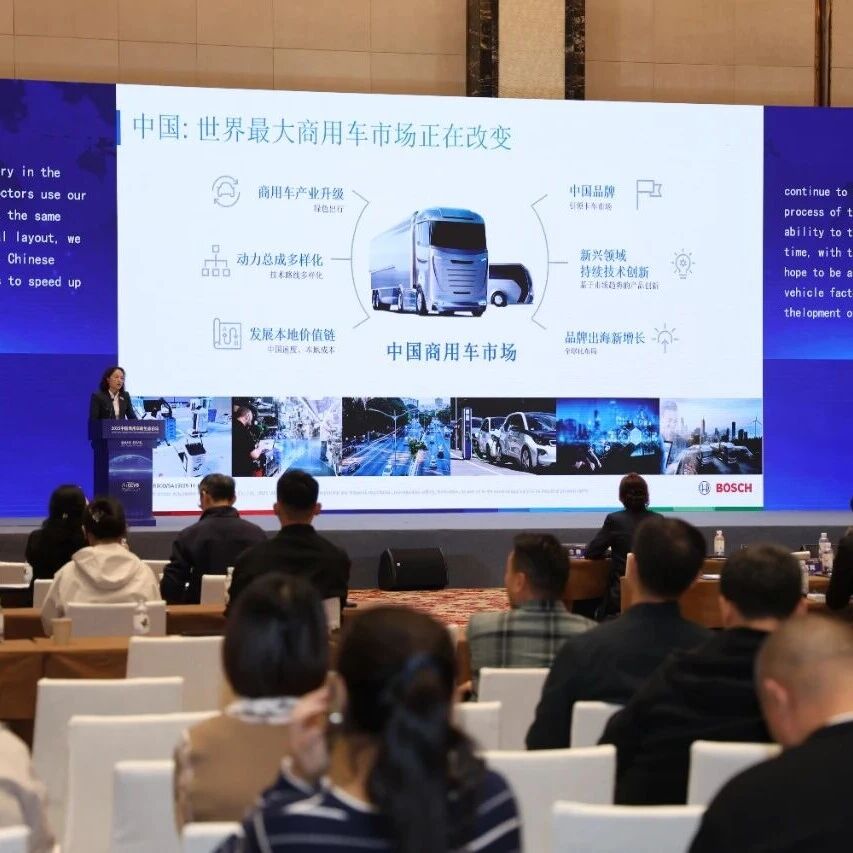
Core Viewpoint - The Chinese commercial vehicle market is undergoing significant changes, driven by the dual carbon goals and the need for energy transition, with Bosch actively promoting solutions for this transformation [3][5][15]. Group 1: Market Dynamics - China, as the world's largest commercial vehicle market, is facing major shifts, particularly with high oil prices and a reliance on imported oil, which is projected to remain around 70% during the 14th Five-Year Plan [3][5]. - The energy structure in China is changing, with non-fossil energy sources exceeding 20% and a target of 25% by the end of the 14th Five-Year Plan [3][5]. Group 2: Commercial Vehicle Emissions - Although commercial vehicles account for about 12% of the total vehicle ownership in China, they contribute over 55% of fuel consumption and carbon emissions [5]. - The 14th Five-Year Plan outlines a clear path for achieving dual carbon goals, emphasizing the need for a new energy system and efficient use of fossil fuels [5]. Group 3: Growth Projections - The commercial vehicle market in China is expected to recover in 2025, with sales projected to exceed 4 million units, and long-term forecasts suggest a market size of 4.6 million units by 2030 [6][7]. - The penetration rate of electric commercial vehicles has increased from less than 3% to nearly 30% over the past five years, indicating a shift towards market-driven growth [7]. Group 4: Diverse Powertrains - The commercial vehicle sector is seeing a diversification of powertrains, including electric, diesel, alternative fuels like natural gas and methanol, and hydrogen fuel cells, each playing a significant role in the transition [7][8]. - Diesel remains a crucial power source, especially with upcoming emissions regulations, while alternative fuels are gaining traction due to cost and efficiency advantages [7][8]. Group 5: Bosch's Solutions - Bosch is developing comprehensive solutions for commercial vehicles, including advanced driver assistance systems and integrated powertrains, to optimize total cost of ownership [10][11]. - The company is focusing on local market needs by establishing R&D centers and manufacturing bases in China, ensuring a robust local supply chain [13]. Group 6: Innovation and Collaboration - Bosch is collaborating with domestic partners to enhance the efficiency, safety, and intelligence of electric commercial vehicles, achieving significant energy savings in real-world applications [15]. - The company emphasizes the importance of embracing green transformation and digital empowerment to create value in the evolving commercial vehicle landscape [15].


博世预测:2030新能源商用车整体渗透率将超50%!
第一商用车网· 2025-11-14 07:01
Core Viewpoint - The article discusses Bosch's strategic approach to the transformation of commercial vehicles in China, emphasizing the importance of local innovation and global integration in response to the electric and intelligent vehicle revolution driven by China's dual carbon strategy and evolving emission standards [2][4]. Group 1: Bosch's Strategy and Market Position - Bosch is committed to deepening its presence in the Chinese market while leveraging global resources to support local brands in expanding internationally [4]. - The company has established a dual strategy of "local deepening + global layout," focusing on local R&D and manufacturing capabilities to create tailored solutions for specific market needs [4]. Group 2: Transition to Market-Driven New Energy Commercial Vehicles - The penetration rate of new energy commercial vehicles in China has surpassed 30%, indicating a shift from policy-driven to market-driven growth [6]. - By 2025, the penetration rate of electric heavy-duty commercial vehicles is expected to reach 18%, with the traction vehicle segment exceeding 30% [6][7]. - Bosch anticipates that by 2030, the overall penetration rate of new energy commercial vehicles will exceed 50%, driven by strong market demand and economic benefits [7]. Group 3: Scene-Driven Solutions - Bosch is developing highly scenario-based solutions for new energy commercial vehicles, addressing diverse technical requirements for different transportation scenarios [8]. - The company focuses on three core areas: diversified power and energy management, chassis motion intelligence, and driver assistance, with three development goals: extreme safety, extreme energy efficiency, and intelligent comfort [8]. Group 4: Technological Innovations - Bosch's modular electric drive axle represents a significant innovation, allowing for flexible design and rapid adaptation to various vehicle requirements [15]. - The electric drive axle system has been developed specifically for the Chinese market, achieving significant weight reduction and efficiency improvements [15]. - Bosch's solutions have demonstrated energy savings of 5%-10% compared to industry benchmarks, with further improvements expected [11]. Group 5: Industry Collaboration and Value Creation - The transformation of commercial vehicles requires collaboration across the industry chain, with a focus on creating value for customers and the industry as a whole [17]. - Bosch aims to empower users through innovative and efficient products that prioritize safety, energy savings, and comfort [17].