比亚迪海豹05

Search documents
【新能源篇】新的一年开始了,各家的销售情况都怎么样?
车fans· 2026-01-19 01:06
Core Viewpoint - The current market is experiencing a significant decline in customer traffic and orders compared to the previous month, primarily due to the reduction of purchase tax subsidies and the lack of new government funding for 2026, leading to a cautious market sentiment [1][10]. Group 1: Market Conditions - Customer traffic and orders have sharply decreased, with many stores reporting single-digit order numbers and a general lack of high-intent customers [1][12]. - The New Year's holiday saw minimal customer engagement, with many potential buyers still in the consideration phase and not making decisive purchases [5][17]. - The introduction of new policies, such as a 12,000 yuan purchase tax subsidy, has not significantly improved the situation, as actual costs remain higher than last year [2][10]. Group 2: Consumer Behavior - Customers are exhibiting a strong wait-and-see attitude, largely influenced by the anticipation of new models and subsidy policies [4][19]. - Many customers who considered purchasing at the end of last year are now hesitant due to increased costs and the uncertainty surrounding new government incentives [8][10]. - The majority of customers are not in a hurry to buy, with many expressing a desire to wait for better deals or new model releases [9][15]. Group 3: Competitive Landscape - The market is seeing increased competition among electric vehicle brands, with some customers considering switching back to traditional fuel vehicles due to the new purchase tax on electric cars [10][19]. - Brands like Xiaopeng and Zeekr are gaining attention for their new models, but overall customer interest remains subdued [8][14]. - The introduction of new models and policies by competitors is expected to influence customer decisions, with many waiting for clearer signals from manufacturers [15][22].

汽车视点 | “0公里二手车”乱象揭秘:数千平台卖家缘何“新车二手卖”?
Xin Hua Cai Jing· 2025-05-28 02:18
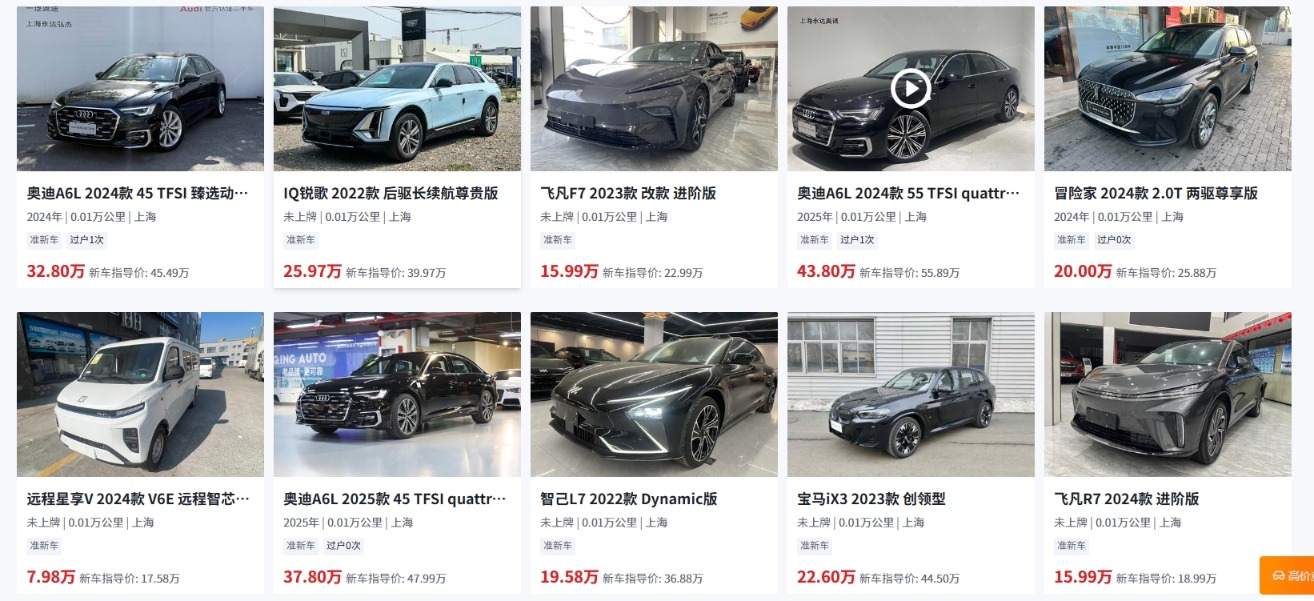
Core Viewpoint - The "0-kilometer used car" market is facing unprecedented scrutiny, with industry leaders exposing its gray areas and questionable practices [1][6]. Industry Overview - The term "0-kilometer used car" refers to vehicles that are registered but quickly resold, creating a market where 3,000 to 4,000 sellers are involved in this type of transaction [1]. - This market has developed a complete supply chain, with various brands like BYD, Aion, and Audi offering "0-kilometer used cars" at prices significantly lower than their suggested retail prices [1]. Pricing and Sales Practices - Examples of pricing include a Volkswagen model sold for 78,800 yuan, which is nearly 50,000 yuan less than its suggested retail price, and a BYD model priced at 55,800 yuan, about 20,000 yuan cheaper than new [5]. - Dealers are using this method as a way to clear inventory, purchasing new cars at low prices and reselling them to consumers at a slight markup, benefiting all parties involved [6]. Market Dynamics - The practice of selling "0-kilometer used cars" is not new and has been a common strategy among dealers to boost sales figures, especially towards the end of the year [6]. - The phenomenon reflects deeper contradictions within the automotive industry, where competitive pressures force some businesses to exploit regulatory loopholes [7]. Consumer Implications - There are risks associated with purchasing "0-kilometer used cars," including the loss of first-owner benefits and potential depreciation in resale value [7]. - The existence of this market raises concerns about consumer rights and the integrity of subsidy policies, as some dealers may manipulate vehicle exchange subsidies for short-term gains [7].