
氢水杯

Search documents
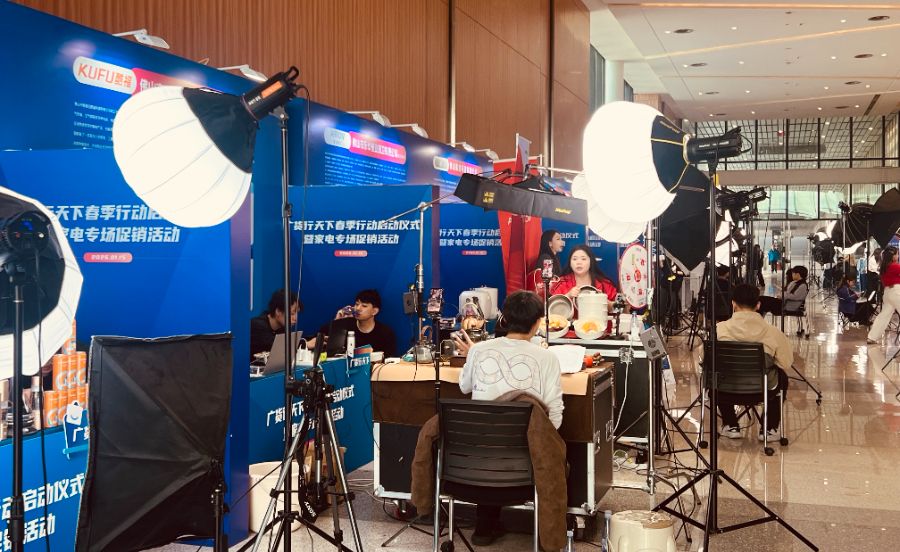
直播间热浪下“广货”从制造走向智造,“粤家电”加速全球化布局
2 1 Shi Ji Jing Ji Bao Dao· 2026-01-16 14:23
Core Insights - The "Guangdong Goods Going Global" spring campaign has successfully ignited online consumer enthusiasm, with sales in live-streaming sessions increasing by nearly 100% in just the morning of the event [1] - Guangdong's home appliance industry has developed a comprehensive supply chain advantage, producing numerous world-class companies and leading in various product categories such as air conditioning and kitchen appliances [1][5] - The transformation of "Guangdong Goods" reflects a shift from manufacturing to self-research, development, and sales, focusing on consumer needs in niche markets [3][6] Industry Overview - The Guangdong home appliance sector has evolved over 40 years, transitioning from OEM and private label to self-branded products, achieving a scale exceeding 1 trillion yuan in revenue [5][6] - Guangdong accounts for nearly half of the national revenue and exports in the home appliance industry, with three companies reaching a valuation of over 100 billion yuan [5][6] - The industry is characterized by a significant focus on quality and innovation, with products like Midea's low-sugar rice cooker and Galanz's multifunctional microwave showcasing advanced technology [5][6] Market Trends - There is a growing demand for personalized, high-quality, and innovative small appliances, as evidenced by the success of niche products like the "surrounding tea pot" and hydrogen water cups [2][3] - Companies are increasingly targeting overseas markets, particularly in Southeast Asia, with Midea and Hisense reporting significant growth in these regions [8][9] - The integration of smart technology into appliances is becoming a key trend, with companies aiming to incorporate Wi-Fi functionality and other innovations into their products [8] Brand Development - The reputation of "Guangdong Goods" is built on quality, with many products demonstrating durability and long-term consumer trust, as seen with the longevity of appliances from brands like Weili and Haotaitai [6][7] - Companies are exploring new product categories and international markets to sustain growth, with Haotaitai focusing on expanding its product line and entering overseas markets [7][8] - The Guangdong manufacturing ecosystem benefits from a well-coordinated industrial chain within the Guangdong-Hong Kong-Macao Greater Bay Area, enhancing production capabilities and service efficiency [9]

下一个五年,氢能市场产值将超万亿元
Zhong Guo Neng Yuan Wang· 2025-11-09 00:04
Core Insights - The Chinese government has outlined a strategic plan to develop future industries, emphasizing quantum technology, biomanufacturing, hydrogen energy, nuclear fusion, brain-computer interfaces, embodied intelligence, and 6G as new economic growth points [1] Hydrogen Energy Industry Development - The hydrogen energy industry in China is transitioning from pilot exploration to organized breakthroughs and large-scale applications, with expectations of significant growth during the 14th Five-Year Plan period [2] - By the end of 2024, China's hydrogen production capacity is projected to exceed 50 million tons, with a production and consumption scale surpassing 36.5 million tons, making it the largest in the world [2] - Renewable energy electrolysis hydrogen production capacity is expected to exceed 120,000 tons annually, with over 540 hydrogen refueling stations established and approximately 24,000 fuel cell vehicles promoted [2] - As of the end of 2024, China's green hydrogen production capacity is estimated at 120,000 tons, accounting for nearly 50% of the global total [2] - The price of hydrogen production is expected to drop to 28 yuan per kilogram, while consumption prices are projected to reach 48.6 yuan per kilogram, reflecting year-on-year decreases of 15.6% and 13.7%, respectively [2] Regional Development Initiatives - Local governments are playing a crucial role in the establishment of the hydrogen energy industry, with cities like Foshan actively developing supportive policy frameworks and building a comprehensive hydrogen industry chain [3][4] - Foshan has established 17 hydrogen refueling stations and deployed 1,350 hydrogen buses, along with over 10,000 hydrogen-powered two-wheelers [4] - Shandong province is leveraging its chemical industry strengths to develop a hydrogen energy industry chain and is promoting technology demonstration projects in various sectors [4] - Baotou is working on becoming a national model for green hydrogen self-circulation innovation, with hydrogen production costs significantly lower than the national average [4] Collaborative Efforts and Challenges - The hydrogen energy industry in China is characterized by localized practices that demonstrate adaptability and collaborative progress across regions [5] - Despite the achievements, challenges remain, including the need for breakthroughs in core technologies, the geographical mismatch of renewable energy production, and competition from rapidly advancing electric vehicle technologies [6] - Experts suggest that future development should focus on systematic technological advancements and the integration of emerging technologies like artificial intelligence and big data into the hydrogen energy sector [6] - A nationwide collaborative approach is essential for building a robust green hydrogen industrial system, emphasizing the importance of cooperation and resource sharing among cities [6]