
水稻联合收割机

Search documents
培养本土技术人才 赋能农业生产变革——科技小院,从中国创新走向全球推广
Xin Lang Cai Jing· 2026-01-12 08:45
Core Insights - The article discusses the impact of the China-Africa Agricultural Technology Centers, highlighting their role in enhancing agricultural productivity and training local farmers in Malawi, Zambia, and Brazil through innovative agricultural practices and technology transfer [14][15][20]. Group 1: Malawi Agricultural Technology Center - The Malawi China-Africa Agricultural Technology Center has implemented a model combining scientific research, technical training, and demonstration to improve local agricultural practices, significantly increasing maize yields and addressing food security [14][16]. - The project has trained over 100 students from 13 African countries, establishing six technology centers that cover 240 villages and 200,000 acres of farmland, with maize yields quadrupling in surrounding areas [16][17]. - Local farmers, such as Joyce Phiri, have seen substantial increases in crop yields and have begun sharing knowledge with their communities, demonstrating the project's success in fostering agricultural innovation [16][17]. Group 2: Zambia Soybean Technology Center - The Zambia Soybean Technology Center has achieved nearly a 40% increase in soybean yields, utilizing a closed-loop production model that integrates crops, fungi, and fertilizers [17][18]. - The center has established a 150-acre soybean demonstration base and trained over 300 individuals, creating a network of core soybean growers and enhancing local agricultural practices [18][19]. - Local farmers have adopted new techniques, leading to improved crop management and productivity, with a focus on practical, localized training methods [19]. Group 3: Brazil Agricultural Mechanization Technology Center - The China-Brazil Family Agricultural Mechanization Technology Center has significantly improved production efficiency, reducing labor time by 80% and production costs by 60%-80% through the introduction of Chinese agricultural machinery [20][21]. - The center has established two operational technology centers, with a focus on training local farmers and providing precise technical support to enhance agricultural practices [21][22]. - Collaborative efforts between Chinese and Brazilian institutions have fostered cultural exchange and the development of local agricultural talent, strengthening the agricultural sector in Brazil [22].

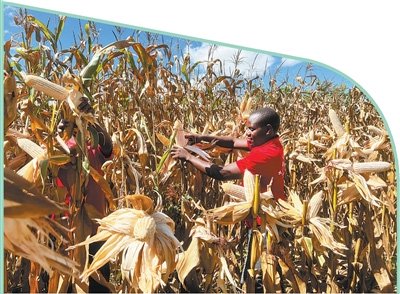
特稿丨在希望的田野上——中国农机助力非洲农业现代化
Xin Hua Wang· 2025-06-14 05:51
Group 1 - The article highlights the increasing collaboration between China and Africa in agricultural modernization, with Chinese agricultural machinery playing a significant role in enhancing efficiency and productivity in African farming [1][9]. - The demand for agricultural machinery in Africa is rising due to population growth and the need for improved food security, with Chinese companies adapting their products to meet local conditions and challenges [2][3]. - Companies like Zoomlion have been exporting agricultural machinery to Africa since 2011, with over 5,000 tractors sold, showcasing their commitment to supporting local agricultural development [2][3]. Group 2 - Chinese agricultural technology, including drones and improved machinery, is revolutionizing farming practices in Africa, significantly increasing productivity and efficiency [3][4]. - The introduction of precision spraying technology through drones is noted for its environmental benefits and effectiveness in pest control, enhancing crop management [4][5]. - Chinese companies are not only selling machinery but also providing comprehensive after-sales support and training to local farmers, fostering a sustainable agricultural ecosystem [7][8]. Group 3 - The collaboration between China and African nations in agriculture is seen as a critical step towards poverty reduction and industrialization, with a focus on enhancing agricultural production efficiency [8][9]. - As of 2024, China has established agricultural cooperation mechanisms with 23 African countries, with investments exceeding $1 billion, indicating a robust commitment to agricultural development in the region [8].