
农业科技服务

Search documents
广西“新农人”打造“滴滴打药”解锁农耕新方式
Zhong Guo Xin Wen Wang· 2026-03-20 04:22
Core Viewpoint - The article highlights the innovative "Guilin Bird First Fly" platform, which connects farmers with drone operators for agricultural pest control, significantly improving efficiency and reducing risks for farmers in Guangxi, China [1][6]. Group 1: Platform Development - The "Guilin Bird First Fly" project was initiated at the end of 2024 and officially launched in November 2025, adopting an agricultural service model similar to "Didi" [2]. - The platform was designed to be user-friendly for farmers, featuring a WeChat mini-program that simplifies the ordering process to just three steps: entering the address, crop type, and acreage [2][6]. Group 2: User Adoption and Impact - Initially, the order rate from farmers was only 7%, but it has now increased to over 90% due to trust-building measures such as a "pay after satisfaction" service and local service points [4][7]. - The platform has drastically reduced the time required for pest control tasks, with drone operations completing in 4 hours what previously took 5 workers 3 days, and it can also operate at night for better pest control [4][7]. Group 3: Benefits for Drone Operators - The platform has created new job opportunities for rural drone operators, allowing them to receive more organized and efficient orders compared to their previous methods of finding work [5][8]. - The team has implemented three key rules to optimize order management: prioritizing the same crop, intelligent order merging, and prioritizing seasonal demands, which has reduced the idle time for drone operators by 40% [5][8]. Group 4: Service Expansion - The "Guilin Bird First Fly" platform now offers a range of services including pest control spraying, seed and fertilizer application, and logistics for agricultural materials, with over a hundred active drone operators serving more than a thousand farmers [8].


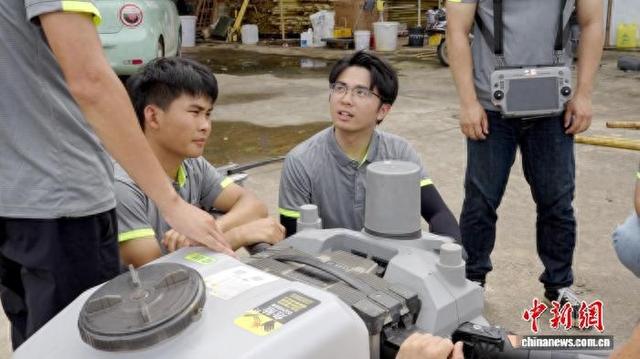
韶关高素质农民培育班收官,1211名新农人学成赋能农业发展
Nan Fang Nong Cun Bao· 2026-02-11 09:31
Core Insights - The training program for high-quality farmers in Shaoguan has successfully concluded, with 1,211 new farmers trained to empower agricultural development [2][4]. Group 1: Training Program Overview - The training program, organized by the Shaoguan Agricultural and Rural Bureau and conducted by Guangzhou Zhongning Agricultural Technology Development Co., Ltd., started in December 2025 and lasted for over a month, comprising four sessions [2][3]. - The program focused on cultivating leaders of new agricultural business entities and key talents for rural revitalization, effectively enhancing the professional skills and practical abilities of local agricultural practitioners [3][4]. Group 2: Curriculum and Practical Training - The curriculum was closely aligned with the actual development needs of Shaoguan's agricultural industry, addressing practical demands in areas such as rice and vegetable planting, digital agriculture, and agricultural machinery operation [6][7]. - Specialized courses were offered to address skill gaps among practitioners, particularly focusing on training agricultural machinery operators [8]. - The training included practical sessions at high-quality agricultural training bases and e-commerce operation bases in cities like Guangzhou, Jiangmen, Huizhou, and Foshan, allowing for field observation, discussions, and hands-on training [15][16]. Group 3: Future Plans and Support - The Shaoguan Agricultural and Rural Bureau plans to establish a follow-up service system for trainees, providing ongoing support through discussions, e-commerce skill enhancement, on-site expert guidance, and agricultural policy education [20][21]. - This initiative aims to help trainees convert their skill advantages into developmental benefits, ensuring that the training translates into practical production outcomes [22].

以科技创新赋能农业发展
Xin Lang Cai Jing· 2026-01-26 22:08
Core Viewpoint - Rural revitalization is considered the foundational support and key link for the comprehensive revitalization of Liaoning province, with a focus on transforming agriculture into an efficient and profitable industry [1] Group 1: Agricultural Innovation - Accelerating seed industry innovation is essential, emphasizing deep integration of production, education, and research led by enterprises to ensure their role as the main body of technological innovation [1] - There is a need to systematically deploy tasks related to variety cultivation, soil quality improvement, and agricultural machinery development to establish a robust technological platform [1] - The conversion of research results should actively engage researchers and relevant stakeholders, promoting the development of various agricultural technology social service organizations to enhance the agricultural innovation ecosystem [1] Group 2: Regional Advantages and Differentiated Development - It is important to leverage regional advantages and implement industry layouts tailored to local conditions for differentiated development [1] - Specialty products such as Dandong strawberries and Dalian cherries should focus on the three key aspects of "variety, quality, and brand" to promote standardized production [1] Group 3: New Cultivation Models - There is a strong emphasis on developing new cultivation models, particularly dense planting methods, which offer advantages such as labor-saving, time efficiency, and ease of mechanization [1]
沈河区“农科硅谷”锚定北方农业科创新标杆
Xin Lang Cai Jing· 2026-01-19 20:11
Core Insights - The event held in Shenyang focused on the development of the "Agricultural Science Silicon Valley" project, aiming to boost the agricultural technology industry in the Shenhe District through collaboration among government, enterprises, and educational institutions [1][2] Group 1: Event Overview - The "15th Five-Year" high-quality development and key project promotion meeting attracted over 500 guests, including experts, business elites, and financial representatives, to discuss innovation and development strategies for the agricultural technology sector [1][2] - The meeting highlighted the strategic vision for the Shenhe District, emphasizing the collaborative development of three main industries: financial commerce, cultural tourism, and agricultural technology [2] Group 2: Project Signings - A total of 17 quality projects were signed at the event, focusing on joint development, agricultural specialty trading platforms, and the transformation of agricultural technology achievements [3] - The projects aim to integrate resources and create a strategic community involving government, industry, academia, and finance, facilitating the transition of agricultural production towards precision and efficiency [3] Group 3: Expert Discussions - Industry representatives discussed key issues such as the integration of scientific research with practical applications in agriculture and the role of financial support in advancing agricultural technology [4] - Insights were shared on various innovative models, including AI-enabled retail for agricultural products and the collaboration of different sectors to enhance the agricultural industry [4] Group 4: Future Directions - The Shenhe District plans to leverage the momentum from the promotion meeting to optimize the business environment, strengthen policy support, and ensure the effective implementation of signed projects [5] - The goal is to establish the "Agricultural Science Silicon Valley" as a leading hub for agricultural innovation in Northern China, contributing to high-quality regional economic development [5]
富邦科技:公司秉承用生物与数字技术赋能全球农业的发展使命
Zheng Quan Ri Bao Wang· 2026-01-16 10:19
Core Viewpoint - Fubon Technology (300387) aims to become a global leader in agricultural technology services by leveraging biological and digital technologies to empower global agricultural development [1] Group 1: Company Strategy - The company is committed to deepening its involvement in the planting industry chain [1] - Fubon Technology plans to explore a differentiated approach combining "water, fertilizer, and pesticide coupling" with digital technology [1] - The goal is to create a modern agricultural ecosystem that integrates "seeds, fertilizers, pesticides, biological technology, and digitalization" [1]

培养本土技术人才 赋能农业生产变革——科技小院,从中国创新走向全球推广
Xin Lang Cai Jing· 2026-01-12 08:45
Core Insights - The article discusses the impact of the China-Africa Agricultural Technology Centers, highlighting their role in enhancing agricultural productivity and training local farmers in Malawi, Zambia, and Brazil through innovative agricultural practices and technology transfer [14][15][20]. Group 1: Malawi Agricultural Technology Center - The Malawi China-Africa Agricultural Technology Center has implemented a model combining scientific research, technical training, and demonstration to improve local agricultural practices, significantly increasing maize yields and addressing food security [14][16]. - The project has trained over 100 students from 13 African countries, establishing six technology centers that cover 240 villages and 200,000 acres of farmland, with maize yields quadrupling in surrounding areas [16][17]. - Local farmers, such as Joyce Phiri, have seen substantial increases in crop yields and have begun sharing knowledge with their communities, demonstrating the project's success in fostering agricultural innovation [16][17]. Group 2: Zambia Soybean Technology Center - The Zambia Soybean Technology Center has achieved nearly a 40% increase in soybean yields, utilizing a closed-loop production model that integrates crops, fungi, and fertilizers [17][18]. - The center has established a 150-acre soybean demonstration base and trained over 300 individuals, creating a network of core soybean growers and enhancing local agricultural practices [18][19]. - Local farmers have adopted new techniques, leading to improved crop management and productivity, with a focus on practical, localized training methods [19]. Group 3: Brazil Agricultural Mechanization Technology Center - The China-Brazil Family Agricultural Mechanization Technology Center has significantly improved production efficiency, reducing labor time by 80% and production costs by 60%-80% through the introduction of Chinese agricultural machinery [20][21]. - The center has established two operational technology centers, with a focus on training local farmers and providing precise technical support to enhance agricultural practices [21][22]. - Collaborative efforts between Chinese and Brazilian institutions have fostered cultural exchange and the development of local agricultural talent, strengthening the agricultural sector in Brazil [22].
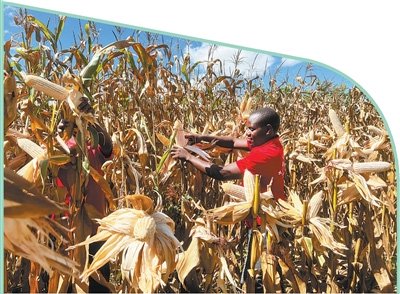
科技小院,从中国创新走向全球推广
Ren Min Ri Bao· 2026-01-12 07:46
Core Insights - The "Science and Technology Small Courtyard" model integrates scientific innovation, social service, and talent cultivation in agriculture, expanding its services to countries like Malawi, Zambia, and Brazil since 2019, leveraging China's successful experiences to stimulate local agricultural development [1][2] Group 1: Malawi Case Study - The Malawi-China Science and Technology Small Courtyard project aims to transform local agriculture through hands-on training and technical support, significantly improving crop yields and food security for local farmers [3][4] - The project has trained over 100 agricultural students from 13 African countries, establishing six technology courtyards that impact 240 villages and 200,000 acres of farmland [3][4] - Local farmers, such as Joyce Phiri, have seen their maize yields quadruple, achieving self-sufficiency and surplus for sale, demonstrating the project's effectiveness in enhancing agricultural practices [3] Group 2: Zambia Case Study - The Zambia Soybean Technology Small Courtyard has increased soybean yields by nearly 40%, benefiting local farmers through improved agricultural techniques and practices [4][5] - The project focuses on a dual approach of cultivating edible fungi and improving soybean varieties, adapting to the local highland tropical climate [5][6] - The courtyard has established a 150-acre soybean demonstration base and trained over 300 individuals, creating a network of skilled agricultural technicians [6] Group 3: Brazil Case Study - The China-Brazil Family Agriculture Mechanization Technology Small Courtyard has significantly enhanced agricultural efficiency, reducing production costs by 60% to 80% and shortening operational time by 80% for local farmers [7][8] - The project has implemented two operational courtyards, focusing on mechanization needs and providing tailored training and technical support to local farmers [7][8] - The initiative fosters cultural exchange and collaboration between Chinese and Brazilian agricultural students, enhancing local agricultural practices and building a skilled workforce [9]
躬耕不辍 履践致远
Xin Lang Cai Jing· 2025-12-23 19:08
Group 1 - The core idea emphasizes that rural revitalization relies on organization and talent, with a focus on practical agricultural technology transfer [2] - The company has developed a "seed company + cooperative + employee" linkage model, which goes beyond simple seed sales and grain collection to create a "learning community" and "practice community" among dispersed farmers [2] - A technology demonstration base has been established as a "field classroom," providing comprehensive guidance from planting to harvesting, emphasizing hands-on teaching rather than mere instruction [2] Group 2 - A "grid-based" service mechanism has been implemented to ensure timely problem resolution, with designated areas of responsibility [2] - The company prioritizes cultivating individuals who can solve problems, focusing on "teaching to fish" through on-site observations, expert lectures, and the creation of "technical points" to develop local agricultural experts [2] - The increasing number of skilled farmers is seen as a positive outcome, indicating that stronger organizations and thriving talent lead to greater agricultural potential [2]
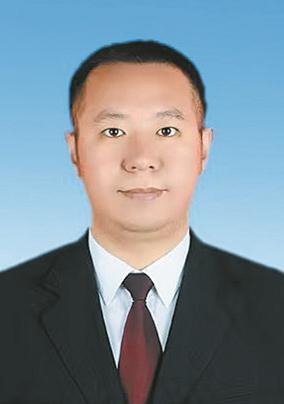
郴州谷满仓科技有限公司成立 注册资本60万人民币
Sou Hu Cai Jing· 2025-12-10 06:30
Core Viewpoint - Chenzhou Guman Cang Technology Co., Ltd. has been established with a registered capital of 600,000 RMB, focusing on fertilizer production and pesticide retail [1] Company Overview - The legal representative of the company is Wu Shuiwan [1] - The registered capital is 600,000 RMB [1] Business Scope - The company is involved in licensed projects including fertilizer production and pesticide retail, which require approval from relevant authorities before operation [1] - General projects include: - Research and development of bio-organic fertilizers - Sales of new organic active materials - Sales of fertilizers - Research and development of technology for the harmless utilization of agricultural and forestry waste - Research and development of biological pesticide technology - Retail of edible agricultural products - Land consolidation services [1]
科技强农粮满仓
Jing Ji Ri Bao· 2025-11-03 23:07
Core Insights - The article emphasizes the accelerated construction of an agricultural technology innovation system centered on high-quality farmland, seeds, opportunities, and methods, which is crucial for ensuring food supply and promoting high-quality agricultural development [1][2][3][4]. Group 1: High-Quality Farmland - The construction of high-standard farmland is a solid foundation supported by technological innovation for food production [1]. - The average grain production capacity per mu (0.067 hectares) of high-standard farmland has increased by approximately 10% [1]. - Modern monitoring techniques such as remote sensing and IoT are utilized for dynamic soil condition assessments, enhancing scientific planting [1]. Group 2: Seed Innovation - Breakthroughs in seed technology are identified as the core engine driving food production [2]. - The national coverage rate of quality seeds has exceeded 96%, with over 95% being independently bred [2]. - Key crops like rice, wheat, and corn have achieved self-sufficiency in seed sources, reinforcing food security [2]. Group 3: Agricultural Machinery Modernization - The total power of agricultural machinery in the country exceeds 11 billion kilowatts, with a comprehensive mechanization rate for major crops surpassing 75% [3]. - The integration of modern information technology with agricultural machinery has led to widespread application of technologies like Beidou navigation and IoT [3]. - The trend towards low-carbon and clean agricultural machinery is being explored through measures such as upgrading emission standards and piloting electric machinery [3]. Group 4: Technology Integration - The establishment of replicable and promotable technology integration models is an effective way to enhance food production [4]. - The implementation of green, high-quality, and efficient actions has covered thousands of major grain-producing counties, promoting standardized technology models [4]. - The focus on long-term agricultural innovation aims to deepen the integration of technology into the entire agricultural production process [4].