汇添富丰穗60天纯债基金

Search documents
临近年底 债市年末行情能否重现?
Sou Hu Cai Jing· 2025-11-25 23:46
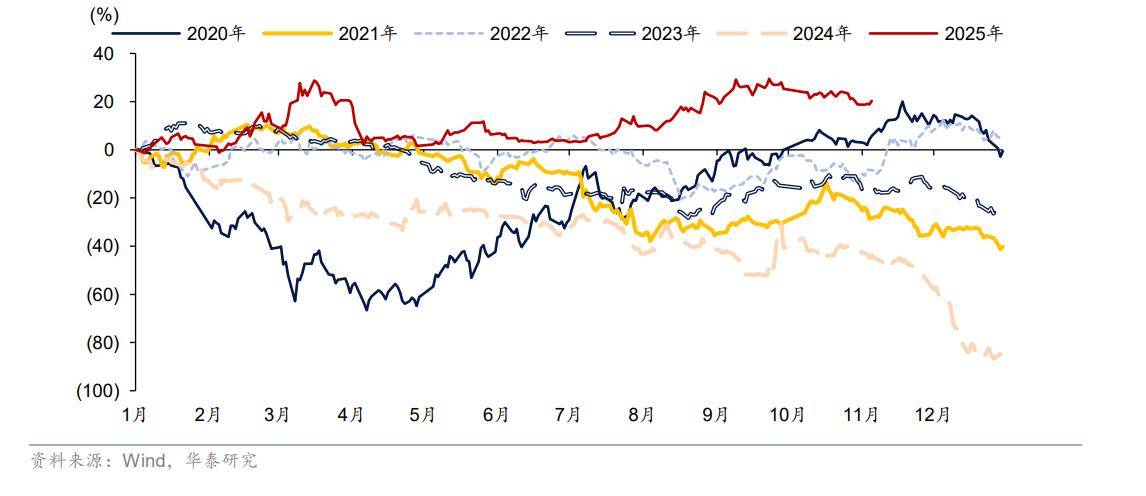
Core Viewpoint - The bond market exhibits seasonal characteristics, with specific trends observed in each quarter, leading to expectations of a favorable year-end market performance [1][9]. Group 1: Seasonal Characteristics of the Bond Market - The bond market typically faces disturbances in the first quarter, followed by a downtrend in yields in the second quarter, a turning point in the third quarter, and a recovery in value after adjustments in the fourth quarter [1]. - Key economic and policy cycles influence these seasonal trends, with the first quarter often showing strong performance, while the second quarter sees a weakening economic momentum [4]. - Important political meetings throughout the year, such as the National People's Congress in March and various Politburo meetings, create fluctuations in market expectations [4]. Group 2: Monetary Policy and Market Dynamics - Central bank actions, such as interest rate cuts and reserve requirement ratio reductions, are concentrated around year-end and significant meetings, contributing to a generally favorable liquidity environment at these times [5]. - The seasonal supply of bonds also plays a role, with government bond issuance typically peaking in the second and third quarters, affecting market supply and demand dynamics [6]. Group 3: Institutional Behavior and Market Sentiment - Institutional investors, including banks and insurance companies, tend to follow a strategy of early allocation for early returns, influenced by the beginning of the year and the need to meet performance benchmarks [7]. - The performance of the stock market, particularly A-shares, also exhibits seasonal patterns that indirectly impact bond market behavior [8]. Group 4: Year-End Market Outlook - As of November, the monetary market maintains a loose stance, with signs of recovery in the bond market as liquidity pressures ease and fiscal spending stabilizes [9]. - Institutions anticipate a year-end bond market characterized by stable funding, declining interest rates, and improved market sentiment, supported by a weak macroeconomic backdrop and a clear monetary easing policy [10]. Group 5: Investment Opportunities - For investors seeking stable, long-term returns, pure bond funds are highlighted as a suitable choice, particularly in the context of increasing market volatility in equities [12]. - The performance of specific funds, such as the Huatai-PineBridge Fengsui 60-Day Pure Bond Fund, demonstrates resilience against market fluctuations, achieving a cumulative return of 2.68% since inception, significantly outperforming its benchmark [14].

市场波动中,债基为何受到追捧?
Sou Hu Cai Jing· 2025-11-24 12:29
Core Viewpoint - The article emphasizes the importance of stable pure bond funds, particularly the Huatai-PineBridge Fengsui 60-Day Pure Bond Fund, as a reliable investment option in uncertain market conditions, providing a solid wealth defense for investors [2][4][15]. Group 1: Market Context - Current market conditions show a return of funds and indecision among investors, leading to a dual test of emotions and wealth [2]. - The CSI 300 Index and Hang Seng Index have experienced consecutive years of negative returns from September 30, 2020, to September 30, 2025, highlighting the volatility in the stock market [4]. - In contrast, the Wind Long-Term Pure Bond Fund Index has achieved positive annual returns over the past 20 years, indicating the stability of pure bond funds [4]. Group 2: Investment Characteristics - Pure bond funds primarily invest in government bonds, financial bonds, and high-grade credit bonds, with returns mainly derived from stable bond coupon income and potential capital gains [4]. - The expectation of a loosening monetary policy may lead to rising bond prices, enhancing the net asset value and market value of bond funds [4]. - Compared to traditional bank deposits and money market funds, bond funds offer better liquidity and potential for higher returns while maintaining controlled risk [6]. Group 3: Fund Performance - The Wind Long-Term Pure Bond Fund Index reported a near 1-year return of 2.33% from November 7, 2024, to November 6, 2025, while the Huatai-PineBridge Fengsui 60-Day Pure Bond Fund A Class achieved a cumulative return of 2.68% since its inception, significantly outperforming its benchmark [6][10]. - The fund manager, Li Wei, has 12 years of experience in the securities industry and employs a combination of macro judgment and quantitative analysis to manage the fund effectively [7][9]. Group 4: Investment Strategies - The fund employs four core investment strategies: flexible duration management, moderate leverage to enhance returns, a conservative credit strategy focusing on high-rated bonds, and detailed daily management to optimize returns [10]. - The fund has a minimum holding period of 60 days, which helps prevent irrational trading behaviors among investors and encourages a long-term investment mindset [10][13]. Group 5: Company Strategy - Huatai-PineBridge aims to become one of China's leading fixed-income asset management companies, focusing on product development, team building, research, and risk management [13][15]. - The company emphasizes a systematic approach to enhance its comprehensive strength in the fixed-income sector, ensuring sustainable business development [13].