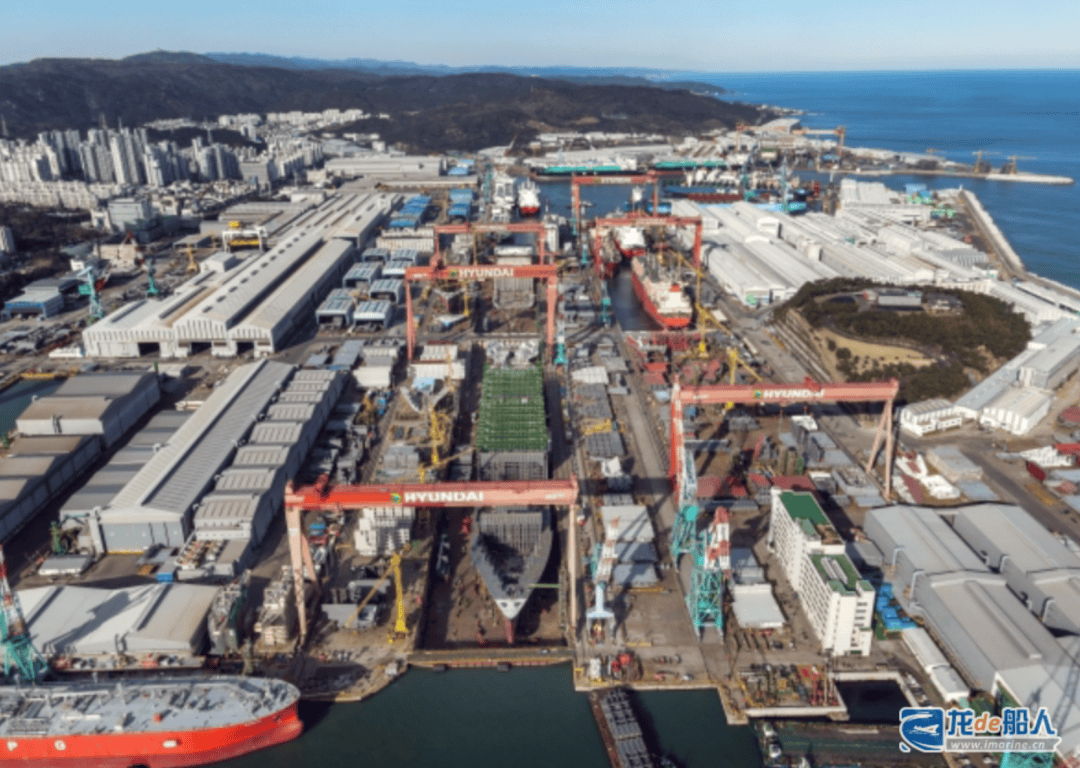
浮式液化天然气生产装置(FLNG)

Search documents
韩国三大船企业绩“爆发”
Sou Hu Cai Jing· 2025-11-20 20:14
Core Viewpoint - The three major South Korean shipbuilding companies—HD Hyundai, Samsung Heavy Industries, and Hanwha Ocean—achieved a combined operating profit of 1.5 trillion KRW (approximately 73.8 billion RMB) in the third quarter, tripling the profit from the same period last year. However, from the fourth quarter onwards, managing "non-manufacturing risks" such as exchange rate fluctuations and policy changes will be crucial for performance [1][4]. Group 1: Financial Performance - HD Korea Shipbuilding & Marine Engineering reported third-quarter operating revenue of 7.5815 trillion KRW (approximately 377.5 billion RMB), a year-on-year increase of 21.4%, with operating profit reaching 1.0538 trillion KRW (approximately 51.85 billion RMB), up 164.5% [3]. - The cumulative operating profits for the first three quarters of the year for HD Korea Shipbuilding & Marine Engineering, Hanwha Ocean, and Samsung Heavy Industries were 2.8666 trillion KRW, 920.1 billion KRW, and 566 billion KRW, respectively, totaling 4.3527 trillion KRW [4]. - The combined operating profit of the three companies for the third quarter reached 1.5817 trillion KRW, significantly improving from 543.9 billion KRW in the same period last year [3][4]. Group 2: Factors Driving Growth - The positive performance in the shipbuilding industry is attributed to multiple factors, including an increase in orders for high-value LNG carriers, growing demand for eco-friendly vessels, accelerated replacement of aging ships, and supply chain disruptions caused by geopolitical tensions [5]. - The shift to a strategy focused on high-value ship types has significantly enhanced profitability, as low-priced orders from previous years have mostly been fulfilled [6]. - The share of LNG carriers in the order book for the three companies is approximately 70% for HD Korea Shipbuilding, 60% for Hanwha Ocean, and Samsung Heavy Industries has also secured orders for six LNG carriers [7]. Group 3: Future Outlook and Risks - The demand for LNG carriers is expected to rise significantly, with projections indicating a new demand of 57 million tons starting in 2029, potentially leading to over 100 new orders [9]. - Despite the record performance, the companies emphasized the importance of risk management due to increasing impacts from external variables such as exchange rate fluctuations and policy changes [9][10]. - The global new ship order volume has decreased by 47% year-on-year, indicating a shrinking investment willingness among shipowners, which could affect future orders [10].

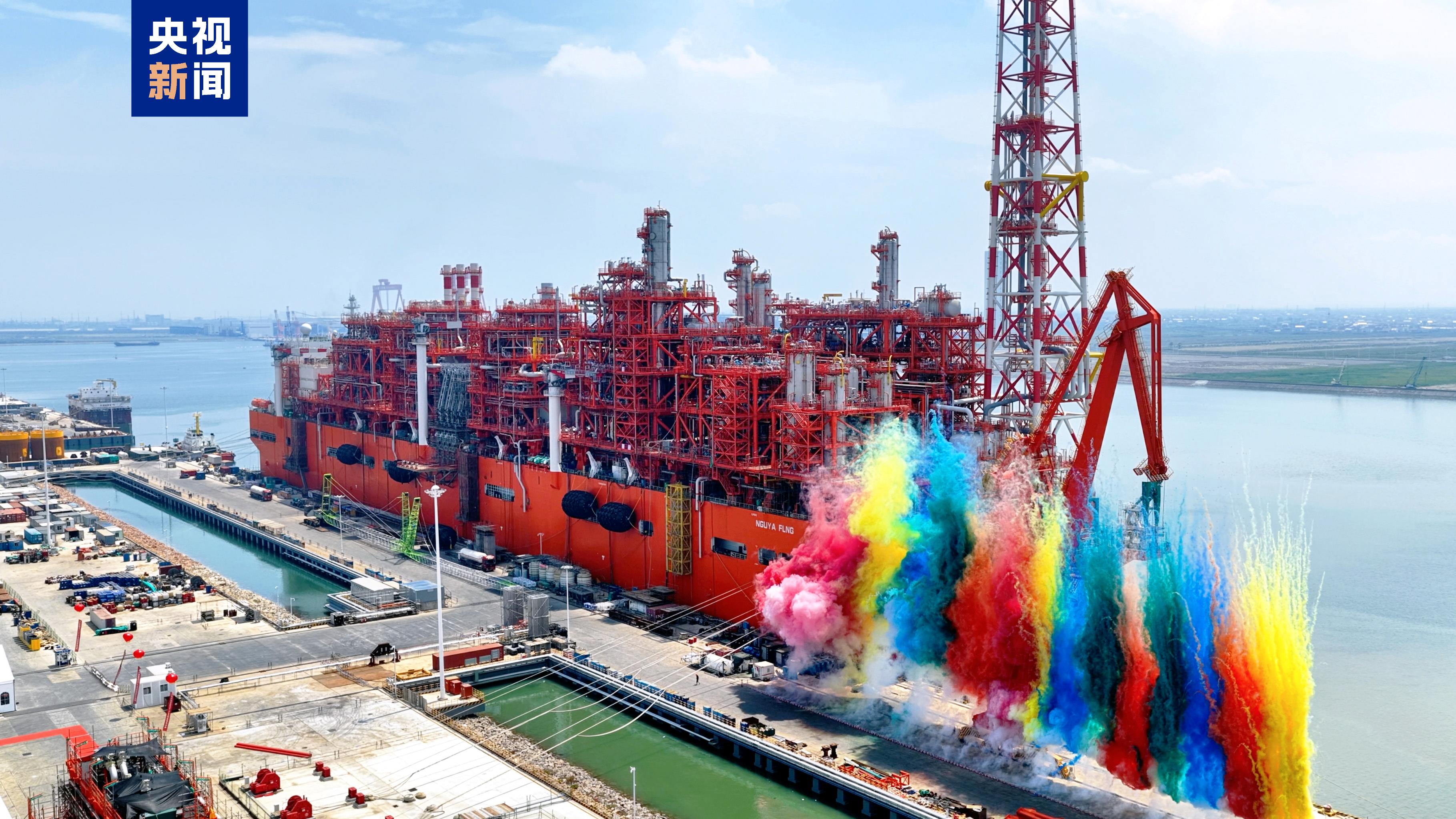
“皇冠上的新明珠” 我国自主建造新型FLNG正式启航
Yang Shi Xin Wen· 2025-08-26 22:04
Core Insights - The launch of China's self-built floating liquefied natural gas production unit "NGUYA FLNG" marks a significant breakthrough in global FLNG technology and engineering management [1][3] - This event highlights the construction capabilities of Chinese enterprises in the high-end energy equipment sector [1] Group 1: Technical Specifications - The "NGUYA FLNG" measures 376 meters in length, 60 meters in width, and 35 meters in depth [3] - It has a liquefied natural gas (LNG) storage capacity of 180,000 cubic meters and an annual LNG production capacity of 2.4 million tons [3] Group 2: Industry Significance - Floating liquefied natural gas production units (FLNG) are complex, high-cost, and high-value products in marine engineering, often referred to as the "crown jewel" of the shipbuilding and offshore engineering industry [3]