海水虹鳟鱼

Search documents
“十五五”开好局 起好步丨上百万尾鱼苗跨越山海 “蓝色粮仓”加速丰盈
Xin Lang Cai Jing· 2026-01-10 12:18
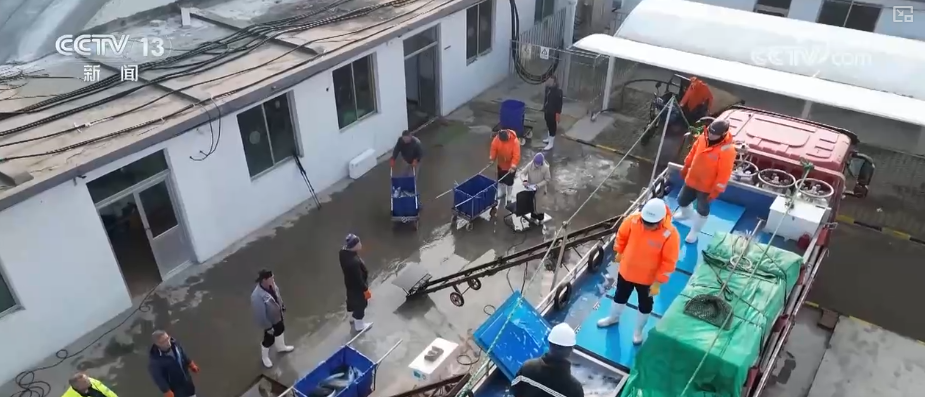
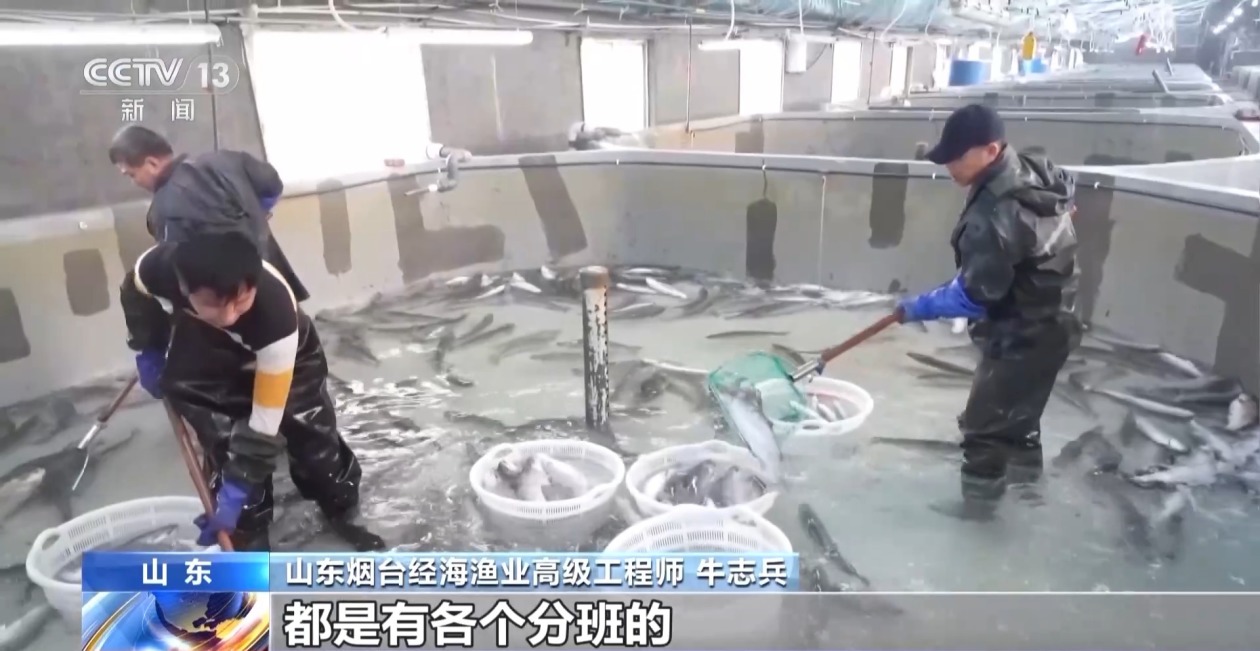
Core Viewpoint - The article highlights the innovative deep-sea aquaculture practices being implemented in Yantai, Shandong, focusing on the transfer of fish fry to deep-sea cages to enhance marine resource utilization and improve fish farming efficiency [1][15]. Group 1: Fish Fry Transfer and Adaptation - Over one million fish fry are being transferred from land to deep-sea cages, marking a significant step in expanding the "blue granary" [1]. - The first batch of nearly 20,000 fish fry is being carefully transported to ensure high survival rates during the transfer process [3][7]. - Special preparations have been made to help the new species of rainbow trout adapt to the deep-sea environment, including the use of saline water in the acclimatization process [5][9]. Group 2: Smart Aquaculture Practices - The deep-sea aquaculture platform has a water capacity of 90,000 cubic meters, capable of supporting 300,000 fish, with only four staff members required due to the implementation of smart aquaculture systems [10][12]. - The platform utilizes intelligent systems to monitor fish behavior and optimize feeding strategies, enhancing operational efficiency [12][17]. Group 3: Future Plans and Goals - Starting in 2026, the company aims to enter large-scale aquaculture and sales, targeting a sales volume of 2,000 tons of rainbow trout [14]. - The initiative includes plans to introduce 1 million fish fry into the deep-sea cages by the end of January, marking the beginning of large-scale deep-sea aquaculture [15]. - The local government is supporting the development of the "blue granary" with policies aimed at increasing production from over 2,000 tons to 10,000 tons within three years [19].

“智慧化养殖+保姆式服务”加速丰盈“蓝色粮仓” 海洋经济释放强劲动能
Yang Shi Wang· 2026-01-10 06:49
Core Viewpoint - The article highlights the innovative deep-sea aquaculture practices being implemented at the Yellow Sea and Bohai Sea junction, focusing on the transfer of fish fry to deep-sea cages to enhance marine resource utilization and increase production capacity [1][18]. Group 1: Fish Fry Transfer and Preparation - Over one million fish fry are being transferred from land to deep sea, marking a significant step in enhancing the "blue granary" [1]. - The first batch of nearly 20,000 fish fry is being carefully transported to deep-sea cages, with meticulous counting and coordination to ensure their health and survival during transit [3]. - Special preparations have been made to help the new species of rainbow trout adapt to the deep-sea environment, including the use of saline water in the acclimatization process [4][12]. Group 2: Deep-Sea Aquaculture Innovations - The deep-sea aquaculture platform has a water capacity of 90,000 cubic meters, capable of supporting 300,000 fish, with only four staff members required for maintenance and operations due to advanced technology [12][14]. - An intelligent deep-sea cage system is in place to guide feeding based on real-time monitoring of fish behavior, optimizing resource use [16]. - The establishment of eight intelligent deep-sea aquaculture platforms is part of a broader strategy to scale up production, with plans to introduce over one million fish fry by the end of January 2026 [18]. Group 3: Industry Growth and Policy Support - The company aims to achieve a sales volume of 2,000 tons of rainbow trout in 2026, leveraging the new aquaculture model to tap into deep-sea resources [19]. - The local government has introduced policies to support deep-sea aquaculture, with a target to increase production from over 2,000 tons to 10,000 tons within three years [24]. - The development of deep-sea aquaculture is expected to accelerate the growth of related industries, including breeding, processing, and storage, contributing to a modern fishery industry base [21].