智能化养殖

Search documents
牧原股份(002714):年报点评:养殖降本保持优秀,屠宰贡献利润增量
Tai Ping Yang Zheng Quan· 2026-03-30 11:15
Investment Rating - The report maintains a "Buy" rating for Muyuan Foods (牧原股份) with a target price based on the last closing price of 45.20 [1][12][13] Core Insights - The company has achieved a significant reduction in breeding costs while the slaughtering segment has contributed to profit growth [1][4] - In 2025, the company reported a revenue of 144.14 billion yuan, a year-on-year increase of 4.49%, but a net profit attributable to shareholders of 15.49 billion yuan, a decrease of 13.39% [3][7] - The company sold 77.98 million pigs in 2025, a 19.1% increase year-on-year, with revenue from pig sales reaching 140.21 billion yuan, up 2.92% [3][4] - The average selling price of live pigs in 2025 was 14.44 yuan/kg, down 9.2% year-on-year, impacting revenue growth despite increased sales volume [3][4] - The company has enhanced its operational efficiency through smart and information technology, leading to improved survival rates and reduced costs in pig farming [3][4] Summary by Sections Breeding Business - The total cost of pig farming in 2025 was approximately 12 yuan/kg, a reduction of about 2 yuan/kg from the previous year [3] - The gross margin for the breeding business was 17.29%, down 3.64 percentage points from the previous year [3] Slaughtering Business - The slaughtering segment achieved profitability for the first time, processing 28.66 million pigs, a 129% increase year-on-year, and generating revenue of 45.23 billion yuan, up 86.32% [4] - The gross margin for the slaughtering business improved to 2.67%, an increase of 1.65 percentage points [4] Financial Health - The company's debt-to-asset ratio improved to 54.15%, a decrease of 4.53 percentage points from the beginning of the year, indicating enhanced debt repayment capacity [5] - The total dividend payout in 2025 was 8.085 billion yuan, with a dividend yield exceeding 3% [5] - The company is exploring international markets, including a partnership in Vietnam, while also enhancing its shareholder structure through a listing on the Hong Kong Stock Exchange [5] Profit Forecast - The forecast for net profit attributable to shareholders for 2026 and 2027 is 4.29 billion yuan and 15.78 billion yuan, respectively, with corresponding EPS of 0.74 yuan and 2.73 yuan [5][7]

牧原股份(02714) - 海外监管公告 - 2025年年度报告摘要及全文、2025牧原绿色低碳行动...
2026-03-29 10:07
香港交易及結算所有限公司及香港聯合交易所有限公司對本公告的內容概不負責,對其 準確性或完整性亦不發表任何聲明,並明確表示概不就因本公告全部或任何部分內容而 產生或因依賴該等內容而引致的任何損失承擔任何責任。 MUYUAN FOODS CO., LTD. 牧 原 食 品 股 份 有 限 公 司 (於中華人民共和國註冊成立的股份有限公司) (股份代號: 2714) 海外監管公告 本公告乃根據香港聯合交易所有限公司證券上市規則第13.10B條刊發。 根據中華人民共和國的有關法例規定,牧原食品股份有限公司(「本公司」)在巨 潮資訊網(www.cninfo.com.cn)刊發了以下公告。茲載列如下,僅供參閱。 承董事會命 牧原食品股份有限公司 董事長兼總裁 秦英林先生 中國,河南省南陽市,2026年3月27日 於本公告日期,本公司董事會成員包括:(i)執行董事秦英林先生、曹治年先生及楊瑞華 女士;(ii)非執行董事錢瑛女士及蘇黨林先生;及(iii)獨立非執行董事周明笙先生、閻磊 先生及馮根福先生。 牧原食品股份有限公司 2025 年年度报告摘要 | 证券代码:002714 | 证券简称:牧原股份 | 公告编号:2026 ...
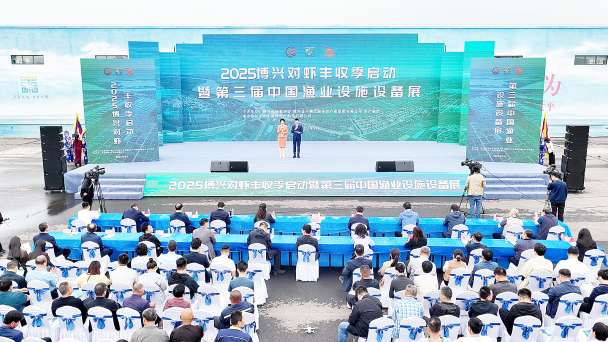
博兴乔庄镇20多年间深耕南美白对虾养殖,培育超十亿级富民产业
Qi Lu Wan Bao· 2026-02-25 02:41
Core Insights - The transformation of saline-alkali land in Qiaozhuang Town, Binzhou City, into a thriving aquaculture hub for South American white shrimp has significantly increased local incomes, with some households earning millions annually, contributing to a billion-level industry cluster [1][21] - Qiaozhuang Town has been recognized as the "First Town for Ecological Breeding of South American White Shrimp in China" and has maintained a unique position as a rural town with a specialty industry exceeding 1 billion yuan for three consecutive years [1][21] Historical Context - In the 1980s, Qiaozhuang faced severe agricultural challenges due to saline-alkali soil, leading to minimal income from traditional farming [4] - The initial shift from crop farming to aquaculture began with the introduction of tilapia, which was more profitable than traditional crops, but faced market challenges due to oversupply [7][8] Development of Aquaculture - The decision to switch to breeding South American white shrimp was based on market demand and high prices, leading to a successful initial harvest that encouraged more farmers to participate [10][18] - By 2013, Qiaozhuang had become the leading town for South American white shrimp in Shandong Province, with numerous villages achieving annual revenues exceeding 5 million yuan [10][21] Technological Advancements - The introduction of scientific breeding techniques and ecological management practices helped address issues of shrimp mortality and improved overall production efficiency [12][13] - The implementation of the "5G + Smart Fishery" initiative has further modernized shrimp farming, allowing for year-round production and enhanced market competitiveness [20] Economic Impact - By the end of 2025, Qiaozhuang is projected to have over 12,000 shrimp ponds, with more than 3,200 farming households, producing an annual output of 30 million kilograms and generating a total output value of 1.3 billion yuan [21][22] - The local government has invested significantly in modern fishery industrial parks, fostering a collaborative model between state-owned enterprises, village collectives, and individual farmers [22]

从养鸡场到鹦鹉园,他转型瞄准宠物经济
Qi Lu Wan Bao· 2026-02-12 16:10
Core Viewpoint - The article highlights the growing trend of parrot breeding as a lucrative alternative to traditional poultry farming, driven by technological advancements and changing consumer preferences, particularly among younger demographics. Group 1: Parrot Breeding Transition - The transition from traditional chicken farming to parrot breeding is exemplified by a farmer who started with 200 parrots and now manages over 800, focusing on species like monk and sun parrots, which have unique characteristics and market demand [1][2] - Parrot breeding is more complex than chicken farming, requiring higher technical skills and meticulous care, as health and appearance are critical for market success [2][3] Group 2: Technological Integration - Technology plays a crucial role in parrot breeding, with smart devices used to control temperature, humidity, and air circulation, creating an optimal environment for the birds [3] - The shift to parrot breeding has resulted in a cleaner and more pleasant working environment compared to traditional chicken farming, with higher profit margins associated with parrot sales [3][4] Group 3: Market Trends - The pet economy is experiencing significant growth, with younger consumers showing increased interest in parrots as pets, moving beyond traditional choices like cats and dogs [3][4] - The perception of bird ownership is changing, with younger generations willing to invest in parrot breeding, indicating a promising market outlook for this niche [4]
天邦食品发布2025年业绩预告,预计亏损超11亿
Jing Ji Guan Cha Wang· 2026-02-12 05:20
Core Viewpoint - Tianbang Food (002124) expects a net profit loss of 1.11 billion to 1.31 billion yuan for the year 2025, primarily due to a decline in the average selling price of commodity pigs, high interest and vacancy costs, and significant asset impairment provisions [1][2] Group 1: Financial Performance - The average selling price of commodity pigs is expected to decline by 17.85% to 14.65 yuan/kg [2] - Interest and vacancy costs are estimated to total approximately 675 million yuan [2] - Asset impairment provisions are projected to be between 761 million and 938 million yuan [2] - The company's operating cash flow is anticipated to be between 850 million and 950 million yuan [2] Group 2: Recent Events - On February 6, 2026, Tianbang Food reported sales data for January 2026, with 682,000 commodity pigs sold and sales revenue of 674 million yuan, reflecting a month-on-month increase of 10.01% and a year-on-year increase of 9.93% [3] - The average selling price for January was 13.60 yuan/kg, showing a month-on-month increase of 14.54% but a year-on-year decrease of 17.83% [3] - The stock price of Tianbang Food experienced slight fluctuations, with a closing price of 2.50 yuan and a cumulative decline of 0.40% over the past seven trading days [3] Group 3: Institutional Insights - During a recent investor meeting, institutional investors discussed industry cycle strategies, cost optimization, and full industry chain collaboration with Tianbang Food's management [4] - The company emphasized its focus on intelligent farming and the prepared food business to address challenges, although specific financial targets were not disclosed [4]

揭秘“吃鸡自由”背后的科技力量
Zhong Guo Jing Ji Wang· 2026-02-05 08:01
Group 1 - Chicken is the second largest meat consumption product in China, with broiler chickens accounting for over 70% of chicken production [1] - By 2025, China is expected to consume over 9 billion broiler chickens, with domestic varieties holding over 30% market share and exports to countries like Tajikistan, Pakistan, and Tanzania [1] - The average weight of broiler chickens at market age exceeds 3 kg, requiring only 1.5 to 1.6 kg of feed for each additional kg of meat [1] Group 2 - Fujian Shengze Biotechnology Development Co., Ltd. is the birthplace of the "Shengze 901" breed, which has expanded its market share by promoting 47 million parent stock sets across 15 provinces [2] - "Shengze 901" has also begun exporting to Belt and Road countries, with nearly 10,000 parent stock sets and over 270,000 eggs exported, marking a significant entry into African and Central Asian markets [2] - The national breeding joint task force has accelerated research and development in molecular breeding and disease prevention technologies during the 14th Five-Year Plan period [2] Group 3 - The "Guangming 2" breed, supported by the Chinese Academy of Agricultural Sciences, has made progress in genomic breeding technology, reducing breeding cycles by 2 to 3 generations [3] - The "Wode 188" breed has also emerged in the market, with over 633,000 parent stock sets promoted and a complete disease purification barrier established [3] Group 4 - The broiler chicken industry has entered an intelligent farming phase, utilizing IoT, cloud computing, big data, and blockchain for management [4] - The "Shengze 901" breed employs advanced computational capabilities for genomic selection analysis and bioinformatics, maximizing social, economic, and ecological benefits [4]
【干货】宠物芯片产业链全景梳理及区域热力地图
Qian Zhan Wang· 2026-01-29 03:08
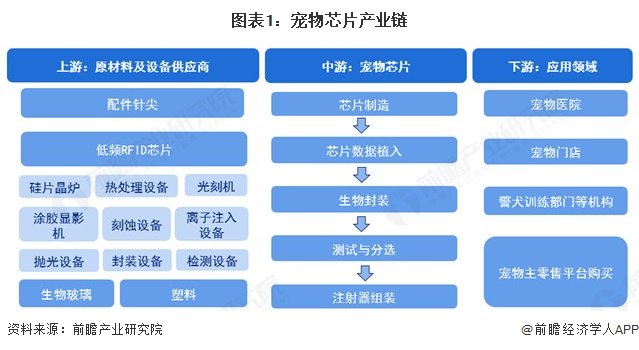
Core Insights - The pet chip industry is experiencing significant growth, driven by advancements in technology and increasing demand for pet identification and health management solutions [2][3][6]. Industry Overview - The pet chip industry chain consists of three main segments: upstream (core materials and high-end equipment suppliers), midstream (chip manufacturing and packaging), and downstream (application and sales terminals) [2][3]. - Upstream suppliers include companies providing low-frequency RFID chips, bioglass, and essential manufacturing equipment [3]. - Midstream focuses on chip manufacturing, data implantation, biological packaging, testing, and assembly, ensuring compliance with medical standards [2][3]. - Downstream applications are primarily through pet hospitals, pet stores, and online platforms, completing the product usage cycle [2][3]. Regional Distribution - The majority of pet chip industry enterprises are concentrated in Guangdong Province, followed by Jiangsu and Shandong [6][8]. - Guangdong is recognized as a pioneer in pet chip promotion, having implemented mandatory chip implantation regulations since 2021 [6]. Key Companies and Developments - Notable companies in the industry include CAINA, CANNA MEDICAL, and 威高股份, which provide essential materials and components [3][8]. - Recent developments include advancements in RFID technology for livestock management, which can be adapted for pet chip applications [13]. - Companies like 瑞值创物联科技 are innovating with implantable animal electronic chips and management systems that integrate RFID technology for comprehensive lifecycle management [13].
专访牧原股份董秘秦军:专注经营管理,不把精力放在研判未来
Nan Fang Du Shi Bao· 2026-01-26 05:43
Core Viewpoint - The article discusses the transformation of the pig farming industry in China, emphasizing the integration of technology and management innovations to enhance efficiency and reduce costs, while also addressing the company's strategic plans for 2026 in response to market dynamics and policy changes. Group 1: Company Development - In 2025, the company achieved a pig output of 77.981 million heads and sales revenue of 132.811 billion yuan, with a breeding cost of 11.3 yuan/kg, leading to a projected net profit of 15.1 to 16.1 billion yuan for 2026, providing a solid foundation for stable operations [2][3] - The average breeding cost decreased by 2 yuan/kg year-on-year, reaching approximately 12 yuan/kg, attributed to continuous technological investments and management innovations [2] Group 2: Strategic Shifts - The company is transitioning from a single focus on commercial pig farming to a dual-driven model that includes commercial piglets, aiming to enhance operational efficiency and provide value to clients while promoting industry specialization and sustainability [3] - The piglet strategy allows clients to lock in prices, reducing risks and improving profitability, while also addressing the challenges faced by small farmers under traditional breeding models [3] Group 3: Technological Innovation - The company plans to increase the coverage and stability of smart equipment across over 1,000 farms, focusing on AI inspection, precise feeding, and environmental control to reduce reliance on personnel [4] - Ongoing research in feed formulation and alternative protein sources aims to further lower breeding costs, with a focus on optimizing nutritional needs for different pig breeds [5][6] Group 4: Industry Layout - The company's slaughtering and meat processing business is expanding in three key areas: increasing slaughter capacity, optimizing product offerings, and enhancing operational capabilities through digital management and cost control [7] - A joint venture in the biopharmaceutical sector aims to maximize the value of pigs by producing heparin sodium and other products, with plans for further collaboration in the industry [8] Group 5: International Expansion - The company is advancing its international strategy, particularly in Vietnam, with plans to replicate domestic technological and management successes in high-growth overseas markets [9] - Initial international efforts will focus on light-asset models, with future considerations for establishing production capacities and targeted acquisitions [9] Group 6: Industry Trends - The company acknowledges the dual challenges of strong policy regulation and weak market cycles in 2026, focusing on operational management and innovation to maintain stability and efficiency [10][12] - Strategies to stabilize raw material supply chains and mitigate cost fluctuations include partnerships with grain suppliers and flexible procurement approaches [12][13] Group 7: Ecosystem Development - The company aims to empower upstream and downstream partners through an "industry interconnection" model, enhancing collaboration and sharing resources to drive mutual growth [14]
中国经济年报丨大黄鱼“升值记”!看福建海洋产业“焕新”前行→
Sou Hu Cai Jing· 2026-01-21 10:05
Core Insights - The article highlights the transformation of the large yellow croaker industry through intelligent aquaculture, which has significantly increased the market value of this fish [1]. Group 1: Industry Transformation - The "Qian Dong No. 1" deep-sea aquaculture platform in Fujian's Lianjiang area is revolutionizing the breeding and quality of large yellow croaker, providing a near-wild living environment for fish [3]. - The platform's design allows for a natural and efficient growth environment, enhancing the fish's quality and transforming it into a high-end culinary ingredient [5]. Group 2: Technological Advancements - These platforms integrate wind-resistant design, intelligent feeding, and water quality monitoring, representing a shift from traditional fishing methods to a technology-driven industrial future [7]. - The use of automated inspection boats, underwater robots, and sonar systems exemplifies the modernization of marine fisheries, making operations more controllable and efficient [7]. Group 3: Market Impact - The high-quality large yellow croaker from Lianjiang is increasingly available in local markets, often paired with local specialties, leading to popular dishes [9]. - By 2025, Lianjiang is projected to produce approximately 16,600 tons of fresh large yellow croaker, with the entire industry chain generating over 1 billion yuan in value [9].

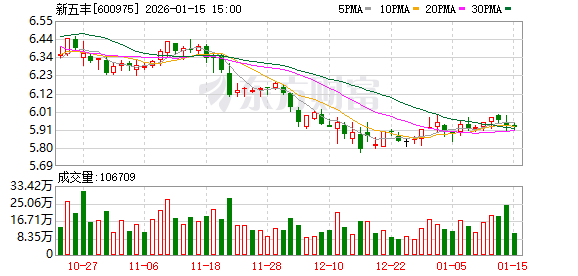
新五丰:经营管理团队重视与包括牧原等在内的行业优秀企业进行交流
Zheng Quan Ri Bao· 2026-01-15 12:42
Core Viewpoint - New Five Feng emphasizes its commitment to independent breeding and strategic partnerships with industry leaders to enhance breeding efficiency and maintain competitiveness in the pig farming sector [2] Group 1: Company Strategy - New Five Feng is a professional pig farming enterprise that focuses on independent breeding while collaborating with companies like Coplix and PIC to align with industry standards [2] - The management team prioritizes communication with leading companies in the industry, such as Muyuan, through forums and field research to learn advanced practices in smart farming, precise feeding, and cost management [2] Group 2: Future Outlook - The company plans to continue its strategy of independent innovation and open learning to enhance its core competitiveness and drive high-quality development [2]