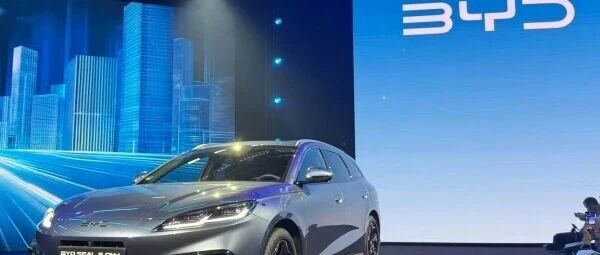
海豹6

Search documents
比亚迪日本研究(下)补贴未增,全方位参与
日经中文网· 2026-02-28 07:36
Core Viewpoint - BYD faces significant challenges in the Japanese market due to government subsidies favoring competitors like Toyota and Tesla, which receive over 1 million yen, while BYD's subsidy is only 350,000 yen, impacting its competitiveness in the plug-in hybrid vehicle (PHV) segment [2][5]. Group 1: Subsidy and Market Conditions - The Japanese government has increased the subsidy cap for electric vehicles (EVs) by 400,000 yen, benefiting companies like Toyota and Tesla, while BYD's subsidy remains unchanged at 350,000 yen [3][5]. - The competitive landscape is tough for BYD, as the actual purchase price of Toyota's bZ4X is lower compared to BYD's ATTO 3, creating a significant disadvantage [6]. Group 2: Product Strategy - BYD plans to focus on the PHV segment, which combines electric motors and internal combustion engines, making it more suitable for long-distance travel in Japan, where hybrid vehicles are more accepted than pure EVs [7]. - The company will start delivering the SUV "Sea Lion 6" in January and plans to launch the travel car "Sea Leopard 6" and compact SUV "ATTO 2" by 2026, aiming to cover a wide range of models in the Japanese market [7][9]. Group 3: Market Expansion and Future Outlook - Sales in China are expected to slow down, with vehicle purchase tax exemptions for EVs being halved by 2026, pushing BYD to focus on profitability in overseas markets [10]. - BYD is strengthening its presence in Southeast Asia, with projected sales growth of 60% in Thailand by 2025, reaching approximately 43,000 vehicles [10]. - Establishing credibility in Japan is crucial for BYD, as success in this market could enhance its reputation and sales in Southeast Asia, which is seen as a gateway for global automotive sales [10].