插电式混合动力车(PHV)

Search documents
比亚迪日本研究(下)补贴未增,全方位参与
日经中文网· 2026-02-28 07:36
Core Viewpoint - BYD faces significant challenges in the Japanese market due to government subsidies favoring competitors like Toyota and Tesla, which receive over 1 million yen, while BYD's subsidy is only 350,000 yen, impacting its competitiveness in the plug-in hybrid vehicle (PHV) segment [2][5]. Group 1: Subsidy and Market Conditions - The Japanese government has increased the subsidy cap for electric vehicles (EVs) by 400,000 yen, benefiting companies like Toyota and Tesla, while BYD's subsidy remains unchanged at 350,000 yen [3][5]. - The competitive landscape is tough for BYD, as the actual purchase price of Toyota's bZ4X is lower compared to BYD's ATTO 3, creating a significant disadvantage [6]. Group 2: Product Strategy - BYD plans to focus on the PHV segment, which combines electric motors and internal combustion engines, making it more suitable for long-distance travel in Japan, where hybrid vehicles are more accepted than pure EVs [7]. - The company will start delivering the SUV "Sea Lion 6" in January and plans to launch the travel car "Sea Leopard 6" and compact SUV "ATTO 2" by 2026, aiming to cover a wide range of models in the Japanese market [7][9]. Group 3: Market Expansion and Future Outlook - Sales in China are expected to slow down, with vehicle purchase tax exemptions for EVs being halved by 2026, pushing BYD to focus on profitability in overseas markets [10]. - BYD is strengthening its presence in Southeast Asia, with projected sales growth of 60% in Thailand by 2025, reaching approximately 43,000 vehicles [10]. - Establishing credibility in Japan is crucial for BYD, as success in this market could enhance its reputation and sales in Southeast Asia, which is seen as a gateway for global automotive sales [10].


比亚迪日本投放海狮6,插混SUV最低价
日经中文网· 2025-12-02 08:00
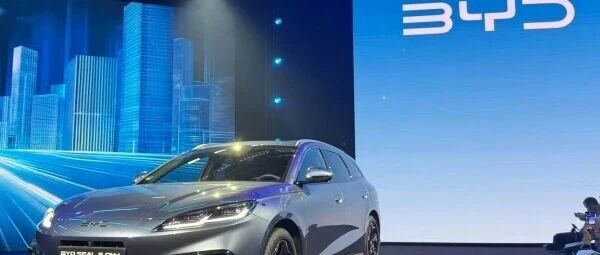
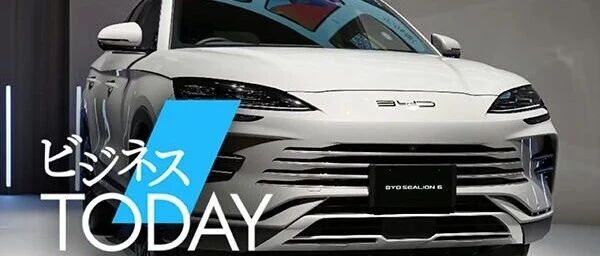
Core Viewpoint - BYD is leading the global market in plug-in hybrid vehicles (PHV), with its model "Sea Lion 6" being the top-selling SUV in this category, priced competitively in Japan [2][9]. Group 1: Market Performance - In the global PHV sales from January to October, BYD accounted for approximately 30% of the total 6.25 million units sold [9]. - The "Sea Lion 6" is priced at 3,982,000 yen (approximately 180,900 RMB), making it one of the most affordable options in the Japanese market for plug-in hybrid SUVs [5][6]. - BYD's sales in Japan increased by 64% year-on-year, reaching 3,298 units, although it still trails behind competitors like Mercedes-Benz and Tesla [12]. Group 2: Product Features - The "Sea Lion 6" offers a fuel efficiency of 22.4 km/L, outperforming competitors such as Mitsubishi's "Outlander PHEV" and Toyota's "Harrier" [5][12]. - The vehicle has been designed with enhanced passenger comfort in mind, incorporating feedback from Japanese consumers regarding rear seat comfort and vibration [10]. - It includes advanced driver assistance features, such as three millimeter-wave radars and a high-resolution camera for obstacle detection [12]. Group 3: Strategic Positioning - BYD aims to activate the electric vehicle market globally through its competitive EV and PHV offerings, marking its first entry into the PHV segment in Japan [4][9]. - The company is increasing its export ratio of PHVs to Europe, where these vehicles are not subject to additional tariffs imposed on Chinese EVs [13]. - Success in the Japanese market, particularly with PHVs, is crucial for BYD to enhance its presence and compete effectively against established brands [13].
1~6月丰田在华新车销量增6.8%,本田日产苦战
日经中文网· 2025-07-09 02:44
Group 1 - Toyota's new car sales in China from January to June increased by 6.8% year-on-year, reaching 837,700 units, marking the first time in four years that it surpassed the previous year's performance in the same period [1] - The combined new car sales of Honda and Nissan in China decreased by double digits, with a total decline of 7% to 1.43 million units compared to the same period [1] - Japanese automakers are lagging in the EV and PHV sectors in China, with sales down 40% compared to the recent peak in 2021 [1] Group 2 - FAW Toyota, a joint venture with China's First Automobile Group, saw a sales increase of 16.3% to 377,800 units, while GAC Toyota, in partnership with Guangzhou Automobile Group, grew by 0.6% to 364,200 units [2] - Lexus, the luxury brand, experienced a 1.3% increase in sales, reaching 85,600 units [2] - Honda's new car sales in China from January to June fell by 24.2% to 315,152 units, with the Accord and CR-V remaining strong but other models underperforming [2] Group 3 - Nissan's sales decreased by 17.6% to 279,546 units, with both Honda and Nissan losing market share to Chinese manufacturers [3] - In June alone, Toyota's sales grew by 3.7% to 157,700 units, while Honda's sales dropped by 15.2% to 58,468 units, and Nissan's sales increased by 1.9% to 53,843 units [3]


丰田新款RAV4升级PHV发动机,总续航增至1350km
日经中文网· 2025-06-19 07:38
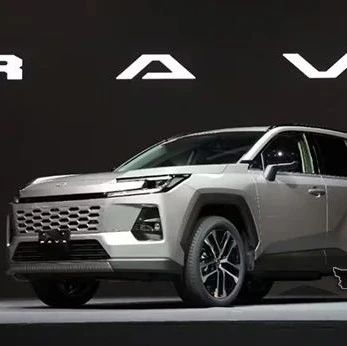
Core Viewpoint - Toyota's new RAV4 has upgraded its plug-in hybrid vehicle (PHV) engine, achieving a pure electric mode range of 150 kilometers, which is 1.5 times the previous range, while also increasing the total range to over 1350 kilometers, indicating a strong push to compete with leading Chinese companies like BYD in the PHV sector [1][3]. Group 1: Product Features and Innovations - The new RAV4 features the latest sixth-generation hybrid system, which includes a 30% increase in battery capacity, enhancing its overall efficiency [3]. - The total range of the vehicle, when fully charged and fueled, exceeds 1350 kilometers, comparable to the distance from Tokyo to Kagoshima [3]. - The new hybrid system utilizes high-efficiency silicon carbide (SiC) semiconductors, improving output power by over 12% by reducing electrical losses [3]. - The e-Axle's overall height has been reduced by 15% and weight by 18%, improving interior space and seat comfort [4]. Group 2: Market Position and Competition - Despite the advancements, Toyota's global sales of PHVs remain low, accounting for only 2% of total sales, with projected sales of 153,829 units in 2024 [6]. - In contrast, BYD sold 2.5 million vehicles in 2024, surpassing pure electric vehicle sales, highlighting the competitive landscape in the PHV market [6]. - Toyota's strategy includes focusing solely on the latest hybrid engine for the new RAV4, eliminating gasoline models, which aligns with stricter emissions regulations globally [6][5].
主力车企在中国加快布局插电混动车
日经中文网· 2025-04-25 04:27
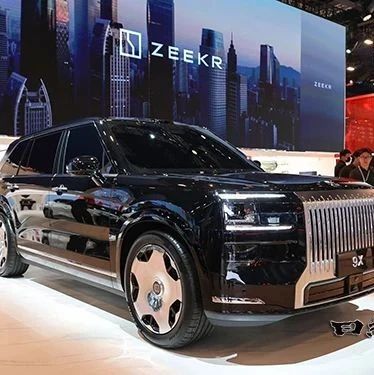
Core Viewpoint - The Chinese market for Plug-in Hybrid Vehicles (PHV) is experiencing rapid growth, outpacing Electric Vehicles (EV) due to longer driving ranges and increasing competition among major automotive manufacturers [1][4][7]. Group 1: Market Trends - Major automotive manufacturers in China are accelerating their deployment of PHVs, with brands like Zeekr and Xpeng set to launch their first PHV models [1][4]. - The demand for PHVs is driven by their ability to offer longer ranges compared to EVs, making them increasingly popular among consumers [1][6]. - In 2024, PHV sales in China are projected to reach 5.14 million units, an 83% increase from 2023, while EV sales are expected to grow by only 15% to 7.71 million units [7]. Group 2: Product Launches - Zeekr's PHV model "9X" is scheduled for launch between July and September, featuring a range of 380 kilometers in electric mode and extended range with the engine [4][5]. - BYD plans to introduce two new PHV models in its "Ocean" series, priced around 100,000 yuan [5]. - Guangzhou Automobile Group is focusing on battery performance for its upcoming PHV, utilizing CATL's latest "Xiaoyao Battery" which can charge from 30% to 80% in 15 minutes [5]. Group 3: Competitive Landscape - Volkswagen has unveiled its first EREV concept car "ID.ERA," which can travel 300 kilometers in electric mode and up to 1000 kilometers with the engine [6]. - Mazda is set to launch its new SUV "EZ-60" by 2025, expanding its offerings in the PHV segment [6]. - Xpeng is also entering the EREV market, with plans to launch a model by late 2025 to meet the growing demand for PHVs [6]. Group 4: Export Opportunities - PHV exports from China are expected to triple in 2024, reaching 290,000 units, while EV exports are projected to decline by 10% [7]. - As the Chinese automotive market becomes saturated, domestic EV manufacturers are increasingly targeting European and Southeast Asian markets, positioning themselves as strong competitors against established brands [7].