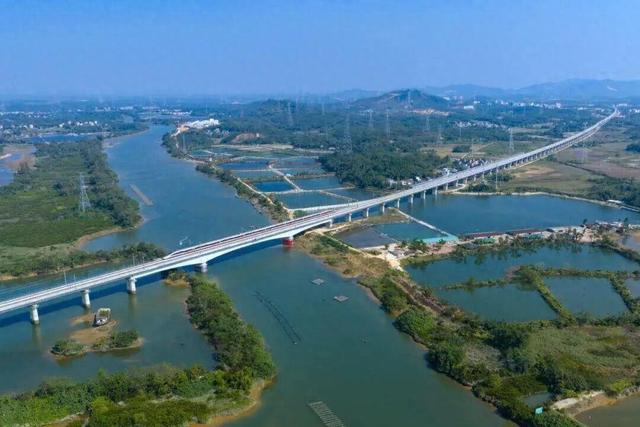
湛江北动车运用所

Search documents
22日通车!广州⇌湛江高铁只要1.5小时
Yang Shi Xin Wen· 2025-12-21 18:17
Core Viewpoint - The opening of the Guangzhou-Zhanjiang high-speed railway significantly reduces travel time between the North Bay city cluster and the Guangdong-Hong Kong-Macao Greater Bay Area, supporting high-quality regional economic and social development [1][16]. Group 1: High-Speed Railway Details - The Guangzhou-Zhanjiang high-speed railway has a total length of 401 kilometers and a design speed of 350 kilometers per hour, connecting multiple cities including Guangzhou, Foshan, Zhaoqing, Yunfu, Yangjiang, Maoming, and Zhanjiang [3][6]. - The railway allows for travel from Guangzhou Baiyun Station to Zhanjiang North Station in as little as 1 hour and 32 minutes, with the fastest travel time from Guangzhou to Zhanjiang reduced by 61 minutes compared to previous routes [6][16]. - Initial operations will feature up to 64 high-speed trains daily, with flexible pricing mechanisms implemented to cater to diverse passenger needs [6][7]. Group 2: Supporting Infrastructure - The Zhanjiang North Train Operation Depot, a key supporting project for the high-speed railway, is located approximately 2.3 kilometers from Zhanjiang North Station and is essential for the maintenance and operation of high-speed trains [9][14]. - The depot includes facilities for inspecting and maintaining up to 12 standard high-speed trains simultaneously, with a maximum capacity for daily maintenance of 36 trains [9][14]. - The operational readiness of the depot enhances the overall efficiency of the railway network and supports the integration of the West Guangdong region into the Greater Bay Area's transportation framework [14][16].

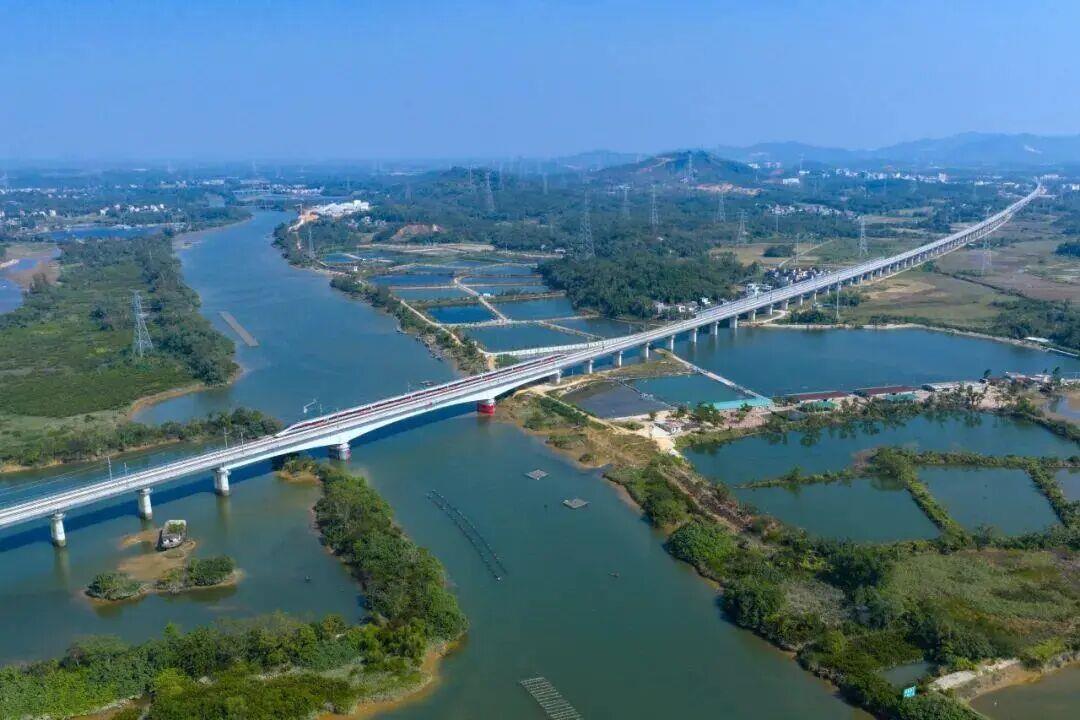
今日通车!广州⇌湛江高铁只要1.5小时
Xin Lang Cai Jing· 2025-12-21 17:39
Core Viewpoint - The Guangzhou-Zhanjiang High-Speed Railway has officially opened, significantly reducing travel time between the North Bay Urban Agglomeration and the Guangdong-Hong Kong-Macao Greater Bay Area, thus supporting high-quality regional economic and social development [1][11]. Group 1: Railway Details - The Guangzhou-Zhanjiang High-Speed Railway connects multiple cities including Guangzhou, Foshan, Zhaoqing, Yunfu, Yangjiang, Maoming, and Zhanjiang, with a total length of 401 kilometers and a design speed of 350 kilometers per hour [3][5]. - The railway has opened seven stations: Xinxing South, Yangchun East, Yangjiang North, Mata, Maoming South, Wuchuan, and Zhanjiang North, with connections to Guangzhou Baiyun Station and Zhanjiang North Station [3][5]. Group 2: Operational Capacity - The railway will operate at a maximum speed of 350 kilometers per hour, with up to 64 train services running daily. Travel times from Guangzhou Baiyun to Zhanjiang North and Maoming South are reduced to 1 hour and 32 minutes and 1 hour and 20 minutes, respectively, cutting the previous travel time by 61 minutes [5][11]. - A flexible and differentiated pricing mechanism will be implemented to meet various passenger needs, with specific ticket prices available through the railway's official platform [5]. Group 3: Supporting Infrastructure - The Zhanjiang North Train Operation Depot, a key supporting project for the high-speed railway, is located approximately 2.3 kilometers from Zhanjiang North Station and is crucial for the maintenance and operation of high-speed trains [9][11]. - The depot includes facilities for inspecting and maintaining up to 12 standard high-speed trains simultaneously, with a maximum capacity for daily maintenance of 36 trains [9]. Group 4: Regional Impact - The opening of the Guangzhou-Zhanjiang High-Speed Railway will greatly shorten the travel distance between the North Bay Urban Agglomeration and the Guangdong-Hong Kong-Macao Greater Bay Area, facilitating travel for local residents and enhancing regional connectivity [11]. - This development is expected to improve the regional railway network layout, promote the economic and social development of the area, and contribute to building a vibrant and internationally competitive first-class bay area and world-class urban agglomeration [11].