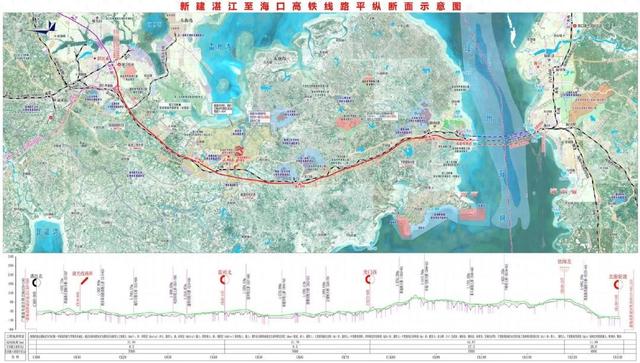
广湛高铁

Search documents
广州春节假期客流增长近一成,交通枢纽赋能经济提质
Nan Fang Du Shi Bao· 2026-02-25 01:08
Group 1 - The Guangdong provincial government emphasizes high-quality development and economic vitality through efficient transportation during the Spring Festival [1][2] - During the Spring Festival holiday, approximately 35.01 million people traveled to and from Guangzhou, with a daily average of 3.89 million, marking a 9.5% year-on-year increase [1] - The transportation sector in Guangzhou has optimized hub connections to support the "Guangdong goods go global" initiative, enhancing the flow of talent, capital, and technology [1][2] Group 2 - The Guangzhou transportation department plans to focus on project implementation and develop a comprehensive transportation plan to strengthen its position as an international hub [2] - The opening of the Guangzhou-Zhanjiang high-speed railway and the new T3 terminal at Baiyun Airport are expected to increase passenger flow and operational pressure during the 2026 Spring Festival [3][5] - The T3 terminal will operate 24-hour shuttle buses to facilitate passenger transfers, enhancing the travel experience [3][4] Group 3 - The railway hub in Guangzhou has improved its service and capacity, with the Guangzhou-Zhanjiang high-speed railway significantly reducing travel time to the Greater Bay Area [5][6] - During peak travel times, the Guangzhou South Station has extended service hours and optimized passenger flow management to ensure efficient operations [6] - The transportation department has implemented a comprehensive plan to ensure smooth traffic flow on highways, with a focus on self-driving travel, which constitutes about 70% of the travel volume [7][8] Group 4 - The integration of transportation and tourism services during the Spring Festival has been emphasized, with initiatives to promote local products and enhance the travel experience [8][10] - The Guangzhou Metro has extended service hours and increased operational capacity to accommodate the surge in passenger numbers during the holiday [9][10] - Public transport services have been adjusted to meet the demands of major events and tourist attractions, improving accessibility for both residents and visitors [11]

广湛高铁春运首秀 广州湛江最快1小时30分直达
2 1 Shi Ji Jing Ji Bao Dao· 2026-02-14 11:44
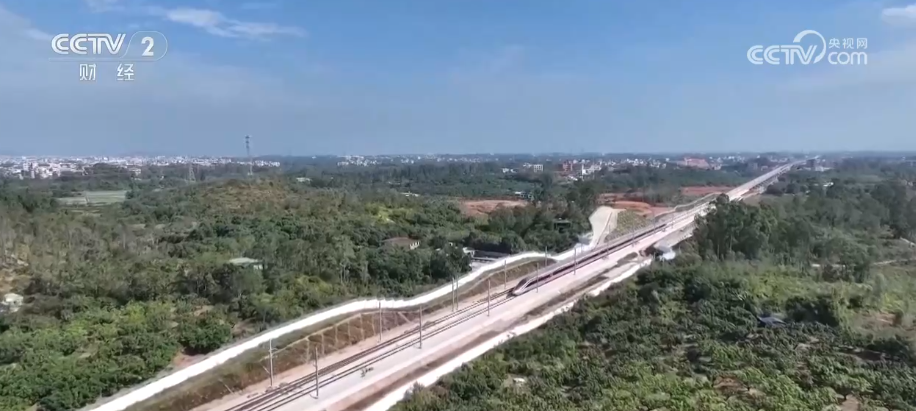
Core Insights - This year marks the first Spring Festival travel season for the Guangzhan High-Speed Railway, which spans a total length of 401 kilometers, significantly enhancing the convenience for residents in western Guangdong to return home and travel [1] Group 1 - The Guangzhan High-Speed Railway facilitates quicker homecoming and travel for the local population in western Guangdong [1] - The railway's operational debut during the Spring Festival indicates its importance in improving regional connectivity [1] - The total length of the railway is 401 kilometers, showcasing a significant infrastructure investment in the region [1]
春运通途透过新线看变化 交通能级提升助推文旅经济新发展
Yang Shi Wang· 2026-02-08 07:01
Core Viewpoint - The introduction of the Guangzhan and Shanshan high-speed rail lines in 2026 will significantly enhance the high-speed rail network in Guangdong, alleviating pressure during the Spring Festival travel peak and providing new travel options for passengers [1][3]. Group 1: High-Speed Rail Network Expansion - The total operational mileage of Guangdong's high-speed rail has surpassed 3,400 kilometers, ranking first in the country [3]. - The new lines create a direct fast track from Zhanjiang North Station to Shantou Station, significantly reducing travel time compared to previous routes [3]. - Travel time from Guangzhou to Zhanjiang has been reduced to approximately 1.5 hours, with some segments seeing over a 50% reduction in travel time [3][5]. Group 2: Impact on Travel and Tourism - The enhanced transportation capabilities are expected to boost local tourism, with a projected 45% increase in tourist traffic to the western Guangdong region [5]. - The Spring Festival travel volume is anticipated to reach 78.55 million passengers, a year-on-year increase of 4.8%, with an average of 1.964 million passengers daily [5]. - The number of train services planned for the pre-festival period will increase by 202.5 pairs compared to the previous year [5]. Group 3: Operational Enhancements - The operational capacity towards Zhanjiang, Shantou, and Meizhou has been significantly increased, with additional high-speed trains being introduced [7]. - High-speed trains on the Jingguang and Guiguang lines will operate at speeds of 350 km/h and 300 km/h, respectively, further shortening travel times [7].

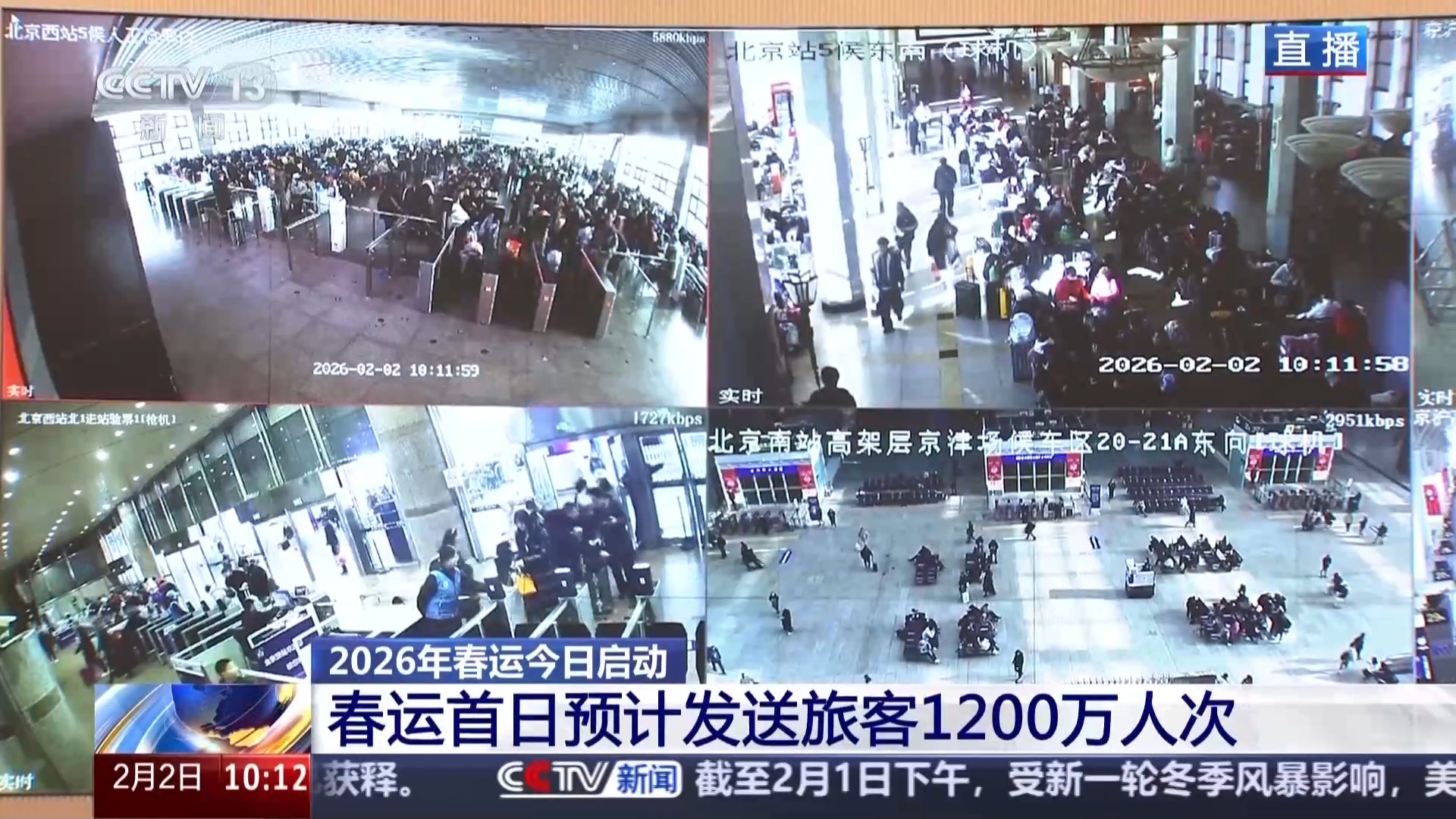
视频丨春运首日铁路预计发送旅客1200万人次
Yang Shi Xin Wen Ke Hu Duan· 2026-02-02 06:05
Core Viewpoint - The Spring Festival travel season is expected to see a significant increase in passenger volume, with the national railway projected to send 540 million passengers from January 7 to March 13, 2026, marking a 5% year-on-year increase in daily average passenger volume to 13.48 million [2][3]. Group 1: Passenger Volume and Trends - On the first day of the Spring Festival travel period, an estimated 12 million passengers are expected to be sent by the national railway [2]. - The travel patterns are characterized by a focus on labor, family visits before the festival, and a mix of student, tourism, and labor flows during and after the festival [3]. Group 2: Capacity Enhancement Measures - To effectively increase overall capacity, new high-speed rail lines and trains will be utilized, including the Guangzhan, Baoyin, and Xiyan high-speed rail lines, along with newly deployed Fuxing bullet trains [5]. - The railway will add over 1,500 direct passenger trains daily across different railway bureaus and will operate over 1,000 night high-speed trains on major routes [7]. Group 3: Targeted Capacity Deployment - In areas with concentrated passenger flow, such as Beijing, Guangzhou, and Shanghai, additional capacity will be deployed to meet travel demands, including temporary trains and expanded services [8]. - Major railway hubs will maintain a reserve of trains and personnel to respond to sudden increases in passenger flow [8]. Group 4: Cultural and Tourism Initiatives - Various railway departments are organizing activities and special trains to enhance the travel experience, such as cultural performances and themed trains that promote local products and tourism [9][11]. - Initiatives like the "Tianjin Travel Time Train" aim to integrate cultural displays and immersive performances into the travel experience, supporting local tourism and economic growth [11].
中国铁路春运启动 预计发送旅客5.4亿人次
Zhong Guo Xin Wen Wang· 2026-02-02 05:26
Core Insights - The 2026 Spring Festival travel season in China is expected to see 540 million passenger trips, averaging 13.48 million trips per day, representing a year-on-year increase of 5.0% [1] Group 1: Passenger Volume and Growth - The national railway is projected to send 540 million passengers during the Spring Festival travel period from February 2 to March 13, 2026, over 40 days [1] - Daily passenger volume is expected to average 13.48 million, with a year-on-year growth of 5.0% [1] Group 2: Operational Enhancements - The railway department will utilize new lines and stations, including the Guangzhan, Baoyin, and Xiyan high-speed railways, along with newly deployed Fuxing bullet trains to enhance capacity [1] - An additional 1,500 direct passenger trains can be added daily across railway bureau groups, with over 1,000 night high-speed trains scheduled on major routes [1] - The overall passenger train capacity is expected to increase by 5.3% compared to the previous year [1] Group 3: Targeted Capacity Adjustments - The railway department will implement temporary passenger trains, double-heading of high-speed trains, and expansion of conventional passenger trains to meet travel demand in key areas [2] - The number of direct train stations from Hong Kong to the mainland has increased to 110, facilitating cross-border travel during the Spring Festival [2]
广湛高铁接入广州站 粤西粤东打通350公里时速高铁通道
Xin Lang Cai Jing· 2026-01-30 06:15
Core Viewpoint - The opening of the Guangzhan High-Speed Railway enhances the connectivity between Zhanjiang North and Guangzhou, significantly improving the transportation network in Guangdong and facilitating regional economic development [1][2] Group 1: Infrastructure Development - The Guangzhan High-Speed Railway connects Zhanjiang North to Shantou, reducing travel time to 4 hours and 27 minutes, thus improving the efficiency of the Guangdong high-speed rail network [1] - The railway serves multiple cities and counties along the route, including Maoming, Yangjiang, Yangchun, Xinxing, Shanwei, and Chao'nan, enhancing accessibility for residents [1] Group 2: Economic Impact - The new railway line supports the integration of the Guangdong-Hong Kong-Macao Greater Bay Area with the eastern and western regions of Guangdong, promoting coordinated regional development [2] - The increased frequency of trains, with 66 services starting from February 2, will stimulate the flow of people, goods, and capital, thereby invigorating the economy in western Guangdong [1] Group 3: Future Plans - The railway department plans to optimize operations towards Shantou and improve service quality, while also enhancing supporting infrastructure for better connectivity with other high-speed rail lines [2]
新增52列!广深港高铁将成全国开行密度最高的高铁线
Shen Zhen Shang Bao· 2026-01-15 13:59
Core Viewpoint - The new train operation schedule implemented on January 26 significantly enhances the railway transport capacity in the Shenzhen area, with the Guangzhou-Shenzhen-Hong Kong high-speed railway becoming the highest in terms of train frequency and station stops in the country [1][2]. Group 1: Train Operation Enhancements - The new schedule increases the number of passenger trains at Shenzhen North Station to 428.5 pairs, a 36.5 pair increase compared to the previous schedule [1] - Futian Station will see an increase to 97.5 pairs of passenger trains, with a 4 pair increase, and the number of originating and terminating trains will rise to 68 pairs [1] - Shenzhen Station will operate 116 pairs of passenger trains, reflecting a 4.5 pair increase [1] Group 2: High-Speed Rail Developments - The Guangzhou-Shenzhen-Hong Kong high-speed railway will add 52 new trains, bringing the total to 415 trains, making it the highest in terms of operational density and stop frequency in the country [2] - The new schedule includes a high-speed train from Hong Kong West Kowloon Station to Shanghai Hongqiao Station, marking the first direct high-speed connection from provincial capitals in Jiangsu and Anhui to Hong Kong [2] - The cross-border passenger flow between Hong Kong and the mainland is balanced, with 101.71 million passengers transported from January 1 to 12, 2026, and Shenzhen's traffic to Hong Kong accounting for 63% [2] Group 3: Travel Time Reduction - New lines such as the Guangzhan and Yongguang high-speed railways will significantly reduce travel times, with the fastest journey from Shenzhen to Zhanjiang North taking 2 hours and 52 minutes, and to Shantou taking only 1 hour and 39 minutes [3] - The addition of 22.5 pairs of trains on the Hangzhou-Shenzhen line will enhance service frequency at key stations, improving regional connectivity [3] - The upgrade of the T212/1 regular train from Shenzhen East to Shanghai Songjiang to a D-series high-speed train will enhance travel comfort [3]
海南与粤港澳大湾区将实现高铁直达!网友:一整个期待住了
Zhong Guo Ji Jin Bao· 2026-01-02 17:06
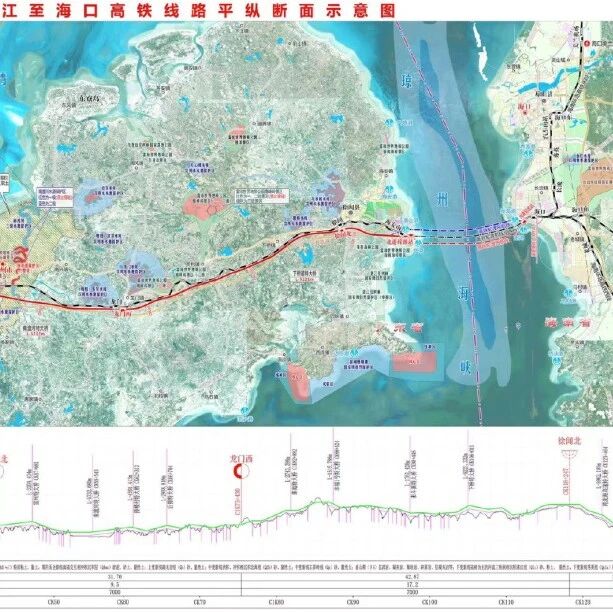
Core Viewpoint - The Zhanhai High-Speed Railway project is progressing, with significant infrastructure investments exceeding 400 billion yuan, aimed at enhancing connectivity between the Guangdong-Hong Kong-Macao Greater Bay Area and Hainan Free Trade Port [1][2]. Group 1: Project Overview - The Zhanhai High-Speed Railway will connect Zhanjiang in Guangdong Province to Haikou in Hainan Province, featuring a 23-kilometer ferry crossing over the Qiongzhou Strait [2]. - The project is part of the national "eight vertical and eight horizontal" high-speed railway network, facilitating rapid transit between key regions in Guangdong and Hainan [2][3]. Group 2: Economic Impact - Upon completion, travel time from Zhanjiang to Xu Wen is expected to decrease from approximately 2 hours to under 30 minutes, while the journey from Zhanjiang to Haikou will be reduced from 3-4 hours to around 2 hours [2]. - The railway aims to create a seamless connection between Hainan's circular island high-speed railway and the national high-speed rail network, promoting resource sharing and industrial collaboration between the two economic zones [2][5]. Group 3: Development Timeline - The project is on track to be completed and operational during the "14th Five-Year Plan" period, with preliminary work progressing steadily [3]. - The Zhanhai High-Speed Railway is expected to significantly enhance the geographical and functional positioning of the Guangdong region, transforming it from a peripheral area to a frontline hub [5].
海南与粤港澳大湾区将实现高铁直达!网友:一整个期待住了
中国基金报· 2026-01-02 16:12
Core Viewpoint - The Zhanhai High-speed Railway project is a significant infrastructure initiative aimed at connecting the Guangdong-Hong Kong-Macao Greater Bay Area with the Hainan Free Trade Port, facilitating efficient transportation and economic integration between these two major national economic zones [4][7]. Group 1: Project Overview - The Zhanhai High-speed Railway will start from Zhanjiang City in Guangdong Province, passing through Leizhou and Xuwen, and will include a ferry crossing of approximately 23 kilometers across the Qiongzhou Strait to Haikou City in Hainan Province [4][5]. - The project is part of the national "Eight Vertical and Eight Horizontal" high-speed railway network, serving as a crucial transportation link between Hainan and the mainland [4][7]. Group 2: Time Efficiency - Once completed, the travel time from Zhanjiang to Xuwen is expected to be reduced from around 2 hours to under 30 minutes, while the journey from Zhanjiang to Haikou is anticipated to decrease from 3-4 hours to under 2 hours, creating an efficient transportation loop across the Qiongzhou Strait [5][9]. Group 3: Strategic Importance - The Zhanhai High-speed Railway will enable seamless connectivity between the Hainan Ring Island High-speed Railway and the national high-speed rail network, fostering resource sharing and industrial collaboration between the Greater Bay Area and the Hainan Free Trade Port [7][10]. - The project aims to transform the geographical role of western Guangdong from a peripheral area to a frontline region, promoting industrial upgrades in manufacturing and modern logistics under the influence of free trade policies [13]. Group 4: Project Timeline - The Zhanhai High-speed Railway is striving to be completed and operational during the "14th Five-Year Plan" period [8][9].
海南与粤港澳大湾区将实现高铁直达!
Xin Lang Cai Jing· 2026-01-02 12:18
Core Viewpoint - The approval of the Zhanhai cross-sea ferry and railway project marks a significant step towards the construction of the Zhanhai high-speed railway, with a total investment exceeding 400 billion yuan [1][3]. Group 1: Project Overview - The Zhanhai cross-sea ferry and railway project is a crucial part of the Zhanhai high-speed railway, connecting Zhanjiang in Guangdong Province to Haikou in Hainan Province via a ferry across the Qiongzhou Strait, covering a distance of approximately 23 kilometers [3][4]. - The project is part of the national "eight vertical and eight horizontal" high-speed railway network, linking key areas in Guangdong and Hainan, and serving as a rapid transit corridor between the Hainan Free Trade Port and the mainland [3][4]. Group 2: Expected Benefits - Once completed, travel time from Zhanjiang to Xuwen is expected to be reduced from around 2 hours to under 30 minutes, and from Zhanjiang to Haikou from 3-4 hours to under 2 hours, creating an efficient transportation loop across the Qiongzhou Strait [3][4]. - The Zhanhai high-speed railway will seamlessly connect the Hainan ring island high-speed railway with the national high-speed railway network, enhancing resource sharing and industrial collaboration between the Guangdong-Hong Kong-Macao Greater Bay Area and the Hainan Free Trade Port [4][6]. Group 3: Strategic Implications - The integration of the Zhanhai high-speed railway with the Guangzhang high-speed railway will transform the geographical function of western Guangdong, shifting its role from a "fringe" to a "frontier" in development [6]. - The project is anticipated to promote the transformation and upgrading of industries such as manufacturing and modern logistics, as well as the development of a golden tourism belt from the Greater Bay Area to the Hainan Free Trade Port [6].