滑雪机

Search documents
争夺万亿级冰雪经济,东北能否再次站上风口赢回底气?
Nan Fang Du Shi Bao· 2025-12-23 05:32
Core Insights - The article highlights the booming ice and snow economy in Harbin and the broader Northeast region of China, with significant investments and developments aimed at capitalizing on this trend [1][4]. Consumption Trends - Harbin Ice and Snow World has seen a surge in consumer spending, with a daily revenue of 23,000 yuan from a creative store within the park [2]. - The overall tourism data for the 2024-2025 ice season indicates that Heilongjiang province is expected to receive over 135 million domestic and international visitors, a year-on-year increase of 18.5%, with total spending reaching 211.72 billion yuan, up 30.7% [2]. Industry Developments - Notable companies like Bosideng are investing in the region, with plans to establish a production base in Harbin, investing 1 billion yuan, and launching a co-branded down jacket series that is projected to generate nearly 200 million yuan in sales in its first year [4][5]. - The ice and snow economy is fostering a diverse range of industries, including equipment manufacturing and technology, with companies reporting significant increases in sales and orders due to the rising popularity of winter sports [5][6]. Regional Impact - Surrounding cities like Daqing and Qiqihar are experiencing a tourism boom, with visitors drawn to their unique cultural offerings and proximity to Harbin, leading to increased visitor numbers and revenue growth [6][7]. - Local governments are adapting to modern tourist demands by enhancing services and creating unique experiences, such as themed cafes and cultural events, to attract visitors [7]. Economic Benefits - The ice and snow economy is generating substantial direct and indirect economic benefits, including job creation and enhanced regional brand value, with experts emphasizing the importance of these effects beyond immediate financial returns [8][9]. - The development of the ice and snow economy is seen as a catalyst for broader economic growth, with potential for investment in related sectors and improvements in local infrastructure [9].
“滑旱雪”潜力分析:非实景化室内体育如何突破家长阻力?
Xin Lang Cai Jing· 2025-05-23 01:30
Core Viewpoint - The article discusses the potential sustainability and market opportunities of indoor skiing, particularly focusing on the "dry snow" skiing machines, and their relationship with urban sports consumption trends in China post-2022 Winter Olympics [2][4]. Group 1: Market Trends and Consumer Insights - The popularity of ice and snow sports has surged in China following the 2022 Winter Olympics, leading to rapid development of indoor ski facilities, especially in southern cities [4]. - Indoor ski facilities are categorized into two types: large enclosed snow parks with snow-making machines and smaller gym-like setups with skiing machines [4]. - The number of indoor ski facilities is projected to increase to 60 by 2024, a 33% rise from 2023 [4]. - The consumer demographic for skiing machines primarily consists of economically capable adults, with 80% of skiing enthusiasts under 39 years old, and over half aged between 25-34 [6][9]. Group 2: Consumer Behavior and Preferences - Skiing machine users are often not beginners but rather individuals looking to maintain their skiing skills, indicating a preference for one-on-one training sessions [5][6]. - The cost of private lessons on skiing machines is comparable to other sports, with prices around 200-300 RMB per half hour, and monthly memberships costing approximately 800 RMB [6]. - The interest in skiing often begins with outdoor experiences, with skiing machines serving as an extension of that interest rather than a primary attraction [8]. Group 3: Family Dynamics and Attitudes - Family dynamics play a significant role in skiing participation, with parents often introducing their children to skiing after developing their own interest [9][10]. - The attitudes of parents towards skiing can vary, with some viewing it as a valuable skill for their children, while others may be indifferent or concerned about safety [10][13]. - The presence of skiing machines in family-oriented venues suggests a potential for broader acceptance, but parental attitudes can hinder widespread adoption among youth [16].


广交会上的“体育热”:中国智造实力“圈粉”采购商
Zhong Guo Xin Wen Wang· 2025-05-05 04:10
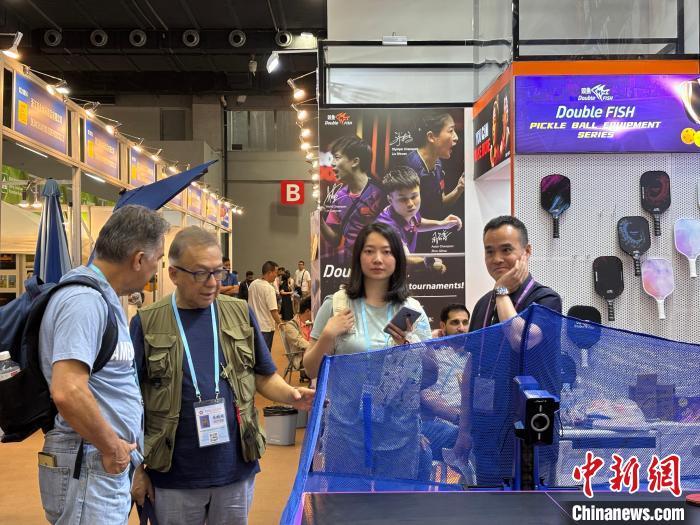
Core Insights - The 137th Canton Fair is currently taking place in Guangzhou, focusing on the theme of "Beautiful Life," showcasing innovative sports and leisure products that attract buyers [1] Group 1: Company Developments - Guangzhou Shuangyu Sports Goods Group introduced a new ping pong serving machine with enhanced features, allowing adjustments to ball frequency, speed, direction, and landing point through a controller [2] - The company aims to expand its market presence in emerging regions such as the Middle East and Africa, while maintaining strong relationships with existing customers in Southeast Asia and Russia [2] - Shanxi Yikang Fitness Equipment Co., Ltd. presented over 60 new products, including treadmills and rowing machines, with a focus on artificial intelligence integration and customized user interfaces [2] Group 2: Market Trends - China's exports to over 160 countries and regions have seen growth, with a 9.6% increase to Belt and Road countries and a 13.4% increase to ASEAN countries [2] - The demand for Chinese fitness equipment in overseas markets is significant, with Zhejiang Tuda Hardware Products Co., Ltd. reporting a 35% year-on-year increase in sales for Q1 [4] - The overall export value of China's sports goods is projected to reach $28.396 billion in 2024, reflecting a year-on-year growth of 6.77% [4]