激光潜艇

Search documents
中国意外发现星链大秘密!从此不怕马斯克支援台湾
Sou Hu Cai Jing· 2025-11-29 02:26
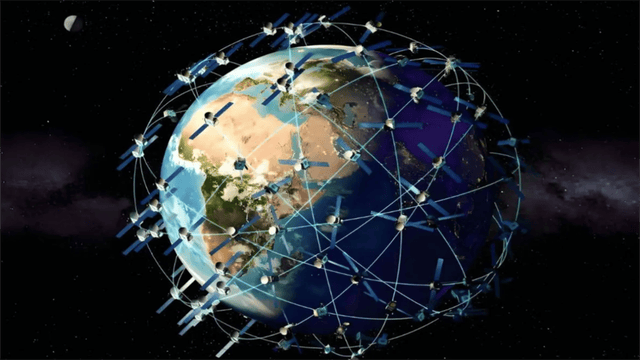
Core Insights - The article discusses the implications of SpaceX's Starlink system in modern warfare, particularly in the context of the Ukraine conflict and potential scenarios in the Taiwan Strait [1][3][5][7] - It highlights China's response strategies to counter the Starlink network, emphasizing the shift in electronic warfare tactics and the importance of spectrum control [3][5][7] Group 1: Starlink System Capabilities - Starlink is not merely a civilian project; it has evolved into a critical military communication tool, enabling seamless communication among drone swarms and providing real-time targeting for remote firepower [1] - The system's resilience is demonstrated by its ability to recover from signal interference through remote software upgrades, indicating a need for advanced countermeasures [1][5] Group 2: China's Countermeasures - Chinese researchers have identified that suppressing Starlink signals over Taiwan would require at least 935 drones equipped with jamming devices, reflecting a new definition of "electromagnetic sovereignty" [3] - The strategy involves a distributed jamming approach using numerous low-power nodes rather than relying on a few high-power jamming stations, enhancing effectiveness in localized areas [3][5] Group 3: Advanced Technologies and Strategies - China is exploring various countermeasures, including high-power microwave weapons capable of generating 10 gigawatts of pulse energy to damage satellite electronics, and laser submarine systems for stealth attacks [5] - The development of China's own low Earth orbit satellite network, known as the "Qianfan" constellation, is underway to counter Starlink's influence [5][7] Group 4: Technological Arms Race - The article suggests that the ongoing developments signal a new electronic arms race, with the U.S. military recognizing the potential of soft-kill methods combined with artificial intelligence to suppress low Earth orbit constellations [7] - The core competition is framed as a battle between distributed intelligence and centralized intelligence, emphasizing the need for adaptive and evolving counter-systems in modern electronic warfare [7]