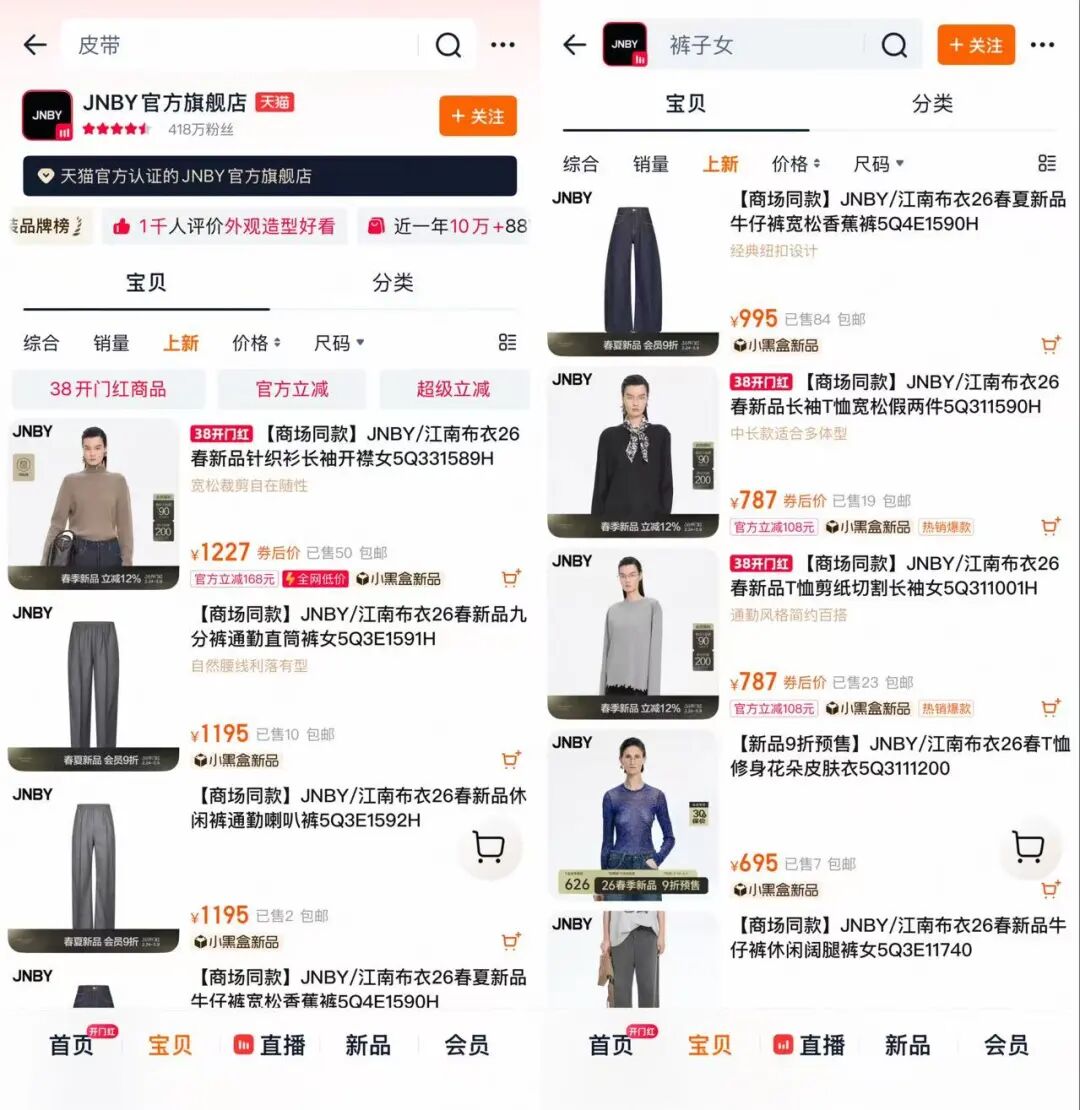
灰色直筒西装裤

Search documents
逛江南布衣,被班味儿呛到
3 6 Ke· 2026-03-09 07:24
Core Viewpoint - Jiangnan Buyi, once known for its artistic designs, is shifting towards a more minimalist and mainstream style, which has led to a notable increase in revenue despite concerns about losing its unique identity [1][4][5]. Financial Performance - For the first half of the 2026 fiscal year, Jiangnan Buyi reported total revenue of 3.376 billion yuan, a year-on-year increase of 7% [1]. - Net profit grew by 11.9%, with a gross margin increase of 1.4 percentage points to 66.5%, and a net profit margin of 20.0% [1]. Brand Strategy Shift - The brand is moving from a focus on individuality to a more simplified and practical design approach, aligning with current consumer trends towards minimalism and practicality [5][7]. - The marketing language has shifted to emphasize comfort, practicality, and timelessness, moving away from the previously artistic expressions [2][4]. Market Position and Competition - The shift towards minimalism has drawn attention in the market, with competitors like Uniqlo and other designer brands also targeting this space, leading to a crowded market [8][11]. - Jiangnan Buyi's transition to a more mainstream style may dilute its unique brand identity, raising concerns about potential homogenization in a competitive landscape [11][20]. Consumer Perception - There is a growing sentiment among consumers that the brand's offerings are becoming repetitive and lack innovation, with comments on social media reflecting dissatisfaction with the similarity of designs [13][15]. - The brand's pricing strategy shows a contradiction, with new products priced high while discounts on older items lead to consumer expectations of waiting for sales [11][20]. Brand Matrix and Growth - The main brand, JNBY, contributed over half of the revenue at 1.86 billion yuan, but its growth rate of 5.7% was the slowest among its segments [16]. - The LESS brand, targeting professional women, saw a revenue increase of 16.3%, indicating a successful alignment with consumer demand for quality and practicality [16][18]. Challenges in Retail Environment - The offline retail environment is facing challenges, with comparable store sales declining by 2.2% and distributor channel growth slowing to 0.3% [19][20]. - The brand must address the need for revitalizing offline channels while ensuring that online growth can complement the overall sales strategy [20].