
片仔癀(肝病用药)

Search documents
片仔癀“中药茅”光环褪色 非经常性收益粉饰下的主业困局
Cai Jing Wang· 2025-10-23 10:57
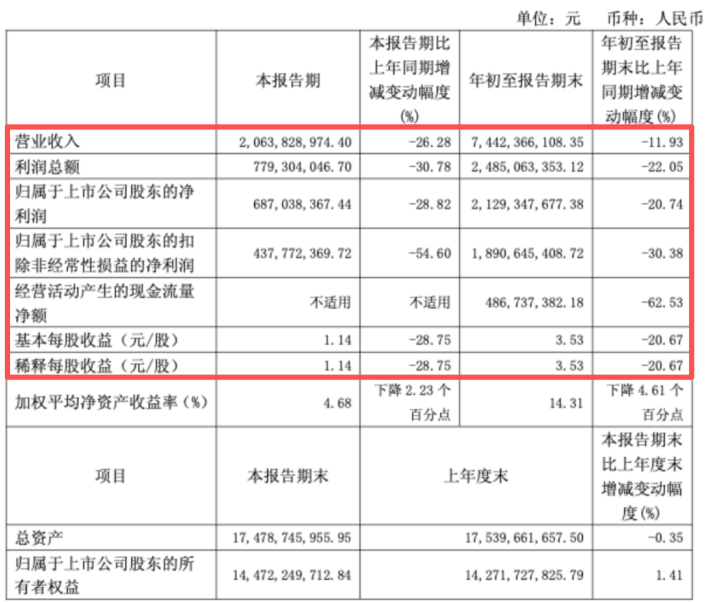
Core Viewpoint - The recent quarterly report of Pianzaihuang revealed significant declines in revenue and profit, raising concerns about the company's core profitability and growth sustainability, leading to a sharp drop in stock price and market capitalization [1][3][9]. Financial Performance - For the first three quarters, the company reported revenue of 7.44 billion yuan, a year-on-year decrease of 11.93%, and a net profit of 2.13 billion yuan, down 20.74% [2]. - In Q3 alone, revenue was 2.06 billion yuan, down 26.28%, and net profit was 687 million yuan, down 28.82% [2][9]. - The non-recurring net profit saw a drastic decline of 54.6%, indicating a severe drop in core profitability [9][10]. Cost and Margin Issues - The pharmaceutical manufacturing segment, which accounts for a significant portion of revenue, experienced a revenue decline of 12.93%, with core product sales (liver disease medication) down 9.41% while costs rose by 20.64% [3][4]. - The gross margin for the core product has narrowed to 61.11%, reflecting increased cost pressures [3]. - The company has faced challenges from rising raw material costs and changes in healthcare policies, impacting profit margins [3][4]. Market Dynamics - There is evidence of price erosion in the market, with unofficial sales prices for Pianzaihuang products dropping significantly below official prices, indicating challenges in market price control [4][6]. - The company's contract liabilities have decreased, suggesting reduced enthusiasm from distributors, while inventory levels have surged by 24.02% [6][7]. Strategic Challenges - The company has struggled to diversify its revenue streams, with significant reliance on a single core product, which has led to a lack of growth in other business segments [8][9]. - The long-term pricing strategy of raising product prices has begun to show negative consequences, impacting sales and market perception [3][8]. Research and Development - Pianzaihuang is advancing its R&D efforts, with ongoing clinical trials for new drugs, but these initiatives are unlikely to have a significant impact on the current year's financial performance [12][13]. - The company has increased its R&D expenditure by 24.42% year-on-year, reflecting a commitment to innovation despite financial pressures [13].


片仔癀“中药茅”光环褪色:渠道失守、扣非腰斩 非经常性收益粉饰下的主业困局
Hua Xia Shi Bao· 2025-10-23 00:00
Core Viewpoint - The recent quarterly report of Pianzaihuang reveals significant declines in revenue and profit, raising concerns about the company's core profitability and growth sustainability, leading to a sharp drop in stock price and market capitalization [2][3][12]. Financial Performance - For the third quarter, Pianzaihuang reported revenue of 20.64 billion yuan, a year-on-year decrease of 26.28%, and a net profit attributable to shareholders of 6.87 billion yuan, down 28.82% [3][4][12]. - The company has experienced three consecutive quarters of negative revenue growth, marking the first time in nearly 20 years that both revenue and net profit have declined in the first three quarters [3][4]. - The non-recurring net profit saw a drastic decline of 54.6%, indicating a severe deterioration in core profitability [12]. Cost and Margin Issues - The decline in revenue is attributed to reduced sales in the pharmaceutical manufacturing sector and a drop in gross margin, with key raw material costs remaining high [5][9]. - The gross margin for the core product, a liver disease medication, has significantly narrowed due to rising costs, with revenue from this product down 9.41% while costs increased by 20.64% [4][5]. Market Dynamics - There is a notable shift in the pricing structure, with unofficial channel prices dropping nearly 30% below official prices during promotional events, indicating challenges in market price control [6][8]. - The company's contract liabilities have decreased significantly, reflecting reduced prepayments from distributors, suggesting a decline in their purchasing enthusiasm [8]. Strategic Challenges - Pianzaihuang's reliance on a single core product for revenue generation poses risks, as other business segments, including cosmetics and pharmaceutical distribution, have not shown significant growth [10][12]. - The company is facing pressure to balance cost control and pricing strategies while rebuilding distributor confidence and developing a competitive second growth curve [10][12]. Investment and R&D - The company reported a substantial increase in investment income, which contributed positively to its financial results, but this reliance on non-operating income raises concerns about the sustainability of its earnings [13][12]. - Pianzaihuang is advancing its R&D efforts, with ongoing clinical trials for new drugs, although the financial impact of these initiatives is expected to be minimal in the short term [15].
片仔癀“中药茅”光环褪色:渠道失守、扣非腰斩,非经常性收益粉饰下的主业困局
Hua Xia Shi Bao· 2025-10-22 09:41
Core Viewpoint - The recent quarterly report of Pianzaihuang reveals significant declines in revenue and net profit, raising concerns about the company's core profitability and growth sustainability [2][3][10]. Financial Performance - For the first three quarters, Pianzaihuang reported revenue of 7.44 billion yuan, a year-on-year decrease of 11.93%, and a net profit of 2.13 billion yuan, down 20.74% [2][4]. - In Q3 alone, the company’s revenue was 2.06 billion yuan, a decline of 26.28%, and net profit was 687 million yuan, down 28.82% [3][10]. - The non-recurring net profit saw a drastic drop of 54.6%, indicating a severe deterioration in core profitability [10]. Cost and Margin Issues - The company's core pharmaceutical manufacturing segment, which accounts for a significant portion of revenue, experienced a revenue decline of 12.93%, with a notable increase in costs [5][9]. - The gross margin for the core product, a liver disease medication, fell to 61.11% due to rising costs, which increased by 20.64% [5][9]. - The overall cash flow from operating activities decreased by 62.53%, indicating financial strain [8]. Market Dynamics - Pianzaihuang's pricing strategy has faced challenges, with unofficial channel prices dropping nearly 30% below official prices during promotional events [6][8]. - The company’s contract liabilities decreased significantly, reflecting reduced enthusiasm from distributors [8]. Product and Business Segment Performance - The pharmaceutical manufacturing sector's revenue dropped by 12.93%, while the cosmetics segment saw a 23.82% decline [9]. - The heart and brain medication segment's revenue plummeted by 65.20%, highlighting the company's heavy reliance on a single core product [9]. Investment and R&D Developments - Pianzaihuang reported a substantial increase in investment income, which rose by 819.32% in Q3, contributing positively to overall performance [11]. - The company is advancing its R&D efforts, with a new traditional Chinese medicine entering phase III clinical trials, although this will not significantly impact the current financial year [13][14].

片仔癀前三季营收净利20年首双降 市值4年缩水近1800亿恐难回巅峰
Chang Jiang Shang Bao· 2025-10-19 23:34
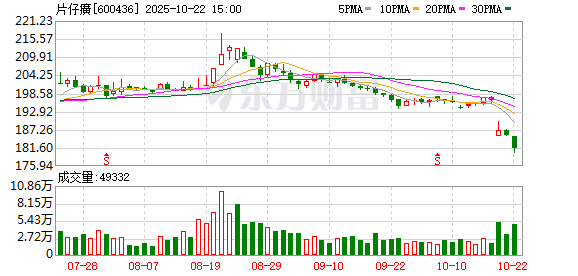
Core Insights - The company "Pian Zai Huang" (片仔癀) has reported a decline in both revenue and net profit for the first three quarters of 2025, marking the first such occurrence since 2006 [2][6][5] - The total revenue for the period was approximately 7.44 billion yuan, a year-on-year decrease of about 12%, while the net profit attributable to shareholders was around 2.13 billion yuan, down approximately 20% [2][5] - The decline in revenue and profit is attributed to decreases across all three main business segments: pharmaceutical manufacturing, pharmaceutical distribution, and cosmetics [7][8] Revenue and Profit Analysis - The pharmaceutical manufacturing segment, which accounts for over 55% of total revenue, saw a revenue decline of over 10% and a gross margin drop of 7.51 percentage points [7][8] - The revenue from the pharmaceutical manufacturing business was 4.02 billion yuan, while the pharmaceutical distribution and cosmetics segments reported revenues of 2.89 billion yuan and 400 million yuan, respectively, with declines of 12.93%, 8.45%, and 23.82% year-on-year [7][8] - The net profit for the first three quarters was 2.13 billion yuan, with a significant drop in the non-recurring net profit, which fell by 30.38% to 1.89 billion yuan [5][6] Cash Flow and Inventory Concerns - The company's operating cash flow has significantly decreased, with a net cash flow of 487 million yuan, down 62.53% from the previous year [4][10] - Inventory levels have increased to 6.16 billion yuan, a rise of 34.91% year-on-year, indicating potential issues with product sales [10] Market Performance - Since July 2021, the company's stock price has dropped approximately 60%, resulting in a market capitalization loss of nearly 180 billion yuan [4][15] - The stock price has seen a decline from a peak of 491.88 yuan per share to 196.34 yuan, reflecting a significant downturn in market confidence [15] Strategic Developments - The company has been actively seeking new growth avenues through investments in health-related subsidiaries and establishing funds with various partners [10][11] - Despite these efforts, the cosmetics business has not yet proven to be a viable second growth driver, as indicated by the revenue performance in the first three quarters of 2025 [13]
“药茅”片仔癀十年增长神话终结 多元化战略步履维艰
Xin Lang Zheng Quan· 2025-09-05 06:01
Core Viewpoint - The financial performance of the company, Pizhou Huang, has shown a significant decline in the first half of 2025, marking the end of a decade-long growth period, with both revenue and net profit experiencing their first half-year drop since the company's listing [2][5]. Financial Performance - In the first half of 2025, the company reported a revenue of 5.379 billion yuan, a year-on-year decrease of 4.81% [2][5]. - The net profit attributable to shareholders was 1.442 billion yuan, down 16.22% year-on-year [2][5]. - The net profit after deducting non-recurring items was 1.453 billion yuan, reflecting a 17.04% decline compared to the previous year [2][5]. - The net cash flow from operating activities was 376 million yuan, a slight decrease of 1.56% year-on-year [2][5]. Cash Flow and Inventory Issues - The company's net cash flow to net profit ratio was only 0.26, indicating that over 70% of profits were tied up in accounts receivable and inventory, highlighting weakened cash return capabilities [2][3]. - As of June 30, 2025, the company's inventory reached 5.724 billion yuan, exceeding total revenue for the first half of the year and increasing by 117.8% compared to the end of 2022 [2][3]. Raw Material Price Impact - The company has been stockpiling strategic materials like natural musk and cow bile to hedge against raw material price fluctuations, which has led to significant capital being tied up in inventory [3][4]. - The price of natural cow bile surged to 1.7 million yuan per kilogram in the first half of 2025, a 371% increase from the baseline price of 350,000 yuan per kilogram in 2019 [3]. Pricing Strategy Challenges - The effectiveness of the company's price increase strategy is diminishing, with discrepancies between official pricing and market prices leading to a pricing dilemma [4]. - The official retail price of the main product has reached approximately 760 yuan per unit, while other market prices range from 600 to 700 yuan [4]. Product Dependency and Market Risks - The company remains heavily reliant on liver disease medications, which generated 2.896 billion yuan in revenue, a 9.7% increase, but with a significant cost increase of 52.98%, resulting in a gross margin decline to 61.50% [5][6]. - Other product lines, including cardiovascular medications and cosmetics, have seen substantial revenue declines, with cardiovascular medication revenue dropping 71.04% year-on-year [5][6]. Research and Development Challenges - The company is currently advancing two new drug projects and has 18 ongoing research projects, but the efficiency and quality of innovation remain to be validated [6]. - The R&D expenditure for the first half of 2025 was only 120 million yuan, accounting for just 2.23% of total revenue, which is significantly lower than industry leaders [6].