牛角梳

Search documents
(新春见闻)边城浦寨马年上“新” 中越客商共赴 “春日之约”
Zhong Guo Xin Wen Wang· 2026-02-11 06:20
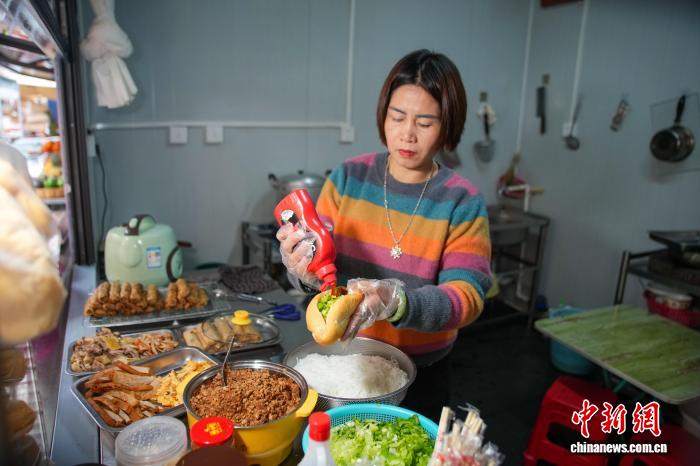
Core Viewpoint - The article highlights the vibrant atmosphere of the border town of Puzhai in Guangxi, China, during the Lunar New Year, showcasing the growing interaction and business opportunities between Chinese and Vietnamese merchants, particularly in the food and retail sectors [1][4]. Group 1: Business Development - The coffee shop "Hua Feng" run by a Vietnamese owner has been a staple in Puzhai for 16 years, offering unique Vietnamese cuisine and attracting both local and tourist customers [3][5]. - The town has seen an increase in Vietnamese merchants, with one-third of the shops operated by them, reflecting a blend of Chinese and Vietnamese cultures [4][5]. - Local entrepreneur Huang Yingzhi has expanded his business from two stores to seven, indicating a growing trend of investment and entrepreneurship in Puzhai, particularly in the context of cross-border trade [5]. Group 2: Cultural Exchange - Visitors, including tourists from China, express appreciation for the unique cultural experience offered in Puzhai, which allows them to enjoy Vietnamese flavors without leaving China [3][5]. - The article emphasizes the warmth of Sino-Vietnamese relations, as seen through the interactions between local residents and Vietnamese merchants, fostering both economic and social ties [5]. Group 3: Market Trends - The article notes a shift towards online sales for some businesses, as seen with Lin Shixiang, who has adapted to market changes by launching an online store to enhance brand visibility [5]. - The Vietnamese e-commerce sector is experiencing rapid growth, prompting local entrepreneurs to explore new opportunities in cross-border e-commerce following the Lunar New Year [5].

研判2025!中国牛角梳行业PEST分析、产业链图谱、发展现状、竞争格局及发展趋势分析:市场格局较为分散[图]
Chan Ye Xin Xi Wang· 2025-07-11 01:39
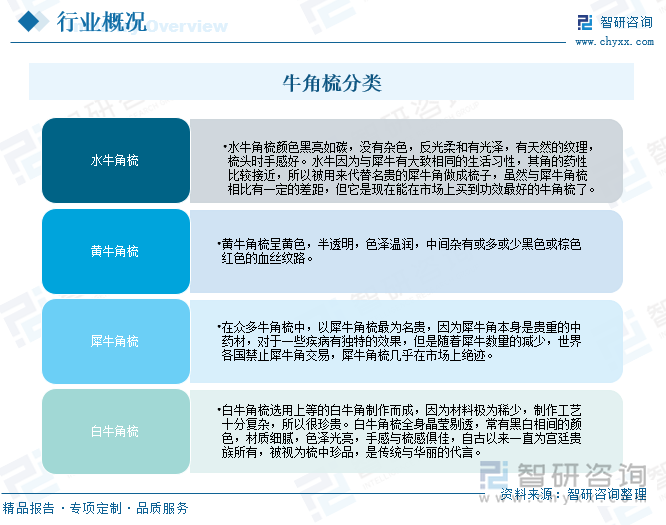
Overview - The bull horn comb, once a luxury item for the elite, has become a popular daily use product among the general public due to increased production and rising living standards. The demand for natural health products has surged, with the market for bull horn combs expected to reach 1.028 billion yuan in 2024, with a demand of 18.6225 million units [1][10]. Development Background - The Chinese government has been promoting cultural industries and traditional crafts as important carriers of cultural heritage, providing policy support for the development of the bull horn comb industry. The increasing consumer focus on health and preference for natural materials have further driven market growth [4]. Industry Chain - The bull horn comb industry consists of upstream sectors such as cattle farming (water buffalo and yellow cattle), production equipment, and packaging materials. The midstream involves the production and manufacturing of bull horn combs, while the downstream includes various sales channels like specialty stores, supermarkets, and e-commerce platforms [6][8]. Current Development - The bull horn comb industry has seen a shift from a luxury item to a widely used product. The demand for natural health products has increased significantly, with the market projected to reach 1.028 billion yuan and a demand of 18.6225 million units in 2024 [10]. Competitive Landscape - The bull horn comb market is fragmented with numerous participants. Key players include Tan Mu Jiang, Zhang Xiao Quan, and several other companies specializing in traditional crafts. Tan Mu Jiang is noted for its high-quality wooden products and has a strong market presence [12][14]. Company Analysis - Tan Mu Jiang Holdings Limited reported a revenue of 505 million yuan in 2024, with a gross profit of 305 million yuan and a gross margin of 60.38% [14]. - Zhangjiajie Drill Bull Horn Crafts Co., Ltd. focuses on quality and has obtained over 80 national patents, establishing itself as a leading brand in the industry [17]. Future Trends - The bull horn comb industry is expected to integrate modern technology, developing smart combs with health monitoring features. There will be an emphasis on enhancing health benefits and establishing a raw material traceability system to ensure sustainable supply and improve product quality [19].