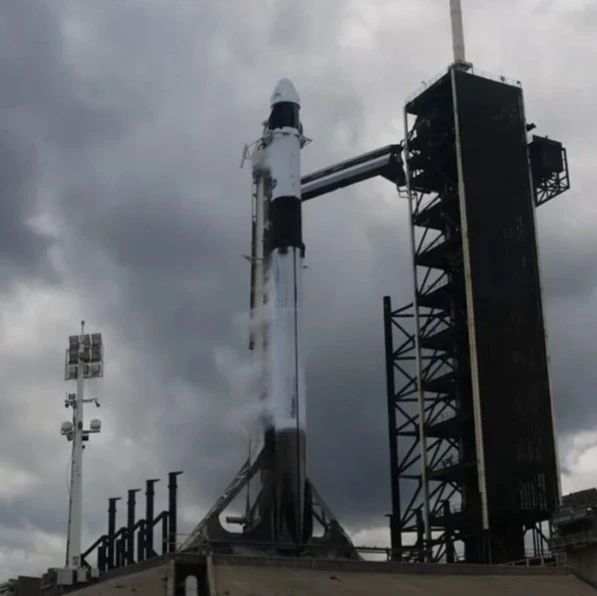
猎鹰9运载火箭

Search documents
欧航局双卫星进入轨道 将收集地球水循环数据
Yang Shi Xin Wen· 2025-11-29 12:22
Core Insights - The European Space Agency (ESA) successfully launched two satellites under the HydroGNSS mission from Vandenberg Space Force Base in California, utilizing SpaceX's Falcon 9 rocket [1][2] - HydroGNSS aims to provide critical hydrological data, including soil moisture, freeze-thaw status in permafrost regions, surface water conditions, and above-ground biomass [1][2] Group 1: Mission Objectives - The mission focuses on enhancing understanding of the Earth's water cycle, improving agricultural planning, and aiding in flood prediction [2] - It also aims to deepen insights into wetland dynamics, permafrost changes, and forest carbon storage [2] Group 2: Technology and Methodology - HydroGNSS employs Global Navigation Satellite System (GNSS) reflection measurement technology to detect water sources accurately [1] - The satellites will compare reflected signals from the Earth's surface with direct signals from navigation satellites to gather scientific data related to the water cycle [1]
欧航局双卫星进入轨道 将收集地球水循环数据
Xin Hua She· 2025-11-29 12:08
Core Insights - The European Space Agency (ESA) successfully launched two satellites under the HydroGNSS mission on November 28, 2023, from Vandenberg Space Force Base in California, using SpaceX's Falcon 9 rocket [1][2] Group 1: Mission Objectives - HydroGNSS aims to provide observational data on four hydrological parameters: soil moisture, freeze-thaw status in permafrost regions, surface water conditions, and above-ground biomass [1][2] - The mission utilizes Global Navigation Satellite System (GNSS) reflection measurement technology to accurately detect water sources by comparing reflected signals with direct signals from navigation satellites [1] Group 2: Importance of Data - The data collected from HydroGNSS is crucial for enhancing understanding of the Earth's water cycle, improving agricultural planning, flood forecasting, and deepening insights into wetland dynamics, permafrost, and forest carbon storage [2] - HydroGNSS is the first reconnaissance mission under ESA's FutureEO Earth observation research program, designed to obtain cutting-edge scientific results in a quick and cost-effective manner [2]
SpaceX突然取消任务
证券时报· 2025-08-01 04:26
Core Viewpoint - SpaceX's Falcon 9 rocket launch carrying the "Crew Dragon" spacecraft was canceled 67 seconds before liftoff due to adverse weather conditions [1] Summary by Sections Launch Details - The Falcon 9 rocket was scheduled to launch on July 31 at 12:09 PM Eastern Time from Kennedy Space Center in Florida [1] - The launch was aborted because of accumulating cloud cover and increasing wind conditions [1] Involvement of NASA - The acting administrator of NASA, Sean Duffy, attended the launch event [1] - Initial weather conditions were favorable, but deteriorated as the launch time approached [1]

“极有可能已撞击月表”,日本私企月球着陆任务再次失败
Guan Cha Zhe Wang· 2025-06-06 09:13
Core Points - The Japanese private aerospace company ispace's lunar lander "Tough" attempted to land on the moon but lost contact before the scheduled landing time, leading to the conclusion that the mission has failed [1][3] - This marks ispace's second failure in lunar landing missions, with the first occurring in April 2023 when the "White Rabbit-R" mission also failed to land successfully [3] Company Summary - The "Tough" lander was launched on January 15, 2025, aboard SpaceX's Falcon 9 rocket and entered lunar orbit on May 7, 2025, as part of the "White Rabbit-R Lunar Exploration" mission [3] - The lander was equipped with several payloads, including a mini lunar rover and a deep space radiation detector, and was intended to land in the moon's cold sea region [3] - Following the recent failure, ispace plans to investigate the reasons behind the mission's failure and determine the necessary measures to overcome it [5] Industry Context - ispace has plans to launch two new lunar landers in 2027, although it is currently unclear if the recent failure will impact these plans [5] - The involvement of private companies in space exploration is seen as beneficial for increasing the speed and scale of projects, as well as enhancing the ability to take risks [5] - Japan has made multiple attempts to launch lunar landers in recent years, with other failed missions including the "Hokke" lunar probe in November 2022 and the "SLIM" lander in January 2024, which also faced significant challenges [5]