
航天探索

Search documents
美国调整登月计划 载人登月任务推迟至2028年
Xin Hua She· 2026-02-28 03:19
Core Viewpoint - NASA has announced a delay in the Artemis lunar program, pushing the planned crewed lunar landing from 2027 to 2028 [1] Group 1 - The Artemis program is a significant initiative by NASA aimed at returning humans to the Moon [1] - The adjustment in the timeline reflects ongoing challenges and considerations in the execution of the lunar mission [1]
美国调整登月计划 载人登月任务推迟至2028年
Xin Hua She· 2026-02-28 03:03
Core Viewpoint - NASA has announced a delay in the Artemis lunar program, pushing the manned lunar landing originally scheduled for 2027 to 2028, with the Artemis 3 mission now focusing on system and operational capability testing in low Earth orbit instead of landing on the Moon [1]. Group 1: Artemis Program Adjustments - The Artemis 3 mission will now attempt to dock with commercial lunar landers being developed by SpaceX and Blue Origin, and will conduct in-orbit tests of life support, communication, and propulsion systems, as well as testing new generation spacesuits [1]. - The Artemis 4 mission is now planned for 2028, which will be the new timeline for the lunar landing [1]. Group 2: Technical Issues and Delays - Prior to the announcement, the Artemis 2 manned lunar flyby mission faced technical issues during two recent integrated exercises, leading to repeated delays in the launch schedule [2]. - NASA has withdrawn the heavy rocket "Space Launch System" and the "Orion" spacecraft from the launch pad for repairs, addressing issues related to the helium supply in the upper stage and conducting comprehensive safety checks [2]. Group 3: Future Launch Plans - The Artemis 2 mission is currently tentatively scheduled for a launch window in April, but the final launch date will depend on data analysis and repair progress [3]. - The Artemis program was announced in 2019, with the Artemis 1 unmanned lunar flyby test completed in November 2022, but subsequent mission timelines have been adjusted multiple times [3].
美国载人登月任务推迟
Jing Ji Wang· 2026-02-28 02:23
Core Viewpoint - NASA has announced significant adjustments to the Artemis manned lunar landing program, shifting the focus of the Artemis 3 mission to a docking test instead of a crewed lunar landing, with the crewed lunar landing now scheduled for the Artemis 4 mission in 2028 [1] Group 1: Mission Adjustments - The Artemis 3 mission will now serve as a docking test between the crewed spacecraft and the lunar lander, rather than completing a manned lunar landing as originally planned [1] - The lunar lander required for these missions is still under development, indicating potential delays in the overall timeline [1] Group 2: Current Mission Status - The Artemis 2 mission, which involves a crewed flyby of the Moon, has not yet been completed, and its launch date has been postponed multiple times [1] - The Artemis program was initially announced in 2019, with the Artemis 1 mission successfully completing an uncrewed lunar flyby test in November 2022 [1]
NASA宣布:计划3月初实施“阿尔忒弥斯2号”任务,载人绕月
Xin Lang Cai Jing· 2026-02-21 06:56
Core Points - NASA confirmed plans to launch the "Artemis 2" manned lunar flyby mission as early as March 6, marking the first time in over 50 years that humans will be sent near the Moon [1] - The mission will involve four astronauts on a 10-day flight, launching from Kennedy Space Center in Florida, flying around the far side of the Moon, and returning to Earth [1] - The astronauts have begun a 14-day pre-launch quarantine to minimize health risks [1] Group 1 - NASA completed a critical rehearsal for the "Artemis 2" mission, including fueling the Space Launch System (SLS) rocket and simulating a countdown [3] - The first rehearsal was cut short due to a hydrogen fuel leak, but issues with seals and filters have since been resolved [3] - The "Artemis 2" mission is still considered a flight test, with the last human Moon landing occurring in 1972 [3] Group 2 - NASA aims to achieve lunar landing goals by 2028, although this timeline is considered highly challenging [3] - SpaceX has been contracted to build the lunar lander for "Artemis 3," but delays in Starship development have prompted NASA to request a more streamlined proposal [3] - Blue Origin, led by Jeff Bezos, has also been asked to develop an accelerated lunar landing plan for "Artemis 3" [4] Group 3 - The U.S. faces external pressure to return to the Moon, particularly from China's advancing lunar program [4] - China's recent successful crewed spacecraft test is viewed as a significant milestone, indicating that both the U.S. and China are on track to achieve crewed lunar landings by 2030 [4] - Experts believe that China is likely now capable of crewed lunar landings, showcasing confidence in their systems [4]

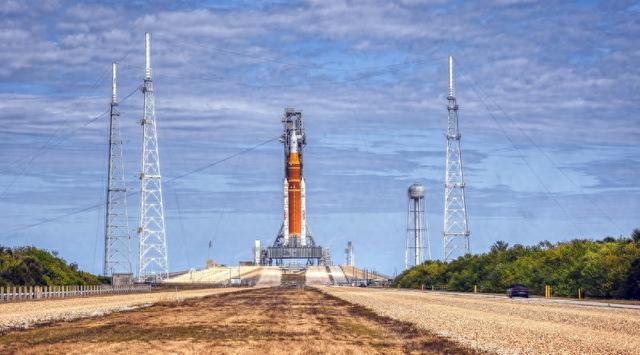
美载人绕月飞行任务完成综合演练 拟3月发射
Xin Hua She· 2026-02-21 04:00
Group 1 - NASA announced the completion of the second integrated rehearsal for the Artemis 2 crewed lunar flyby mission on February 19, with a planned launch in March [1] - During the rehearsal at Kennedy Space Center, over 700,000 gallons (approximately 2.65 million liters) of liquid propellant were loaded into the Space Launch System rocket, and ground teams practiced closing the Orion spacecraft hatch [1] - The Artemis 2 mission will involve four astronauts flying aboard the Orion spacecraft for a lunar flyby, with the earliest launch window set for March 6 [1][2] Group 2 - The Artemis program was announced by the U.S. in 2019, with Artemis 1 successfully completing an uncrewed lunar flyby test mission in November 2022 [2] - Following the Artemis 2 mission, NASA plans to advance to the Artemis 3 crewed lunar landing mission [2]
马斯克的月球殖民计划
Sou Hu Cai Jing· 2026-02-16 01:36
Group 1 - Musk has shifted SpaceX's strategic focus from Mars to building a self-sustaining city on the Moon within the next decade, citing survival concerns as a driving factor [4][8] - The Moon city can achieve self-development in less than 10 years, while a Mars city would take over 20 years, making the Moon a priority for ensuring the future of human civilization [4][5] - The cost of landing on the Moon is lower and the timeline is shorter, making it a rational step towards the Mars plan [4][6] Group 2 - The proposed "Alpha Moon Base" aims to be a permanent outpost for research, production, and habitation, serving as a stepping stone for future Mars exploration [5][6] - SpaceX will play a significant role in the Moon project, utilizing the Starship-Super Heavy rocket system capable of transporting 100 tons of cargo or habitation modules, which will significantly reduce costs [6][11] - The Moon's south pole is identified as a potential site due to the presence of water ice, which can provide water, oxygen, and rocket fuel [11] Group 3 - Musk envisions relocating AI computing infrastructure to space, with solar-powered orbital data centers hosting supercomputers, potentially transforming the AI development landscape [6][7] - The Moon could serve as a production base for AI satellites, deploying 500 to 1,000 terawatts of computing power to deep space annually [7] - The timeline for the Moon city to become a reality remains uncertain, but Musk's strategic pivot has rekindled public interest in lunar exploration [8]
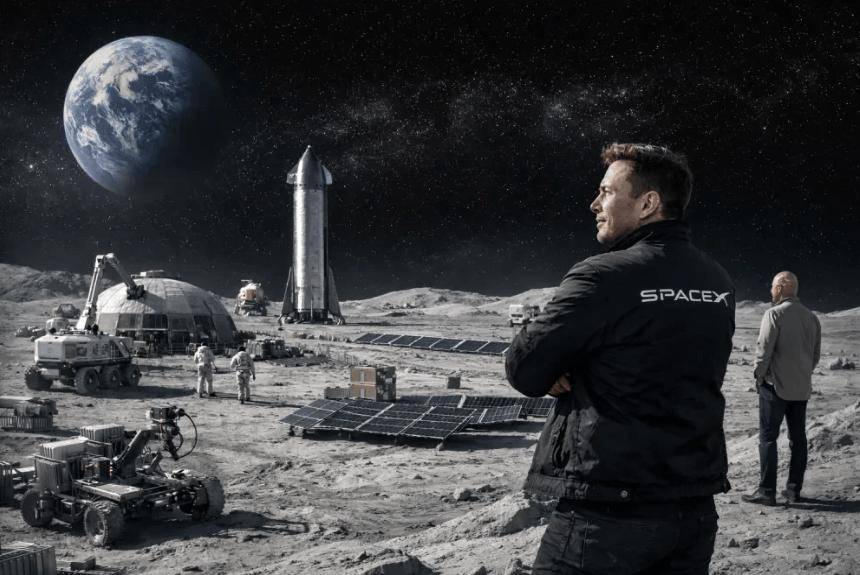
马斯克暂缓火星梦
Sou Hu Cai Jing· 2026-02-11 00:38
Core Perspective - The shift in focus from Mars to lunar city construction by Musk signifies a significant change in the narrative of human space exploration, indicating a recalibration of the path towards interstellar civilization [1][3][4] Group 1: Technical and Engineering Aspects - The decision to prioritize lunar exploration is driven by practical considerations, as the Moon is only 380,000 kilometers away, allowing for more frequent supply and personnel rotations compared to Mars, which is tens of millions of kilometers away and has a launch window every 26 months [3][4] - Establishing a "self-sustaining city" on the Moon requires a high level of logistics and emergency capabilities, making it a more controllable testing ground for deep space survival technologies [3][6] Group 2: Political and Strategic Context - The shift aligns with the U.S. space policy's return to a "near-Earth to Moon" approach, with the Artemis program receiving clear timelines and symbolic significance, reflecting national capability and great power competition [4][6] - SpaceX, as a core contractor, must align more closely with national strategies, making lunar exploration a more immediate and resource-backed goal compared to the long-term vision of Mars colonization [4][6] Group 3: Long-term Implications - The lunar city concept introduces a model of continuous construction, failure, and correction, contrasting with the historical narrative of space exploration that oscillates between monumental achievements and stagnation [9] - This approach emphasizes sustainability in the path of exploration rather than a rapid arrival at a destination, suggesting a more reliable and patient method for extending civilization [9]

出发,去月球!
Ren Min Ri Bao· 2026-02-09 05:44
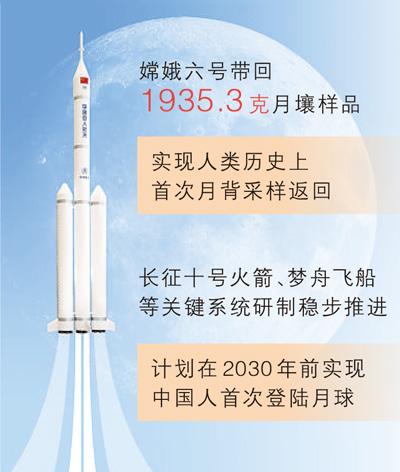
Core Perspective - The article emphasizes the renewed global interest in lunar exploration, highlighting it as a convergence of technological advancement, national strength, and innovative spirit, transforming the dream of "going to the moon" into a tangible reality [2][3]. Group 1: Historical Context and Achievements - The history of lunar exploration reflects humanity's courage to innovate and collaborate, from ancient calculations to modern scientific discoveries [2]. - China's lunar exploration program, particularly the Chang'e series, has made significant strides, including the first soft landing on the moon's far side and the successful return of samples, contributing valuable geological data to the international scientific community [3]. Group 2: Future Plans and Trends - Looking ahead, China has announced plans for a manned lunar mission, with key systems like the Long March 10 rocket and the Dream Chaser spacecraft under development, aiming for a lunar landing by 2030 [3]. - The rise of commercial space ventures in China is notable, with the establishment of launch facilities and an expanding industry chain, indicating a shift towards a more diverse and innovative approach to lunar exploration [3]. Group 3: Technological and Collaborative Needs - Successful lunar exploration requires a robust foundation of national strength and critical technologies, including advancements in rocket technology and lunar exploration instruments [4]. - Continuous innovation in basic research, engineering technology, and management practices is essential for overcoming the challenges of lunar exploration, necessitating collaboration across various fields and borders [5].
重心转移!马斯克立下新十年之约:引领万亿美元SpaceX建造月球城市
Zhi Tong Cai Jing· 2026-02-09 04:11
Group 1 - SpaceX is shifting its focus towards building a "self-growing city" on the Moon, with a goal to achieve this within the next decade [1] - The construction of a lunar city is seen as a long-term vision for permanent settlement beyond Earth, relying on SpaceX's Starship capabilities to transport necessary modules and resources [1] - The lunar base aims to utilize local resources for expansion and sustainability, contingent on ongoing technological advancements and funding [1] Group 2 - The decision to prioritize lunar exploration is influenced by the current policy environment and technological feasibility, with renewed global interest in lunar missions providing potential collaboration opportunities [2] - The U.S. faces intense competition from China in its efforts to return astronauts to the Moon, marking a significant shift since the last Apollo mission in 1972 [2] - This announcement follows SpaceX's agreement to acquire xAI, with SpaceX's valuation reaching $1 trillion and xAI's at $250 billion [2]
重心转移!马斯克立下新十年之约:引领万亿美元SpaceX建造月球城市
智通财经网· 2026-02-09 03:39
Group 1 - SpaceX is shifting its focus towards building a "self-sustaining city" on the Moon, with a goal to achieve this within the next decade [1] - The plan for a lunar city is seen as a long-term vision for permanent settlement beyond Earth, relying on SpaceX's Starship capabilities to transport necessary modules and resources [1] - The lunar base aims to utilize local resources for expansion and sustainability, contingent on ongoing technological advancements and funding [1] Group 2 - SpaceX has informed investors that the lunar mission will take priority over Mars exploration, with an unmanned lunar landing targeted for March 2027 [2] - The decision to focus on the Moon is influenced by the current policy environment and the resurgence of global interest in lunar exploration, providing potential collaboration opportunities [2] - The competitive landscape includes significant challenges from China, as the U.S. aims to return astronauts to the Moon for the first time since the Apollo program in 1972 [2]