
球形青铜瓮

Search documents
国博武王墩大展,感受楚文明的宏大与瑰丽
Jing Ji Guan Cha Bao· 2026-02-11 08:22
Core Insights - The exhibition showcases the archaeological findings from the Wuwangdun tomb, the largest known royal tomb of the Chu state, highlighting the artistic and craftsmanship excellence of the late Warring States period [1][2] Group 1: Exhibition Highlights - The centerpiece of the exhibition is a massive bronze ding, the largest discovered from the Chu state, surpassing the famous "Zhu Ke Ding," symbolizing the authority and aesthetic values of the era [2] - A notable artifact is the spherical bronze urn, the first of its kind found in archaeological digs, featuring intricate cloud and phoenix feather patterns, reflecting a sense of beauty and symmetry [3] Group 2: Artifacts Overview - The exhibition includes a variety of artifacts such as stone vessels, bronze vessels for rituals, and decorative items, showcasing the rich material culture of the Chu state [4][5] - Specific items include a bronze gui for food offerings, a bronze mirror, and various jade ornaments, indicating the complexity and sophistication of Chu burial practices [4][5]
国博重磅大展“遇见考烈王”启幕
Xin Lang Cai Jing· 2025-12-27 07:24
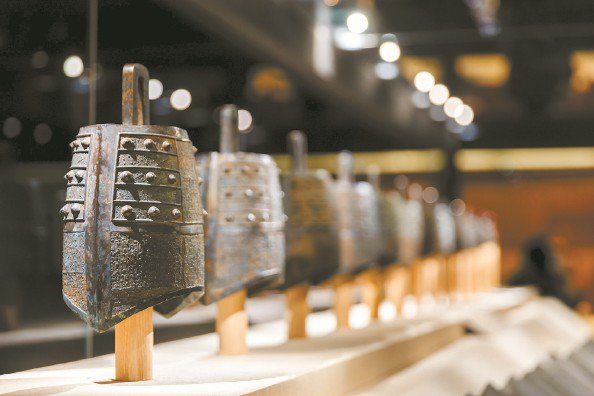
Core Insights - The exhibition "Encountering King Koryo - Archaeological Discoveries from the No. 1 Tomb of King Wu Wang Dun in Huainan, Anhui" opened at the National Museum of China, showcasing the largest and most complex royal tomb of the Chu state from the Warring States period [2] - Over 10,000 precious artifacts have been unearthed from the site between 2020 and 2024, with the exhibition featuring more than 200 selected items [2] - The exhibition is divided into four sections: "Sealed Treasures," "Coffin Inscriptions," "Exquisite Chu Treasures," and "Belonging to Huaxia," highlighting significant bronze ritual vessels and exquisite jade artifacts [2] Group 1 - The No. 1 Tomb of King Wu Wang Dun is recognized as a "cultural treasure trove" of the Chu state, with artifacts that span over a thousand years [2] - The exhibition will last for four months, allowing visitors to engage with the historical artifacts directly [2] - Notable items include a set of bronze ritual vessels, a complete set of bronze bells, and intricately designed jade pieces, showcasing the craftsmanship of the era [2] Group 2 - The tomb also revealed two sets of musical bells, known as "Niu Bells," which are characterized by their decreasing sizes and intricate designs, reflecting the musical culture of the Chu people [3] - A rare spherical bronze urn, believed to have been used for holding fine wine or soup, exemplifies the romantic aesthetic of Chu culture [3] - The exhibition features a painted lacquer wood table adorned with dragon and phoenix motifs, along with a matching lacquer cup, highlighting the unique artistic expression of the Chu civilization [3]

北京200余件套文物启封楚韵秘藏
Xin Lang Cai Jing· 2025-12-27 00:11
Core Insights - The exhibition showcases over 200 precious artifacts and the latest research findings from the archaeological excavation of the Wuwangdun No. 1 tomb, highlighting the grandeur of the late Warring States period Chu civilization [1] - The tomb is noted as the largest, highest-ranking, and most complex royal tomb of the Chu state discovered through scientific excavation to date [1] Group 1 - The excavation team has unearthed over 10,000 valuable relics from 2020 to 2024, with new discoveries occurring almost every month [1] - The exhibition features many artifacts that are being displayed for the first time, including the largest known bronze cauldron from the Warring States period, which has a diameter of over 88 centimeters [1] - The bronze cauldron, used for significant ceremonial activities, is referred to as the "new Chu cauldron" and is indicative of high-ranking burial practices during the Warring States period [1] Group 2 - The exhibition includes a variety of unique artifacts, such as a bronze jar with intricate designs and a combination of bronze ritual vessels that reflect the highest ceremonial standards of the Zhou dynasty [2] - The exhibition is divided into four thematic sections, showcasing the richness of Chu culture and its unique role in the development of Chinese civilization [2] - The exhibition will run for four months, allowing visitors to engage with the artifacts and gain a deeper understanding of Chu culture [3]