琉璃砖

Search documents
琉璃阁旧纹承新韵
Xin Lang Cai Jing· 2026-02-08 08:13
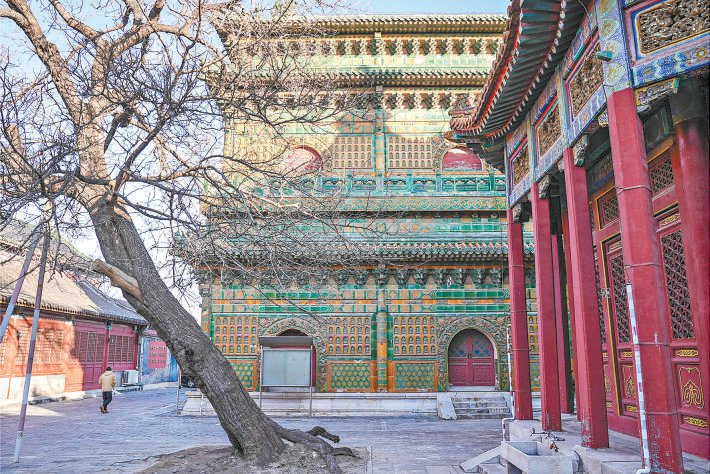
Core Viewpoint - The recent relocation and handover ceremony of the Liuli Pavilion in Beihai Park has garnered significant attention, with public anticipation for the future opening of this historical site [2]. Historical Significance - The Liuli Pavilion, located within the Xitian Fan Jing architectural complex in Beihai Park, is a rare example of Qing Dynasty official glazed architecture, originally built in the 24th year of the Qianlong reign (1759) [2][3]. - There are two main theories regarding the construction date of the Liuli Pavilion: one states it was built in 1759, replacing a previously burned pagoda, while the other suggests its origins date back to 1755, referring to the initial pagoda built at that site [2][3]. Architectural Details - The Liuli Pavilion is recognized as one of China's three major beamless glazed buildings, constructed entirely from brick and stone, featuring a unique aesthetic without beams or columns [4]. - The pavilion is adorned with 1,424 pieces of yellow and green glazed bricks, each requiring six production processes, showcasing the high craftsmanship of the time [4]. Cultural Impact - During the Republic of China period, the Liuli Pavilion became a popular gathering place for locals, described in the 1936 edition of the "Beiping Travel Guide" as a winter retreat for residents [5]. - The pavilion has been a site of cultural significance, attracting literary figures such as Xu Zhimo and Xu Deyuan, who celebrated its beauty in their works [5]. Preservation Efforts - After the establishment of the People's Republic of China, the preservation and cultural transmission of the Liuli Pavilion became more systematic and professional, with it being officially designated as a cultural heritage site in Beijing in 1957 [6].