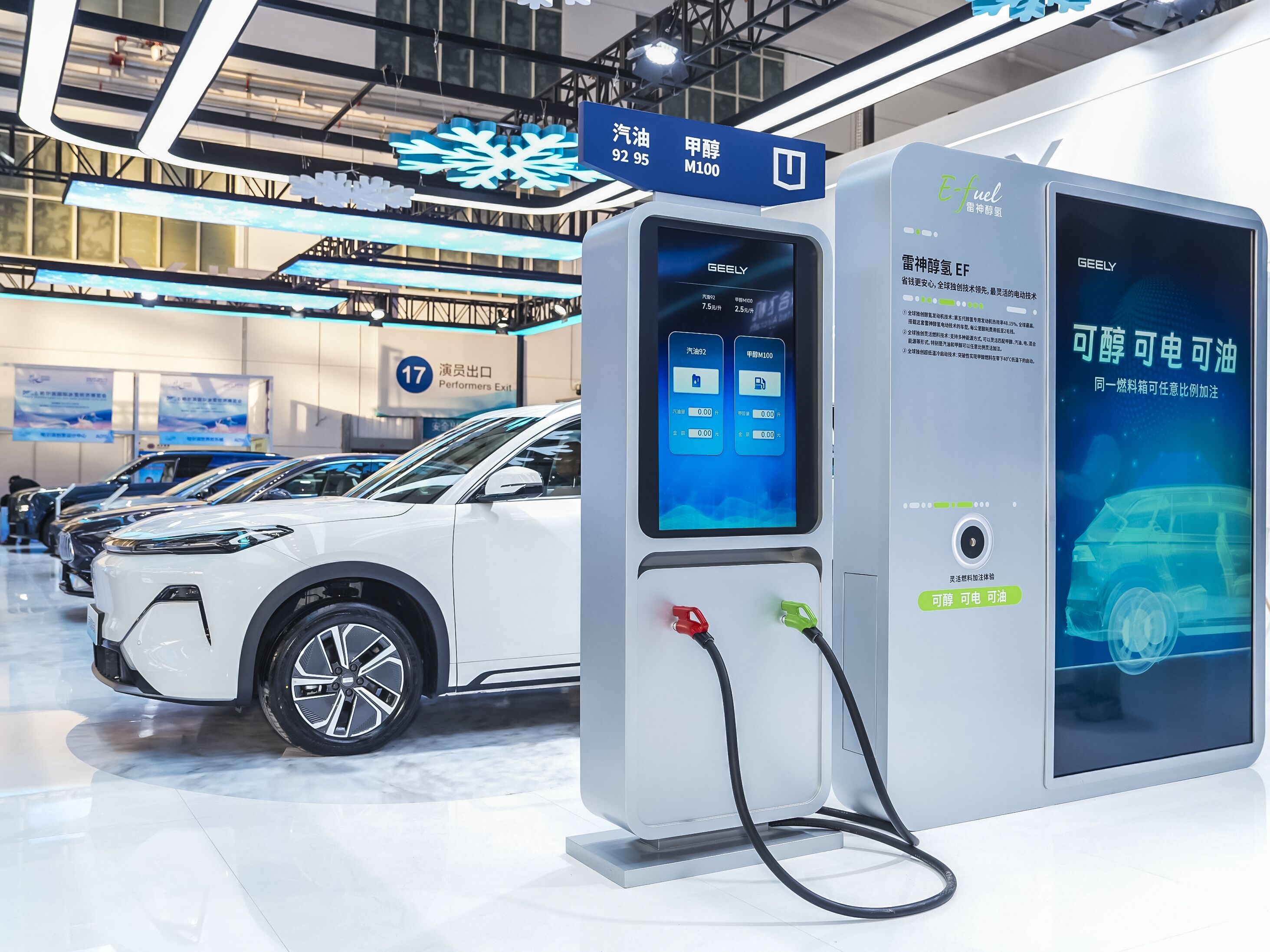
甲醇电动汽车

Search documents
政策东风来,吉利迎甲醇产业发展新机遇
Zhong Guo Qi Che Bao Wang· 2026-02-06 09:57
Core Viewpoint - The green low-carbon transition is a central development theme in China's 14th Five-Year Plan, with methanol emerging as a key energy carrier due to its environmental, economic, and safety advantages, particularly in various applications beyond traditional vehicles [1][4]. Policy Framework - A comprehensive policy framework has been established to support the methanol industry, with over 70 policy documents issued by national and local governments to promote methanol vehicles, ensuring a full-chain policy support system from production to application [4][5]. - Local governments in resource-rich areas like Gansu, Qinghai, and Guizhou are implementing special policies to enhance methanol fuel pricing mechanisms and infrastructure investments, while cities like Shanghai are focusing on scaling up green methanol applications in shipping [4][5]. Industry Positioning - Geely has positioned itself as a leader in the methanol fuel sector, leveraging over 20 years of experience and aligning its development strategy with national energy transition goals, creating a comprehensive green ecosystem across the entire industry chain [1][6]. Technological Advantages - Methanol's diverse production pathways address energy security challenges in China, allowing for production from coal, natural gas, and renewable sources, which aligns with Geely's carbon neutrality goals [5]. - Methanol fuel demonstrates practical advantages in cold weather performance and cost-effective infrastructure integration compared to electric and hydrogen fuel cell vehicles, making it a viable alternative in the transportation sector [5][6]. Infrastructure Development - Geely has established over 900 methanol refueling stations nationwide, aiming to increase this number to 4,000 by the end of 2027, enhancing the convenience of methanol refueling and supporting the industry's large-scale development [7]. - The company has successfully deployed over 50,000 methanol electric vehicles, accumulating over 23 billion kilometers in travel, and is expanding its technology applications to various sectors, including shipping and machinery [7].