
电子仓单质押融资产品

Search documents
武汉这个小码头变身国际港口,怎么做到的?
Chang Jiang Ri Bao· 2025-12-09 08:30
Core Viewpoint - Wuhan Yangluo Port is rapidly evolving into a significant inland port and international shipping hub, enhancing its connectivity and logistics efficiency, particularly for the Central and Western regions of China [4][12]. Group 1: Port Development and Operations - The Yangluo Port has transformed from a small dock in the 1960s to a major container hub, with significant international shipping capabilities established since 2019 [6]. - The port currently operates 32 container shipping routes, with a container throughput of 1.861 million TEUs in the first three quarters of this year, marking a 60.47% increase in the number of inbound and outbound vessels [12]. - The "Hanya Direct Shipping" service has established a network covering Japan, South Korea, Russia, Vietnam, and Indonesia, with a total transport volume of 67,376 TEUs from January to November, reflecting a growth of over 22% [6][12]. Group 2: Logistics Efficiency - Direct shipping routes have significantly reduced transportation time and costs, with the Yangluo Port to Indonesia's Labota Port route cutting logistics time by 7 to 10 days and costs by 10% to 20% [9]. - The port has implemented efficient customs processes, including a dedicated direct shipping window and smart electronic inspections, reducing inspection times by over 30% [9][12]. - The intermodal transport network has seen a 52.65% increase in container rail-water transport volume, accounting for 38.21% of the national total in this category [14]. Group 3: Trade and Financial Services - The establishment of the "Belt and Road" national pavilion at Yangluo Port has attracted numerous international goods and trade opportunities, enhancing its role as a trade service platform [21]. - The port aims to develop a comprehensive financial service hub, providing settlement, financing, and insurance services to enhance logistics and economic benefits [23]. - Recent initiatives include tailored financing products for the grain industry, addressing challenges in inventory financing and promoting financial services in the logistics sector [23].

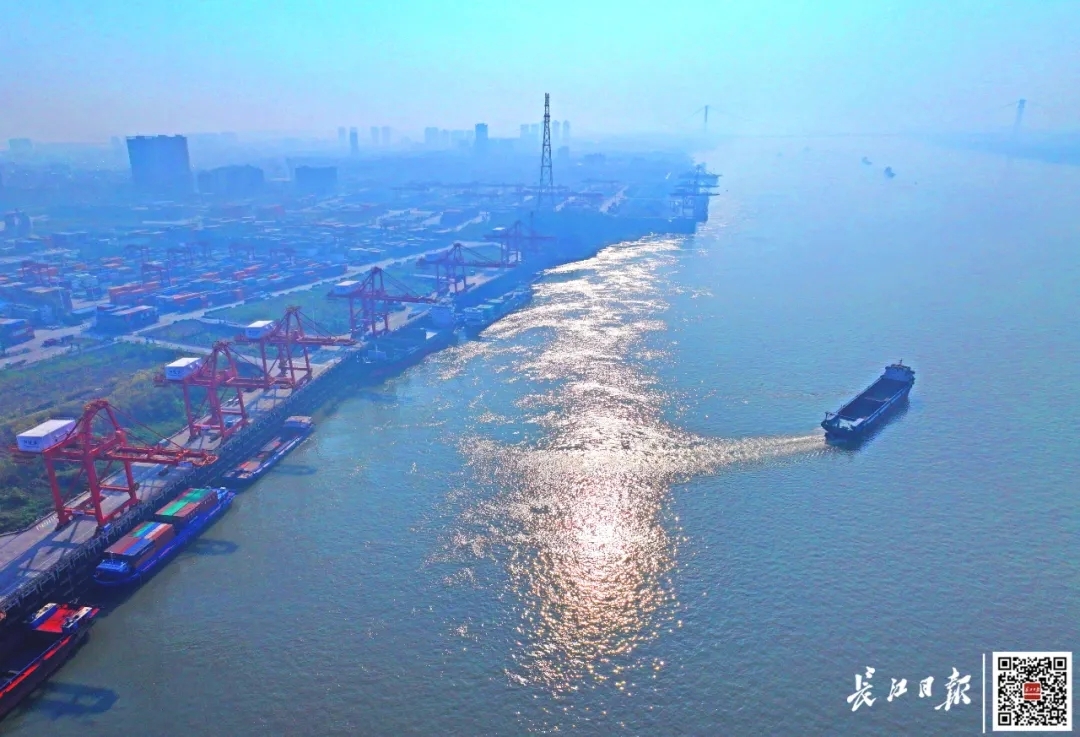
武汉加快建设长江中游航运中心
Chang Jiang Ri Bao· 2025-12-09 00:25
Core Viewpoint - Wuhan Yangluo Port is rapidly evolving into a significant inland port and international logistics hub, enhancing its role in the Yangtze River economic belt and facilitating global trade connections [2][4][12]. Group 1: Port Development and Operations - The Yangluo Port has transformed from a small dock in the 1960s to one of the largest inland container hubs in China, with a focus on international shipping routes [4]. - The port has established a network of five direct international shipping routes covering countries such as Japan, South Korea, Russia, Vietnam, and Indonesia, significantly increasing its shipping capacity [4][6]. - In the first eleven months of this year, the "Hanya Direct Shipping" service achieved a transportation volume of 67,376 TEUs, marking a year-on-year increase of over 22% [4][6]. Group 2: Logistics Efficiency - The direct shipping routes have reduced transportation time by nearly half, with costs decreasing by 10% to 20% due to streamlined logistics processes [6]. - The port has implemented efficient customs procedures, including a dedicated direct shipping window and smart electronic quarantine measures, which have reduced inspection times by over 30% [6][8]. - The container throughput at Yangluo Port reached 1.861 million TEUs in the first three quarters of this year, with a 60.47% increase in the number of inbound and outbound vessels [6][8]. Group 3: Multi-Modal Transport - Yangluo Port has developed 42 multi-modal transport channels, integrating water, rail, road, and air transport to enhance logistics efficiency [7][8]. - The port's multi-modal transport network has seen a 52.65% increase in container rail-water transport volume, accounting for 38.21% of the national total for similar inland ports [8]. Group 4: Financial and Trade Services - Yangluo Port aims to become a financial hub, providing integrated services such as settlement, financing, and insurance to enhance trade efficiency [9][12]. - The establishment of the "Belt and Road" country pavilion has attracted numerous international products, positioning the port as a significant trade service platform [10][11]. - The port's financial services have already facilitated a successful inventory financing transaction, addressing challenges in the agricultural sector [12].