
多式联运

Search documents
中远海运旗下2艘集装箱船未能通过霍尔木兹海峡,向波斯湾方向折返!伊朗已宣布关闭海峡,任何试图通过者都将遭严厉打击
Mei Ri Jing Ji Xin Wen· 2026-03-27 11:21
Core Viewpoint - The situation in the Strait of Hormuz has escalated due to the ongoing conflict involving the US, Israel, and Iran, leading to a significant reduction in maritime traffic and the implementation of new shipping routes to mitigate risks [1][8][12]. Group 1: Shipping and Logistics Developments - The Iranian Revolutionary Guard announced the closure of the Strait of Hormuz, threatening severe repercussions for any vessels attempting to transit, particularly those associated with US and Israeli allies [1]. - Since the onset of the conflict, the number of commercial vessels passing through the Strait has plummeted by 95% compared to pre-conflict levels, with only 153 crossings recorded from March 1 to 25 [8][10]. - COSCO Shipping has resumed new booking services for certain Middle Eastern countries, utilizing a multi-modal transport approach that avoids direct passage through the Strait [4][5]. Group 2: Alternative Shipping Routes - COSCO Shipping plans to reroute cargo through land bridges and feeder shipping, connecting to ports outside the Strait, such as those on the eastern coast of the UAE [5]. - The newly established "safety corridor" allows some vessels to pass through the Strait, but the overall traffic remains low, with only 17 vessels reported to have used this route since its opening [10][12]. - Other shipping companies, like Yang Ming Marine Transport, are adjusting their operations in response to the heightened risks, delaying port calls and monitoring safety conditions closely [6][7]. Group 3: Market Impact and Demand - The ongoing conflict has led to a significant increase in shipping costs, with oil tanker rates rising over 50% compared to pre-conflict levels due to supply chain disruptions [10][13]. - Demand from Middle Eastern clients has been delayed, as many are uncertain about their procurement plans amid the conflict, leading to a decrease in booking requests for shipping services [6][12]. - Major logistics companies, including Maersk, are facing operational disruptions and are working to adapt their networks to mitigate the impact of the conflict on their performance [12][13].


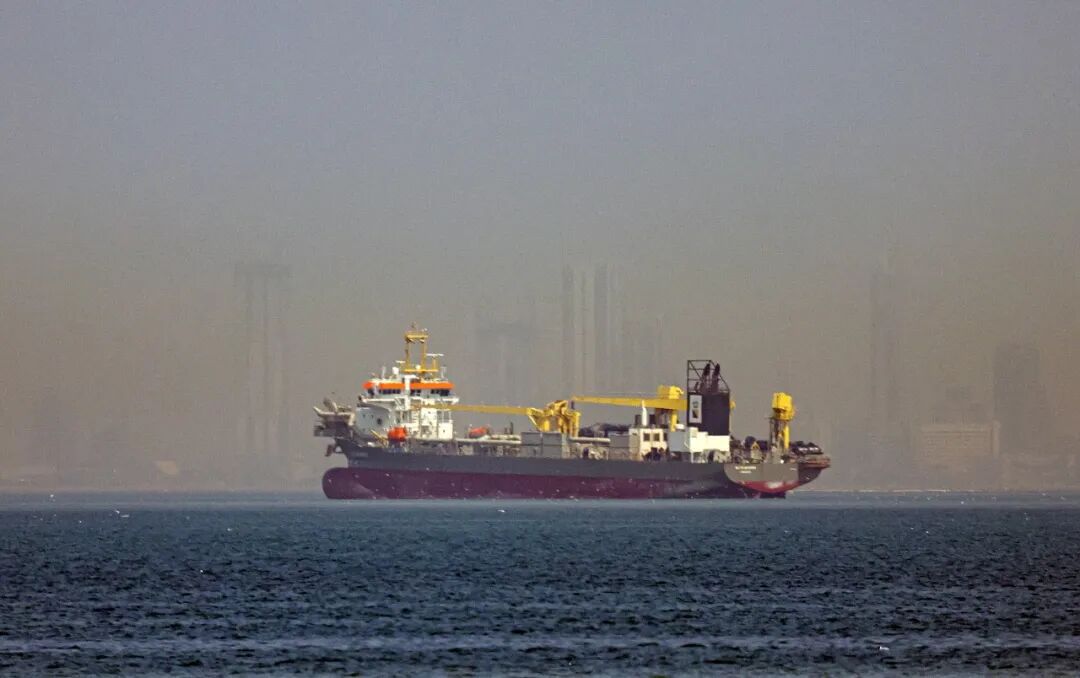
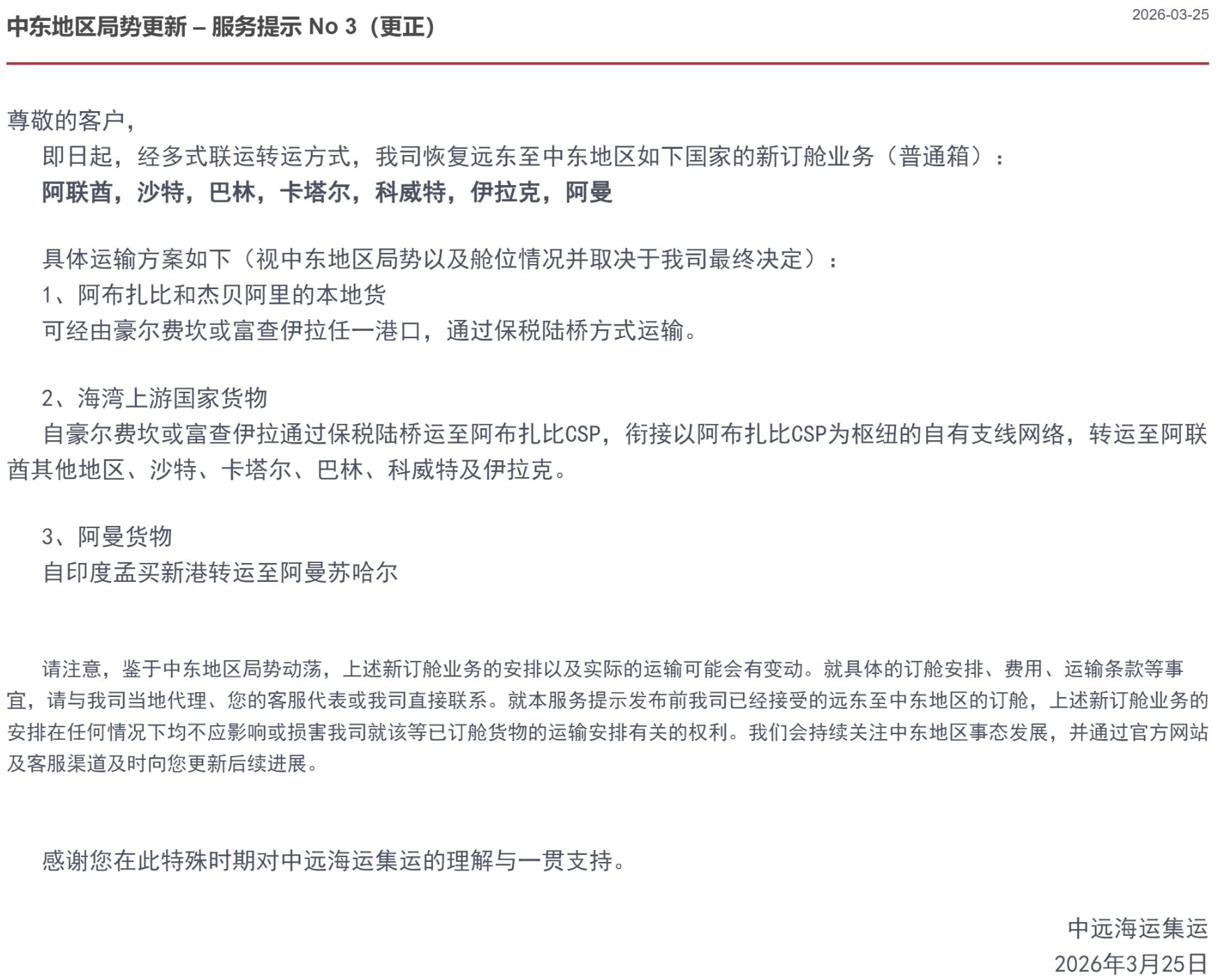
霍尔木兹海峡“安全通道”来了?中东航运仍充满不确定性 中远海运以多式联运破局
Mei Ri Jing Ji Xin Wen· 2026-03-27 08:33
Core Insights - The ongoing conflict in the Middle East has severely disrupted shipping through the Strait of Hormuz, with a reported 95% decrease in vessel traffic since March compared to pre-conflict levels [1][7][11] - COSCO Shipping has cautiously resumed booking services for certain Middle Eastern countries, utilizing a multi-modal transport approach that avoids direct passage through the Strait of Hormuz [2][4] - The establishment of a "safe corridor" has allowed some vessels to navigate the Strait, but overall traffic remains low, with only 153 crossings reported from March 1 to 25 [9][10] Group 1: Shipping Operations - COSCO Shipping has announced the resumption of new bookings for shipping to the UAE, Saudi Arabia, Bahrain, Qatar, Kuwait, Iraq, and Oman, using a combination of land and sea transport [1][4] - The company plans to adjust its main shipping routes to end at ports outside the Strait, specifically on the eastern coast of the UAE, to mitigate risks associated with the conflict [4][5] - Other shipping companies, such as Yang Ming Marine Transport, are also adjusting their operations in response to the heightened risks in the region, with some vessels remaining on standby [5][6] Group 2: Market Demand and Client Behavior - There is a noticeable delay in demand from Middle Eastern clients, as many are uncertain about their purchasing plans due to the ongoing conflict and disrupted travel [5][6] - Some clients who previously used Maersk are being persuaded to switch to COSCO Shipping, but overall booking demand remains low as clients await clearer conditions [5][6] - The logistics operations in the Middle East are facing significant interruptions, which may impact the performance of companies operating in the region [13] Group 3: Safety and Risk Management - The safety situation in the Strait of Hormuz remains precarious, with reports of multiple attacks on vessels, prompting shipping companies to exercise caution [6][12] - The Iranian government has indicated that the Strait is not entirely closed, allowing vessels from friendly nations to pass, but the overall risk remains high [12][13] - Companies are closely monitoring the security situation and adjusting their operations accordingly to ensure the safety of their vessels and crews [6][13]
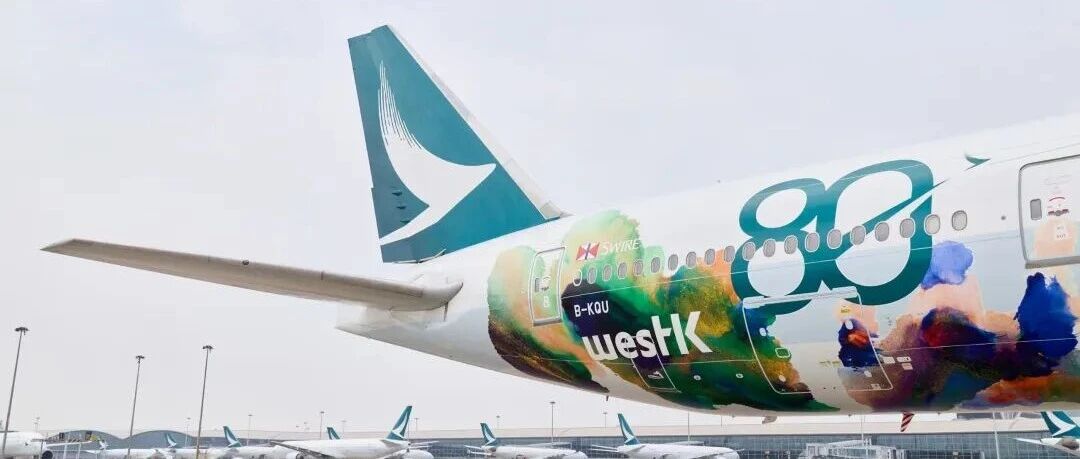
航空业变局之中,这家航司何以持续穿越周期站稳盈利风口?
财富FORTUNE· 2026-03-25 13:08
Core Viewpoint - Cathay Pacific has successfully navigated through significant challenges, including the COVID-19 pandemic, and is now experiencing a strong recovery, achieving record profits and setting a solid foundation for future growth [1][3][9]. Financial Performance - In 2025, Cathay Pacific reported revenues of HKD 116.77 billion, a year-on-year increase of 11.9%, and a net profit attributable to shareholders of HKD 10.83 billion, up 9.5%, marking the first time profits exceeded HKD 10 billion since the pandemic [1][3]. - Over the past three years, the company has achieved a cumulative profit exceeding HKD 30 billion, surpassing the losses incurred during the pandemic [3]. Market Position and Strategy - Cathay Pacific aims to strengthen its position as a high-end airline based in Hong Kong, focusing on enhancing customer experience and maintaining team morale amidst external uncertainties [4][9]. - The airline is actively expanding its presence in the Greater Bay Area and leveraging its unique position to connect global markets with a focus on the Chinese mainland [19][20]. Operational Challenges - The airline faces ongoing challenges from geopolitical instability, fluctuating fuel prices, and supply chain disruptions, which impact both passenger and cargo operations [7][8]. - Despite these challenges, Cathay Pacific is adapting by reallocating capacity to other routes, particularly in Europe, and implementing fuel hedging strategies to mitigate cost volatility [8][9]. Product and Service Innovations - Cathay Pacific has invested significantly in upgrading its fleet and enhancing customer service, including the introduction of new cabin products and improved in-flight dining experiences [11][15]. - The airline plans to launch new cabin classes and enhance its entertainment offerings, aiming to provide a unique travel experience that goes beyond mere transportation [13][15]. Expansion Plans - The airline is set to receive new aircraft, including the Boeing 777-9 and A330-900, as part of a broader investment plan exceeding HKD 100 billion, aimed at reinforcing its hub status and expanding its route network [26][28]. - Cathay Pacific has opened new routes to cities in mainland China, including Urumqi and Changsha, and continues to explore opportunities in second and third-tier cities to capture additional market share [24][22]. Recognition and Future Goals - Cathay Pacific has received accolades in various airline rankings, including being named one of the top airlines globally, and aims to become the best airline in the world within the next five years [18][28]. - The company is committed to continuous improvement in operations, efficiency, and customer service to navigate future challenges effectively [28].
节日能源供应“不断线”
Ren Min Wang· 2026-02-26 05:55
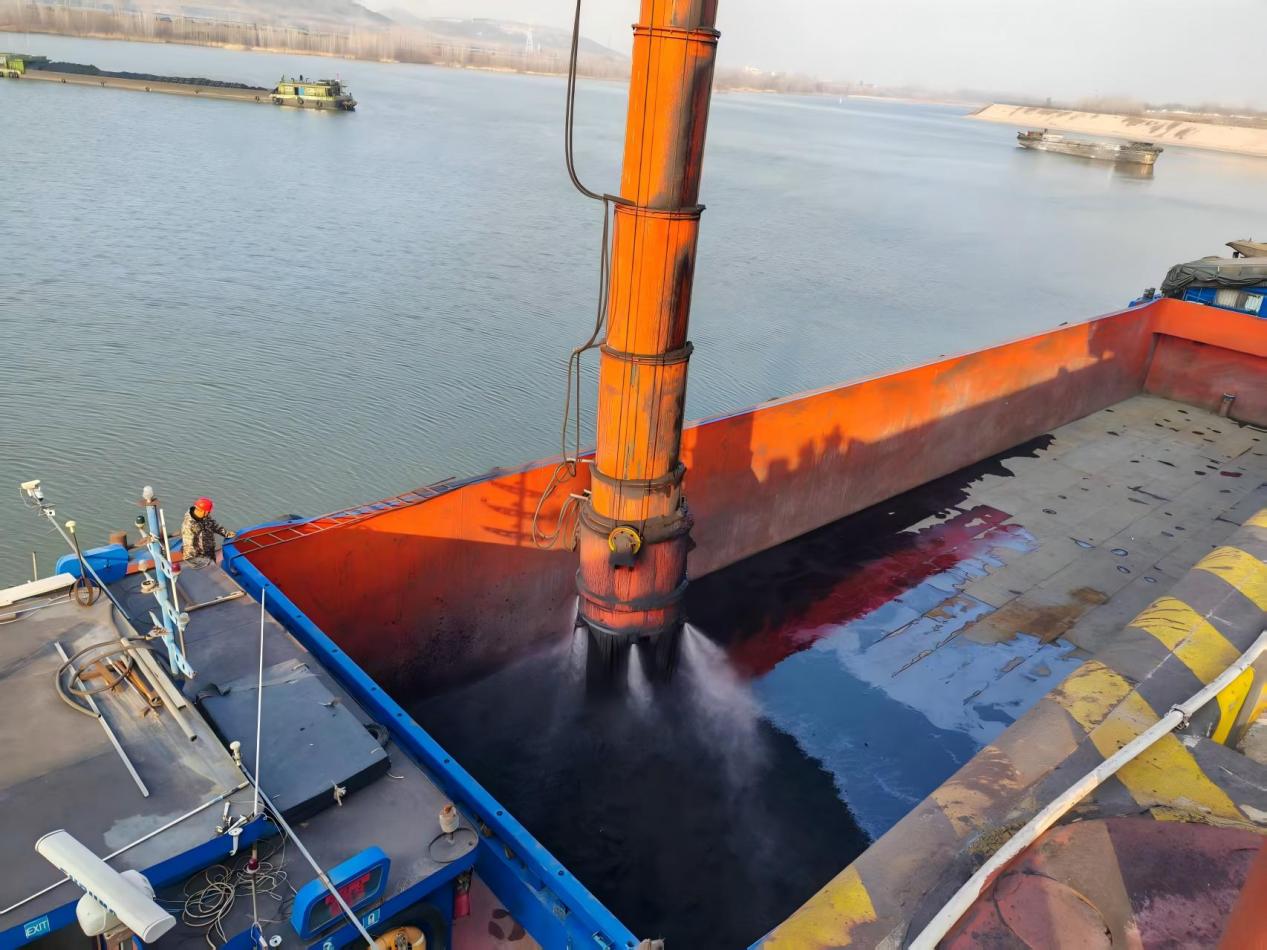
Core Insights - The article highlights the efficient and automated operations at the Yanzhou Coal Mining Group's Dongping Lu Port, showcasing its advanced technology and logistics capabilities during the Spring Festival period [1][6]. Group 1: Operational Efficiency - The Dongping Lu Port utilizes automated loading equipment, allowing for a single ship loading capacity of approximately 2,000 tons to be completed in just one hour, ensuring timely delivery to the Jiujiang Power Plant [3][6]. - The port plans to handle around 70,000 tons of coal during the Spring Festival holiday, with a monthly stable shipment of over 20,000 tons to support downstream power generation [3][6]. Group 2: Logistics and Transportation - The port has optimized its multi-modal transportation system, focusing on the urgent needs for electricity and coal during the Spring Festival, with a dual transport plan for efficient coal distribution [6][7]. - The port's daily maximum loading capacity can exceed 40,000 tons during peak periods, demonstrating its robust operational capabilities [6][7]. Group 3: Technological Advancements - The port's static coal storage capacity has been enhanced to 2 million tons, and key equipment operates without human supervision, increasing production efficiency by 60% and reducing labor by 300 workers compared to similar ports [7]. - The implementation of a real-time matching mechanism for vehicles, ships, and cargo has halved waiting times for vessels, while the new "direct loading" model has reduced coal turnover cycles to under 48 hours [7]. Group 4: Environmental Initiatives - The port has achieved a green energy usage rate of 45%, resulting in a carbon reduction of 5,000 tons annually, and has been recognized as a "provincial zero-carbon park" candidate [7].
2026年中国长途陆运行业产业链、市场规模及发展趋势分析
Sou Hu Cai Jing· 2026-02-25 06:14
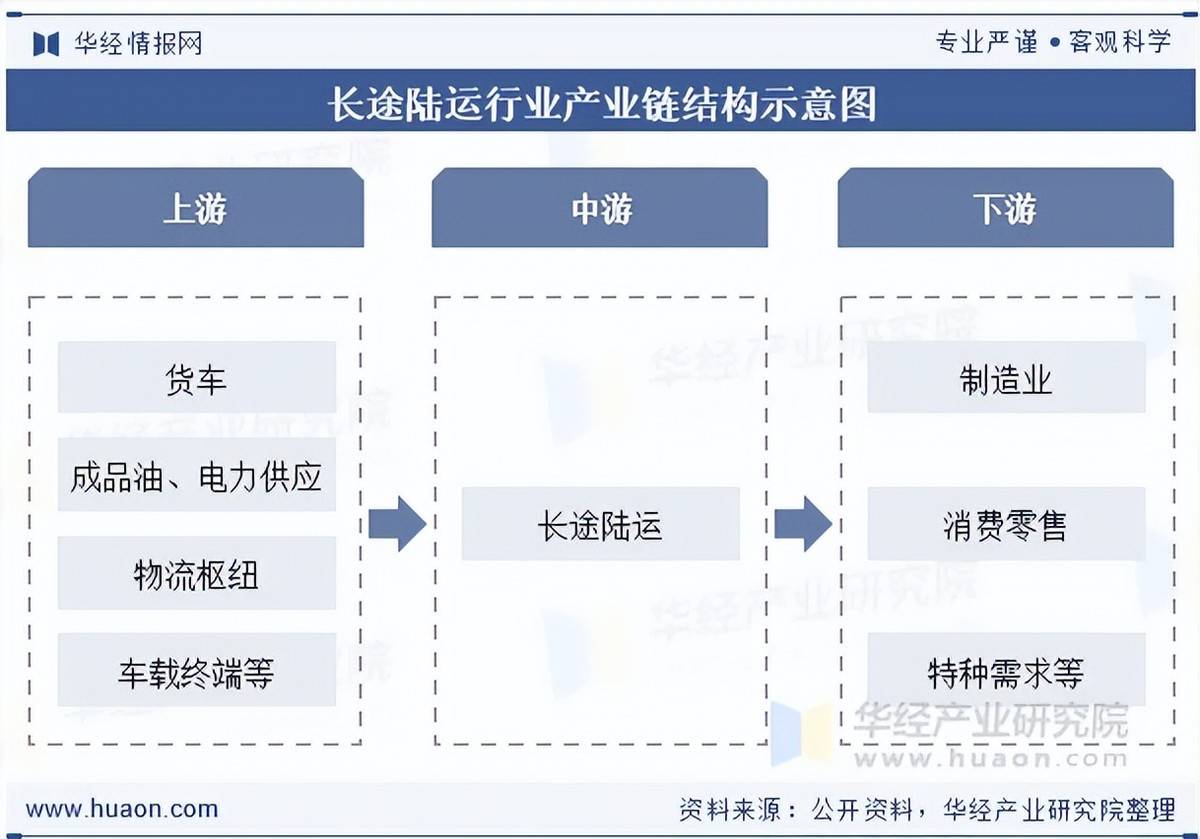
Core Insights - The long-distance land transportation industry in China is projected to reach a market size of $547.7 billion in 2024, driven by macroeconomic recovery and industrial demand upgrades [3] - The industry is undergoing a transformation from fragmentation to scale and digitization, supported by policies aimed at cost reduction and green transition [3][5] - The multi-modal transport model is gaining traction, with significant growth in container transport volumes and cross-border transport channels [5] Industry Overview - The upstream sector focuses on manufacturing transport equipment, infrastructure construction, and technological support, with new energy and smart technologies reshaping supply [1] - The midstream sector emphasizes transport services and operational support, with network freight platforms integrating scattered capacities [1] - The downstream sector connects various fields such as manufacturing and retail, with e-commerce growth and industrial upgrades creating differentiated transport demands [1] Market Dynamics - The demand for high-frequency transport in economic regions like the Yangtze River Delta and Pearl River Delta is expanding, contributing to market growth [3] - The total volume of container rail-water intermodal transport in China is expected to reach 13.35 million TEUs in 2024, marking a 15.4% year-on-year increase [5] - The China-Europe Railway Express and Central Asia Railway Express are seeing continuous growth in transport volumes, with 19,000 trains and 2.07 million TEUs dispatched in a year [5] Policy and Innovation - The government is promoting the construction of comprehensive freight hubs in 37 cities to enhance supply chain efficiency [5] - Innovations such as unified bills of lading and real-time pricing are being implemented to streamline operations in rail-water intermodal transport [5] - The integration of logistics hubs is expected to enhance connections between road, rail, and water transport resources, forming a stable and efficient full-process transport service system [5] Research Methodology - The research team employs a combination of desktop research, quantitative surveys, and qualitative analysis to assess the long-distance land transport industry's market capacity, characteristics, and business models [6] - Various analytical models, including SCP, SWOT, and PEST, are utilized to evaluate market environment, policies, competition, and technological innovations [6]
铁担当赋能中部经济向好前行
Zhong Guo Jing Ji Wang· 2026-02-25 04:17
Core Viewpoint - The Wuhan Railway Bureau plays a crucial role in ensuring smooth transportation for both passengers and goods, supporting economic recovery in Hubei and the central region of China, aligning with the country's high-quality economic development goals [1][2][3] Group 1: Passenger Transportation - The Wuhan Railway Bureau has implemented dynamic capacity adjustments and service optimizations to facilitate passenger travel during the post-holiday peak, including the addition of 352 passenger trains on a single day, with 76 high-speed trains operating at night [1] - The measures taken, such as setting up protective facilities and providing convenient services, have enhanced travel safety and convenience, alleviating return pressure and laying a foundation for orderly resumption of work and business [1] Group 2: Multimodal Transport Optimization - Continuous optimization of multimodal transport has provided transportation guarantees for the stability of industrial and supply chains, with 14 dedicated port-railway lines opened and 7 national multimodal transport demonstration projects operational [2] - The "sea-river-rail" transport model has been validated to effectively shorten transport times and reduce logistics costs, saving society 4.5 billion yuan in logistics expenses, indirectly supporting the development of small and medium-sized enterprises [2] Group 3: Infrastructure Development - The steady advancement of road network construction has improved regional transportation layout, with new high-speed rail projects connecting major urban areas, forming a "one-hour commuting circle" among Wuhan, Xiangyang, and Yichang [2] - The ongoing development of the railway network facilitates efficient movement of talent, capital, and resources, providing foundational support for the high-quality development of the Yangtze River Economic Belt and the rise of the central region [2][3]
河北首票“水水中转”货物在京唐港发运
Xin Lang Cai Jing· 2026-02-17 01:48
Core Insights - The successful dispatch of 125 tons of anhydrous glucose from Jingtang Port to Nansha Port in Guangzhou marks the first successful "water-to-water" multimodal transport shipment from Hebei Province [1] - The customs authority has initiated pilot programs for sea-rail and water-to-water multimodal transport to support high-quality development in multimodal logistics [1] Group 1: Multimodal Transport Development - Jingtang Port is positioned as a key hub in the Bohai Rim region, benefiting from natural railway transport conditions and strong economic support from its hinterland [1] - The customs authority has streamlined the application process for multimodal transport, allowing businesses to submit a single application for the entire process, significantly simplifying customs procedures and enhancing logistics efficiency [2] Group 2: Technological Integration and Efficiency - The customs authority has integrated port operation systems with customs clearance platforms to enable real-time sharing and automatic comparison of logistics information, reducing redundant operations [2] - A regular coordination mechanism has been established among ports, shipping companies, and freight forwarders to optimize operational processes and enhance communication [2] Group 3: Competitive Advantage and Future Plans - The new multimodal transport model has provided tangible competitive advantages for local businesses, enhancing the efficiency of regional trade [2] - The customs authority plans to further implement facilitation policies, expand multimodal transport options, and optimize processes to reduce clearance times, aiming to establish Jingtang Port as a demonstration port for multimodal transport in the Bohai Rim region [2]
浩吉铁路开行列车突破9万列 中国南北物流低碳走廊初步形成
Zhong Guo Jing Ying Bao· 2026-02-12 14:30
Core Insights - The operational capacity and channel advantages of the Haoji Railway are increasingly significant in ensuring national energy security and promoting regional economic and social development [1] Group 1: Transportation Capacity and Operations - As of February 9, 2026, the Haoji Railway has operated over 90,000 freight trains since its opening, transporting a total of 490 million tons of goods [1] - The railway operates an average of 81 freight trains daily, with a 12% year-on-year increase in coal transportation in January, setting new records for daily dispatch and loading [1] - The Xi'an Railway Bureau has successfully integrated the Haoji Railway with over ten major railway lines, enhancing its connectivity within the national transportation network [1] Group 2: Infrastructure Development - The Jingbian East Station is set to undergo a third phase of upgrades, adding six new downline arrival and departure tracks to further enhance its transportation capacity [2] - The Xiangzhou North Station, the largest hub on the Haoji Railway, has optimized its operations to achieve an average of over 80 coal trains daily during the Spring Festival, with a focus on seamless train handling [2] Group 3: Diversification of Cargo - The Haoji Railway is expanding from coal transportation to include diversified cargo such as grains and fertilizers, with plans to start these services in 2025 [3] - The railway has successfully attracted various new cargo types, including pure alkali and PVC, by collaborating with logistics companies and enhancing its logistics chain [3] Group 4: Logistics and Efficiency - The introduction of non-coal cargo transport is a key practice in the transformation of China's logistics system, significantly improving operational efficiency [4] - The innovative transportation model of the Haoji Railway has led to a qualitative leap in operational efficiency by utilizing idle railway capacity [4] Group 5: Strategic Value - The project promotes structural adjustments in transportation modes, accelerates the shift from road to rail, and reduces social logistics costs [5] - The Haoji Railway serves as a strategic coal transportation corridor, enabling direct land transport from production to consumption areas, significantly reducing transit times [5] - The railway is projected to exceed a cumulative freight volume of 100 million tons in 2024, marking a significant milestone in its operational history [5]
东北地区首票进口货物水水中转多式联运业务在辽宁实施落地
Zhong Guo Xin Wen Wang· 2026-02-12 11:56
Core Viewpoint - The successful implementation of the first water-to-water multimodal transport business in Northeast China marks a significant innovation in logistics, enhancing efficiency and reducing costs for enterprises [1][2]. Group 1: Multimodal Transport Implementation - The first batch of 75 containers loaded with imported copper ore sand has successfully completed multimodal transport procedures at Dayaowan Port, indicating the operational launch of this new business model [1]. - The new multimodal transport model allows enterprises to complete all procedures in one go at the point of entry or origin, significantly reducing the need for multiple declarations and paperwork [1]. Group 2: Collaboration and Support - Shenyang Customs and Dalian Customs have established a special working group to facilitate the new business, breaking down regional barriers and enhancing collaboration [1]. - The customs authorities have provided policy guidance and practical support to enterprises, helping to streamline the declaration process and resolve logistical challenges [1][2]. Group 3: Benefits to Enterprises - Dalian Jifa Bohai Container Transportation Co., Ltd., a participant in the pilot program, has optimized its operations under customs guidance, achieving cost reductions and efficiency improvements [2]. - The implementation of the water-to-water multimodal transport has enabled a "one order, one box" system, enhancing cargo transfer efficiency and reducing costs for businesses [2].
广西累计下达8100万元 赋能多式联运跑出加速度
Zhong Guo Xin Wen Wang· 2026-02-12 04:01
Core Viewpoint - Guangxi Zhuang Autonomous Region has allocated a total of 81 million yuan to support multiple multimodal transport projects, utilizing an innovative "reward instead of subsidy" approach to optimize transport structure and promote green and low-carbon transformation [1] Group 1: Financial Support and Projects - Guangxi has cumulatively supported 20 multimodal transport projects, with 81 million yuan in subsidies benefiting 14 projects, which include various modes such as rail-water transport and road-rail-water transport [1] - In 2025, Guangxi plans to allocate 30 million yuan in special funds to support six multimodal transport projects, focusing on hub enhancement, low-carbon transformation, and regional collaboration [1] - An additional 60 million yuan in subsidy funds will be provided based on project acceptance to further expand the coverage of multimodal transport [1] Group 2: Goals and Future Plans - The next steps involve promoting deep integration of various transport modes, facilitating the green transformation of the transport industry, and helping to establish important domestic and international dual circulation hub nodes [1]