
瘦身胶带

Search documents
你的快递包裹,正在“瘦身”增“绿”
Zhong Guo Qing Nian Bao· 2026-01-05 23:03
Core Viewpoint - The express delivery industry in China is undergoing a significant green transformation, focusing on sustainable packaging and reducing waste, which is essential for high-quality development and ecological civilization construction [2][10]. Group 1: Green Packaging Standards and Achievements - During the "14th Five-Year Plan" period, the standardization rate of express packaging reached 86%, with reductions in packaging box layers and bag thickness by over 50%, and tape width reduced by 25% [4][10]. - Intelligent packing algorithms have decreased material consumption by nearly 20%, and the proportion of reusable packaging in same-city deliveries has reached 10%, with over 800 million recycled boxes annually [4][10]. - The implementation of the "Interim Regulations on Express Delivery" in June 2025 introduced a dedicated chapter on express packaging, establishing a green and energy-saving express service system [4][5]. Group 2: Collaborative Efforts and Policy Support - The State Post Bureau has actively promoted multi-party participation and collaborative governance, issuing three regulations, 15 standards, and nine policies aligned with green principles to support the green transformation of express packaging [2][4]. - Zhejiang Province has integrated express packaging governance into broader waste management and ecological planning, transforming it from an industry-specific issue to a comprehensive societal concern [5][7]. Group 3: Technological Innovations and Practices - The industry is leveraging modern technologies such as artificial intelligence, big data, and blockchain to enhance operational efficiency and reduce carbon emissions across the entire delivery lifecycle [11][12]. - Companies are adopting eco-friendly materials and practices, such as using narrow tape and biodegradable packaging, which have become standard in daily operations [10][12]. - The use of renewable energy vehicles is increasing, with companies like Debon Express reporting significant cost savings through the adoption of electric vehicles [12]. Group 4: Future Directions and Challenges - Despite notable progress, challenges remain, including high costs of green transformation, incomplete recycling systems, and issues with excessive packaging [13]. - The State Post Bureau plans to accelerate the green transformation of packaging and strengthen inter-departmental collaboration to enhance the effectiveness of green governance [13].

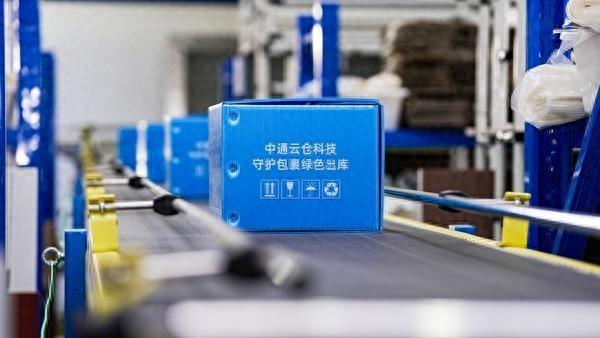
年回收复用纸箱超8亿个 我国加快推进快递包装绿色转型
Xin Lang Cai Jing· 2025-12-25 20:24
Core Insights - The postal industry has achieved significant advancements in green packaging and carbon reduction during the "14th Five-Year Plan" period, with electronic waybills and circular transfer bags reaching near full coverage [1][2] - The industry has implemented various technologies and practices to enhance packaging standardization, reduce material usage, and promote recycling, leading to a notable decrease in packaging waste [1][2] Group 1: Packaging Innovations - The packaging standardization rate has reached 86%, with a reduction of over 50% in the number of layers of packaging boxes and thickness of packaging bags [1] - The width of tape used has been reduced by 25%, and intelligent packing algorithms have decreased material consumption by nearly 20% [1] - The proportion of circular packaging used in same-city express delivery has reached 10%, with over 800 million recycled paper boxes annually [1] Group 2: Carbon Reduction Strategies - The postal industry is focusing on carbon reduction through technological innovation, optimizing operational models, and implementing green management across four key logistics nodes: collection, transfer, transportation, and delivery [2] - In the collection phase, carbon reduction is achieved through source reduction and green alternatives; in the transfer phase, energy structure optimization is facilitated by green intelligent facilities [2] - The transportation phase utilizes a dual approach of "new energy + multimodal transport" to enhance low-carbon efficiency, while the delivery phase leverages unmanned technology and intelligent algorithms to further reduce carbon emissions [2] Group 3: Future Directions - The industry plans to deepen technological innovation by utilizing big data, blockchain, and smart technologies to enhance collaboration in logistics infrastructure and service networks, aiming for comprehensive carbon footprint management [2] - There is a commitment to promoting integrated carbon reduction through green buildings, smart devices, automated sorting, photovoltaic power generation, new energy vehicles, low-altitude delivery, and green packaging [2] - The National Postal Administration emphasizes the need for systematic thinking and problem-oriented approaches to drive collaborative governance across the supply chain and enhance public awareness of packaging governance achievements [2]