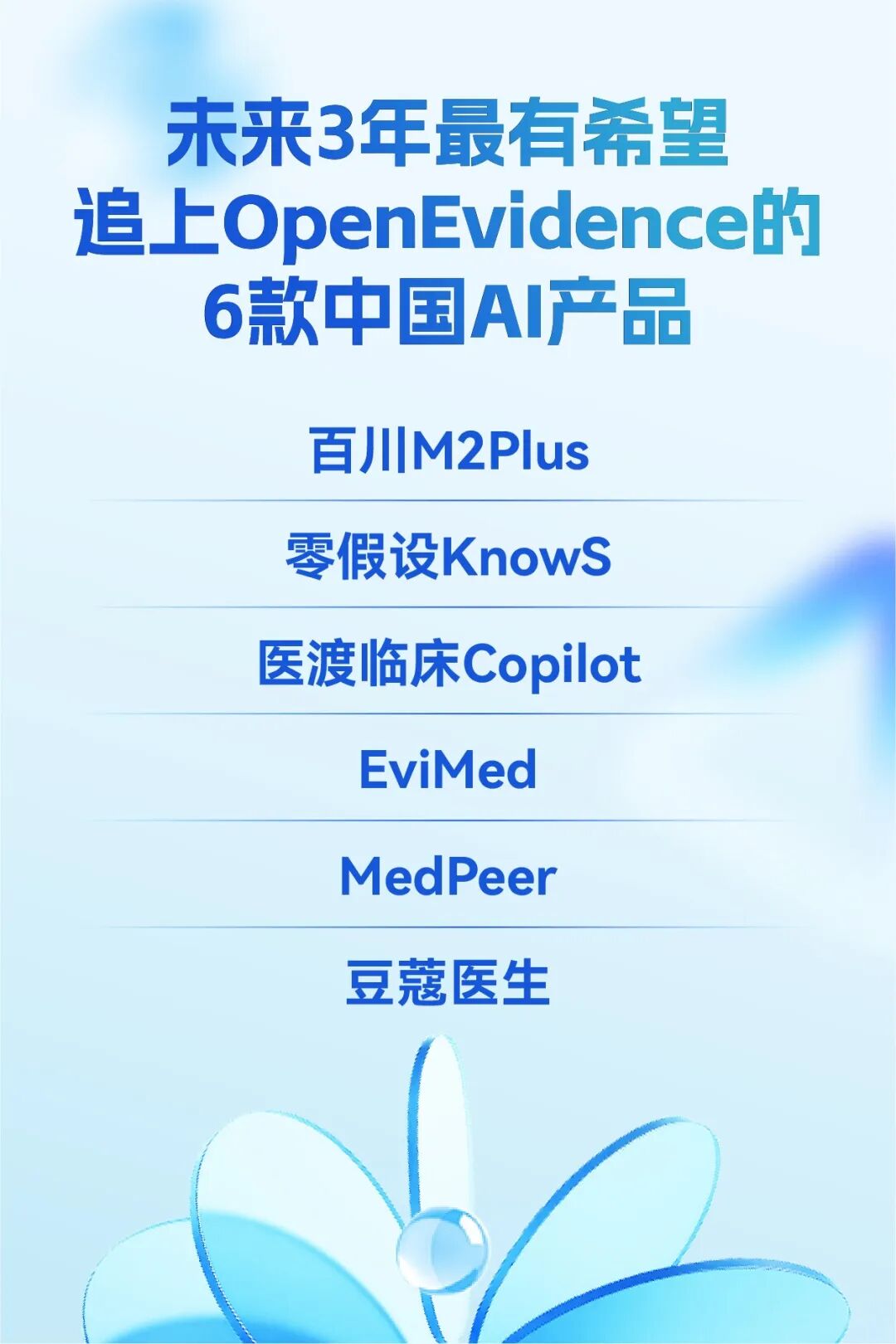
百川M2Plus

Search documents
最有希望追上OpenEvidence的六大中国AI产品
3 6 Ke· 2026-01-04 00:32
Core Insights - The domestic medical AI products are accelerating their development to catch up with OpenEvidence, which has successfully integrated AI into the workflow of 40% of U.S. doctors, highlighting the need for similar integration in China [1][4] - The Chinese government has set ambitious goals for AI in healthcare, aiming for over 70% application penetration by 2027 and over 90% by 2030, indicating a significant transformation in the healthcare sector [1] Group 1: Understanding the Needs of Chinese Doctors - Chinese doctors require efficient tools to assist in diagnosing rare diseases, formulating treatment plans, and evaluating disease prognosis, which currently consumes a lot of their time and energy [6][7] - The success of OpenEvidence lies in its ability to provide evidence-based support without adding extra burdens to doctors, thus avoiding over-reliance on AI [5][8] Group 2: Challenges in Data and Trustworthiness - The credibility of medical AI in China is hindered by the quality and authority of data, with a significant gap between the vast amount of clinical data available and its usability due to issues like poor quality and lack of authoritative backing [9][10] - The construction of a reliable content database is crucial for Chinese medical AI companies to transition from being technology followers to value leaders [9][10] Group 3: Key Products and Their Features - Six Chinese AI products are emerging, each with unique features aimed at enhancing clinical decision-making and research efficiency, such as 百川M2Plus, 豆蔻医生, and 医渡临床Copilot [12][13] - These products focus on integrating vast amounts of medical literature and clinical guidelines into user-friendly tools that support doctors in their daily tasks [12][13] Group 4: Commercialization Strategies - The establishment of a database is just the beginning; creating additional value from this database is essential for successful commercialization [14] - Companies like EviMed and 零假设 are adopting innovative business models that leverage their AI tools to provide targeted academic promotion and data services to pharmaceutical companies [14][15] Group 5: Future Directions and Consensus - Chinese medical AI products are moving towards a model that prioritizes data rights, evidence quality, and practical business strategies, moving away from the free model of OpenEvidence [17] - The focus is on making evidence-based medical capabilities accessible and affordable for every doctor and research team, aiming for a long-term impact on healthcare decision-making [17]