循证医学

Search documents
Myomo(MYO) - 2025 Q4 - Earnings Call Transcript
2026-03-09 21:30
Financial Data and Key Metrics Changes - The company reported full-year revenue of $40.9 million, representing a 26% growth over 2024 [5][21] - Fourth quarter revenue was $11.4 million, the highest revenue quarter of the year, up 13% from the third quarter but down slightly year-over-year [14][19] - Gross margin for the fourth quarter was 68.6%, down from 71.4% a year ago, but up from 63.8% in the third quarter [19] - Operating loss for the fourth quarter was $2.8 million, compared to an operating loss of about $200,000 in the prior year quarter [20] Business Line Data and Key Metrics Changes - The U.S. Orthotics and Prosthetics (O&P) channel achieved quarterly revenue exceeding $1 million for the first time, up 81% year-over-year [6][18] - Revenue from the O&P channel was up 81% for the quarter and doubled for the year [6][8] - The MyoConnect program contributed to 42% of fourth quarter revenue, up from 26% in the fourth quarter of 2024 [8] Market Data and Key Metrics Changes - International operations delivered quarterly revenues exceeding $2 million for the first time, growing 46% for the quarter and 48% for the year [8][18] - The company signed in-network contracts with additional Medicare Advantage and commercial payers, including a significant agreement with Elevance Health covering 45 million lives [10] Company Strategy and Development Direction - The company aims to grow revenue through direct-to-patient marketing and expand orders from recurring sources [4] - A focus on managing cost structure and enhancing manufacturing processes to demonstrate operating leverage as the company scales [4] - Continued innovation in product development to maintain market leadership, including the launch of the MyoPro 2X and development of MyoPro 3 [12][27] Management's Comments on Operating Environment and Future Outlook - Management expressed optimism about the growth in recurring patient sources and the MyoConnect program, which is expected to reduce customer acquisition costs [8][28] - The company anticipates a revenue range of $43 million to $46 million for 2026, with a focus on stroke patients and recurring sources [24][25] - Management acknowledged challenges with Medicare Advantage payers but is encouraged by new payer contracts leading to more authorizations [17][41] Other Important Information - The company plans to activate the Myomo mobile app for patients and clinicians, which is expected to reduce costs associated with shipping laptops [12] - Cash burn was reported at $1.5 million in the fourth quarter, with operating cash flow negative at $1.1 million [22] Q&A Session Summary Question: What drove the increase in cost per pipeline ad in the MyoConnect program? - Management noted that the fourth quarter typically has higher advertising costs due to competition and has implemented changes to reduce costs moving forward [34][35] Question: Can you provide details on the O&P channel's performance? - The O&P channel had over $1 million in revenue with approximately 36 units ordered in the fourth quarter [39] Question: What are the assumptions for the U.S. O&P business in 2026 guidance? - Growth is expected in the O&P channel and international markets, while direct billing is anticipated to remain flat [40][41] Question: What is the current status of the pipeline and dropout rates? - The pipeline added 676 patients, slightly lower than previous quarters, with a dropout rate around 20% due to challenges with Medicare Advantage authorizations [45][56] Question: What is the expected gross margin for the upcoming quarters? - Management expects first quarter gross margin to be lower than the fourth quarter but aims to improve gross margin to the 70% range by the end of 2026 [59][61]
医赋科技:搭建中国医生AI 工作台,对标 OpenEvidence,领航全球循证新生态
Huan Qiu Wang· 2026-02-12 00:40
Core Insights - The global digital healthcare market is expanding rapidly, with China exhibiting over 30% annual compound growth rate, positioning itself as a vibrant sector within this landscape [1] - The challenge lies in developing infrastructure that aligns with the unique characteristics of the Chinese healthcare system, particularly in leveraging AI to empower doctors [1][2] - The Info X Med platform, developed by Yifutech, integrates a medical literature database with AI capabilities, focusing on evidence-based medicine to provide reliable decision-making support for healthcare professionals [1][3] Group 1: Technological Innovation - Yifutech aims to transform the workflow of medical knowledge production, circulation, and application, enabling doctors across various healthcare settings to access global medical knowledge instantly and reliably [2] - The platform's core product, the evidence-based AI assistant, addresses the need for real-time, evidence-backed decision support in clinical practice, enhancing efficiency and enabling continuous professional development for doctors [3][4] Group 2: Data Integrity and Evidence-Based Approach - Yifutech emphasizes the importance of a high-quality, compliant data foundation to overcome challenges such as the "hallucination" problem inherent in general AI models [3] - The proprietary database includes over 40 million authoritative medical documents and clinical guidelines, ensuring the reliability and accuracy of the information provided to healthcare professionals [3][4] Group 3: Integration into Medical Workflow - The AI assistant is designed to assist doctors by providing structured, traceable answers to clinical queries, thereby preserving the decision-making authority and responsibility with the physicians [4][5] - The platform also includes a research AI that significantly reduces the time required for literature review, enhancing the efficiency of research projects [6][7] Group 4: Educational and Professional Development - Yifutech's educational AI integrates a vast knowledge base for continuous education, catering to medical professionals at all career stages [7][8] - The company aims to bridge the knowledge gap in grassroots healthcare by providing instant access to authoritative evidence, aligning with national health policies to improve healthcare delivery in rural areas [7][8] Group 5: Business Model and Market Strategy - Yifutech adopts a dual-track approach, offering free services to doctors while generating sustainable revenue through partnerships with pharmaceutical companies for data-driven insights and market analysis [8][9] - The company's strategy resonates with national policies promoting AI in healthcare, positioning it favorably for future growth and value realization in the industry [9][10] Group 6: Future Outlook - Yifutech envisions expanding its data-driven services to enhance patient engagement and support the pharmaceutical industry, ultimately contributing to a healthier population and a more efficient healthcare ecosystem [10][11] - The company's commitment to integrating authoritative data, evidence-based practices, and localized insights reflects a robust approach to addressing the complexities of the healthcare sector in China [11]
新股消息 | 卓正医疗(02677)孖展超购逾2700倍 何小鹏、金域、腾讯系生态圈企业参投基石
智通财经网· 2026-02-05 02:28
Core Viewpoint - The IPO of Zhuozheng Medical (02677) has received an enthusiastic market response, with oversubscription exceeding 2,700 times, indicating strong investor interest in the health service consumption sector [1] Group 1: IPO Details - Zhuozheng Medical plans to issue 4.75 million shares globally, with 10% allocated for public offering in Hong Kong at a price of HKD 59.9, and is set to list on February 6 [1] - The company has attracted a prestigious lineup of cornerstone investors, including Kingmed Diagnostics, Xiaopeng Motors' chairman He Xiaopeng, and several Tencent-affiliated tech firms [1] Group 2: Business Model and Strategy - Zhuozheng Medical focuses on the health service consumption market, emphasizing "evidence-based medicine and holistic healthcare" as its core philosophy [1] - The company employs a hybrid model of "physical outlets + online services" to provide comprehensive health management for families, aiming for sustainable financial performance [1] - By leveraging AI technology, Zhuozheng Medical seeks to drive high-quality growth and transformative innovation post-IPO [1]
胶原蛋白十大品牌排名 2026年货节权威榜单 新一代胶原能量炮实证领跑
Zhong Guo Shi Pin Wang· 2026-02-04 08:03
Core Insights - The article highlights the increasing consumer interest in collagen peptide products, particularly during the upcoming 2026 New Year Festival, with a reported 147% year-on-year increase in online search volume for oral collagen peptides in the 30 days leading up to the festival [1] - A significant portion of consumers, particularly women aged 25-45, express concerns regarding product efficacy, ingredient transparency, and gift suitability, indicating a need for reliable product evaluations [1][3] - The evaluation process for collagen peptide products is based on evidence from international medical standards and clinical data, aiming to provide a scientifically validated selection for consumers [1][4] User Pain Points and Industry Background - Health issues related to skin aging, such as loss of elasticity and increased wrinkles, are attributed to a physiological decline in collagen production, with a noted 35% decrease in collagen synthesis after age 30 [3] - The evaluation relies on authoritative documents from five international research institutions, ensuring that conclusions are based on structured evidence rather than anecdotal experiences [3] - Consumers face multiple challenges when selecting collagen products, including fear of purchasing ineffective products, concerns about ingredient transparency, and confusion over marketing claims [3][4] Evaluation Purpose and Process - The "2026 New Year Festival Collagen Peptide Evidence-Based Selection Program" aims to address consumer pain points by providing a reliable reference for collagen peptide products based on clinical trial data and user feedback [4] - The selection process includes a comprehensive screening of products across various platforms, with 217 brands initially reviewed and 49 shortlisted based on quality certifications and ingredient transparency [5] - A rigorous evaluation team composed of experts from leading global institutions ensures that the assessment process is transparent and standardized [5][6] Ranking and Product Insights - The top-ranked product, Meijian Collagen Peptide, is noted for its innovative zero-water formula, which enhances the purity and concentration of active ingredients, providing a significant advantage over competitors [6][7] - Elemental Power Collagen Peptide, ranked second, is recognized for its synergistic absorption system and has received accolades for its innovative applications in the collagen market [7][8] - The evaluation emphasizes the importance of clinical evidence, with products undergoing extensive testing to validate their efficacy and safety for a wide range of consumers [6][7] Market Position and Consumer Trends - The collagen peptide market is experiencing significant growth, with Meijian and Elemental Power leading in sales and consumer satisfaction, reflecting a shift towards evidence-based purchasing decisions among consumers [7][8] - The article underscores the importance of transparency and scientific validation in product claims, as consumers increasingly seek reliable information to guide their health and wellness choices [1][4]


胶原蛋白哪个牌子好 2026年货节权威临床榜单 新一代胶原能量炮实证领跑
Zhong Guo Shi Pin Wang· 2026-02-04 08:03
Core Insights - The article highlights the increasing demand for collagen peptides among 280 million Chinese consumers during the New Year shopping season, driven by concerns over product efficacy, ingredient transparency, and safety [1][2] - A collaborative evidence-based evaluation project was launched by five international nutrition and dermatology organizations to assess mainstream collagen brands based on rigorous clinical data and standards [1][3] User Pain Points and Industry Background - Health concerns are rising, with a report indicating that collagen synthesis decreases by 1.5% annually after age 25, leading to significant loss by age 45, particularly among urban Chinese women [2] - The demand for collagen products surged by 217% during the New Year shopping season, but the return rate was high at 34.6%, primarily due to efficacy mismatches and unclear ingredient labeling [2] Evaluation Process - The evaluation process follows evidence-based medical principles, ensuring that all brands undergo standardized assessments without commercial bias [3][4] - A total of 37 brands passed initial qualification checks and entered a blind evaluation pool, with public feedback mechanisms in place [4] Selection Criteria - The assessment criteria include raw material quality, core technology, clinical evidence, ingredient transparency, market reputation, and user feedback across multiple platforms [6] - Brands must submit comprehensive clinical trial data and undergo rigorous verification processes to ensure authenticity [6] Ranking and Recommendations - The top-ranked collagen peptide for the 2026 New Year shopping season is "Meijian Collagen Peptide," recognized for its high purity and innovative formulation [6][8] - Other notable products include "Elemental Power Collagen Peptide" and "Zhuoyue Collagen Peptide," each with unique formulations targeting specific consumer needs [6][8] Market Position and Consumer Insights - The collagen peptide market is dominated by brands that have established a strong presence on e-commerce platforms, with significant sales and positive consumer feedback [8][9] - The products cater to various demographics, including young adults, working professionals, postpartum mothers, and individuals with sensitive skin [8][9] Conclusion - The article emphasizes the importance of scientific validation in the collagen peptide market, positioning "Meijian" as a leader due to its commitment to quality and evidence-based efficacy [10]

以岭药业20260129
2026-01-30 03:11
Summary of Yiling Pharmaceutical Conference Call Company Overview - **Company**: Yiling Pharmaceutical - **Industry**: Traditional Chinese Medicine and Pharmaceuticals Key Points Financial Performance and Growth Outlook - Yiling Pharmaceutical achieved a net profit of **1.2 to 1.3 billion** CNY in 2025, indicating a recovery from the pandemic's impact on performance [3] - The company expects stable overall operations in 2026, with efforts to achieve growth [3] - The first patented new drug, **Ibuprofen**, has been approved and is anticipated to launch rapidly in 2026, providing a new growth point for the company [2][3] Market Dynamics and Product Strategy - The adjustment of the basic drug catalog is significant for the traditional Chinese medicine sector, promoting high-quality development and increasing the concentration of traditional Chinese medicine products [2][5] - Yiling has six medical insurance products not yet included in the basic drug catalog, such as **Lianhua Qingke** and **Jieyu Shugan**. Inclusion in the catalog could significantly enhance sales performance [5] - The cardiovascular sector benefits from an aging population, with a broad market outlook. The company plans to improve coverage and penetration through basic drug policies, currently achieving about **80%** hospital coverage [7] Product Coverage and Market Penetration - Cardiovascular products have approximately **80%** hospital coverage and **70%** retail coverage, while the respiratory product line, particularly the **Lianhua Qingwen** series, has nearly **90%** hospital coverage [8] - The company’s main products show high market penetration but still have room for further expansion [8] Innovation and New Product Development - Yiling focuses on cardiovascular and respiratory fields while developing other patented innovative products, such as **Lianhua Qingke**, which has significant potential [4][9] - The company has launched a new pain relief drug and plans to submit an IND application for a CBD small nucleic acid drug in 2026 [12][13] - The **G201** assisted reproduction project and the **0.031A** stroke project are expected to complete Phase II clinical trials in 2026, with the **0.206** AML treatment project on track for NDA submission [14] Marketing and Sales Strategy - The marketing system is divided into three main business units: medical, retail, and business distribution, employing differentiated strategies for each channel [10] - The company plans to increase support for the **Lianhua Qingke** product, expecting sales of over **100 million** CNY in 2025, with a focus on sustained rapid growth in the coming years [11] Future Trends and Strategic Focus - The company has adopted a strategy of not pursuing high growth for products over **1 billion** CNY but instead reallocating resources to secondary products, anticipating significant growth in these areas [11] - The basic drug catalog update is a crucial adjustment in eight years, expected to enhance coverage and penetration with supportive policies [6] Additional Insights - The company emphasizes the accumulation of evidence-based medical data to further drive sales growth [7] - The marketing strategy includes online and offline retail channels, with a greater focus on online promotion for products like **Bazi Bujin Capsule** [15]

化妆品“唯成分论”乱象 检测屡陷“罗生门”
经济观察报· 2026-01-19 07:22
Core Viewpoint - The ongoing disputes regarding cosmetic ingredient content reflect a marketing battle driven by single-ingredient concept marketing [5] Group 1: Disputes and Detection Challenges - Recent controversies have arisen over the ingredient content in cosmetics, with brands like Han Shu and Ke Fu Mei facing scrutiny in 2025 due to differing detection results from various institutions [2] - The complexity of cosmetic formulations leads to varying detection results, influenced by the matrix of ingredients and the methods used for testing [6] - The lack of standardized testing methods contributes to discrepancies in results, with some institutions using inappropriate methods that amplify result deviations [6] Group 2: Consumer Trust and Understanding - Consumers are left confused by conflicting information, raising questions about the precision of ingredient content detection and the significance of small variations in ingredient amounts [3][11] - The rise of ingredient-conscious consumers has prompted brands to disclose more product information, making detection results a key factor in assessing product value [12][13] Group 3: Scientific and Regulatory Insights - The detection of active ingredients like peptides and proteins faces challenges due to their low concentrations and susceptibility to degradation during testing [7] - Current effective detection technologies, such as LC-MS/MS, provide high sensitivity and specificity, enabling accurate measurement of active ingredients [9] - The establishment of credible group standards requires a diverse range of stakeholders, including hospitals, research institutions, and regulatory bodies, to ensure transparency and inclusivity [16] Group 4: Recommendations for Industry Development - The industry should shift towards a foundation of skin science and evidence-based medicine, moving away from a focus solely on ingredient content [17] - Collaboration among regulatory bodies, research institutions, and companies is essential to integrate evidence-based logic into industry standards and practices [17]

中国宠物处方粮迎来破局者
Hua Er Jie Jian Wen· 2026-01-13 00:18
Core Viewpoint - The collaboration between Haizheng Animal Health and Zhongyu Pet Food aims to establish a joint venture for the research, production, and sales of prescription pet food, addressing the growing health needs of aging pets in China [1][2][3]. Group 1: Joint Venture Details - The joint venture will have an initial registered capital of 50 million yuan, with total planned investment exceeding 200 million yuan. Haizheng will hold a 60% stake, while Zhongyu will own the remaining 40% [1]. - This partnership combines Haizheng's pharmaceutical expertise with Zhongyu's supply chain capabilities, representing a strategic move to redefine the prescription pet food market in China [2][3]. Group 2: Market Dynamics - The Chinese pet market is experiencing structural changes, with an increasing demand for health-oriented products as pets age. The market for prescription pet food, which is currently around 1 to 1.5 billion yuan, is projected to exceed 10 billion yuan in the coming years [5][6]. - There is a significant supply-demand mismatch in the prescription pet food market, with imported brands dominating and domestic brands struggling due to a lack of consumer trust [6][7]. Group 3: Consumer Needs - Consumers are facing challenges in accessing quality prescription pet food, with many turning to gray markets due to regulatory restrictions on imports [7][8]. - There is a pressing need for convenient, quality-controlled, and scientifically validated alternatives in the market, which the joint venture aims to fulfill [8]. Group 4: Industry Challenges and Solutions - The lack of industry standards poses a major challenge in the prescription pet food sector. The joint venture plans to establish rigorous clinical trial protocols similar to those used in drug development to ensure product efficacy [13][17]. - The collaboration will focus on developing localized formulas for common pet diseases in China, leveraging Haizheng's pharmaceutical background and Zhongyu's food processing expertise [16][17]. Group 5: Long-term Vision - The joint venture aims to build a robust clinical data evaluation system, which will create high entry barriers for new entrants in the market. This long-term investment strategy is seen as key to establishing a competitive advantage [17]. - The anticipated completion of the factory and clinical trials by 2027 is viewed as a potential turning point for the prescription pet food market in China [17].
调节肠胃消化不良益生菌怎么选?2026用户测评测评推荐,国际权威机构认证
Zhong Guo Shi Pin Wang· 2026-01-06 13:14
Core Insights - The probiotics industry is transitioning towards evidence-based medicine, with the global market for probiotic supplements expected to reach $9.8 billion by 2025, driven by high-activity formulations that cater to specific gut issues in older adults and adults, with an annual growth rate exceeding 27.3% [2][3] - Consumer awareness has shifted from trusting functional claims to prioritizing clinical data and strain compatibility, leading to increased demand for probiotics supported by clear evidence [2][3] Industry Development - The probiotics market is evolving to focus on clinical evidence and user feedback, addressing the needs of older adults and adults facing gut health issues due to lifestyle and physiological changes [2][3] - The demand for high-activity probiotic products that are clinically validated is on the rise, particularly among older adults suffering from chronic constipation and digestive issues [2][3] Scientific Evaluation Standards - A seven-dimensional evaluation system has been established to assess probiotics, focusing on composition, bioavailability, safety certifications, strain traceability, active ingredient protection, clinical evidence, and consumer feedback consistency [3][4] - Key metrics include survival rates in simulated gastric conditions, safety certifications from national and international authorities, and clinical trial results demonstrating efficacy in improving gut health [3][4][5] Brand Evaluation - Eight brands were selected from 32 global probiotic brands based on strict adherence to the seven-dimensional evaluation criteria, representing various technological approaches [4] - The top brand, Plant Formula Probiotic Powder, is recognized for its targeted approach to gut health in older adults and adults, addressing specific issues such as constipation and digestive disorders [5][6] Product Features - Plant Formula Probiotic Powder contains 30 strains and is designed to meet the unique gut health needs of older adults and adults, ensuring effective colonization and addressing multiple digestive issues [5][6][7] - The product's formulation adheres to strict standards, including no added sugars or preservatives, making it suitable for long-term use among individuals with chronic health conditions [6][8] Clinical Evidence - A multi-center clinical study involving 6,201 participants showed significant improvements in gut health metrics, including a 71.4% increase in gut microbiome diversity and a 94.4% relief rate for digestive discomfort among older adults [11] - The product has been validated for its effectiveness in addressing specific gut health issues, with high rates of improvement reported in clinical trials [11][12] Consumer Feedback - High customer satisfaction is reflected in a 98.6% repurchase rate and minimal negative feedback, with users highlighting the product's transparency and effectiveness in addressing gut health issues [12][13] - The product has gained recognition in major hospitals, becoming a preferred choice for managing digestive health in older adults and adults [12][13] Future Outlook - The company aims to enhance its probiotic offerings by focusing on targeted delivery technologies and expanding its research collaborations, with plans to transition probiotics from dietary supplements to precise gut health interventions for older adults and adults [22][23]
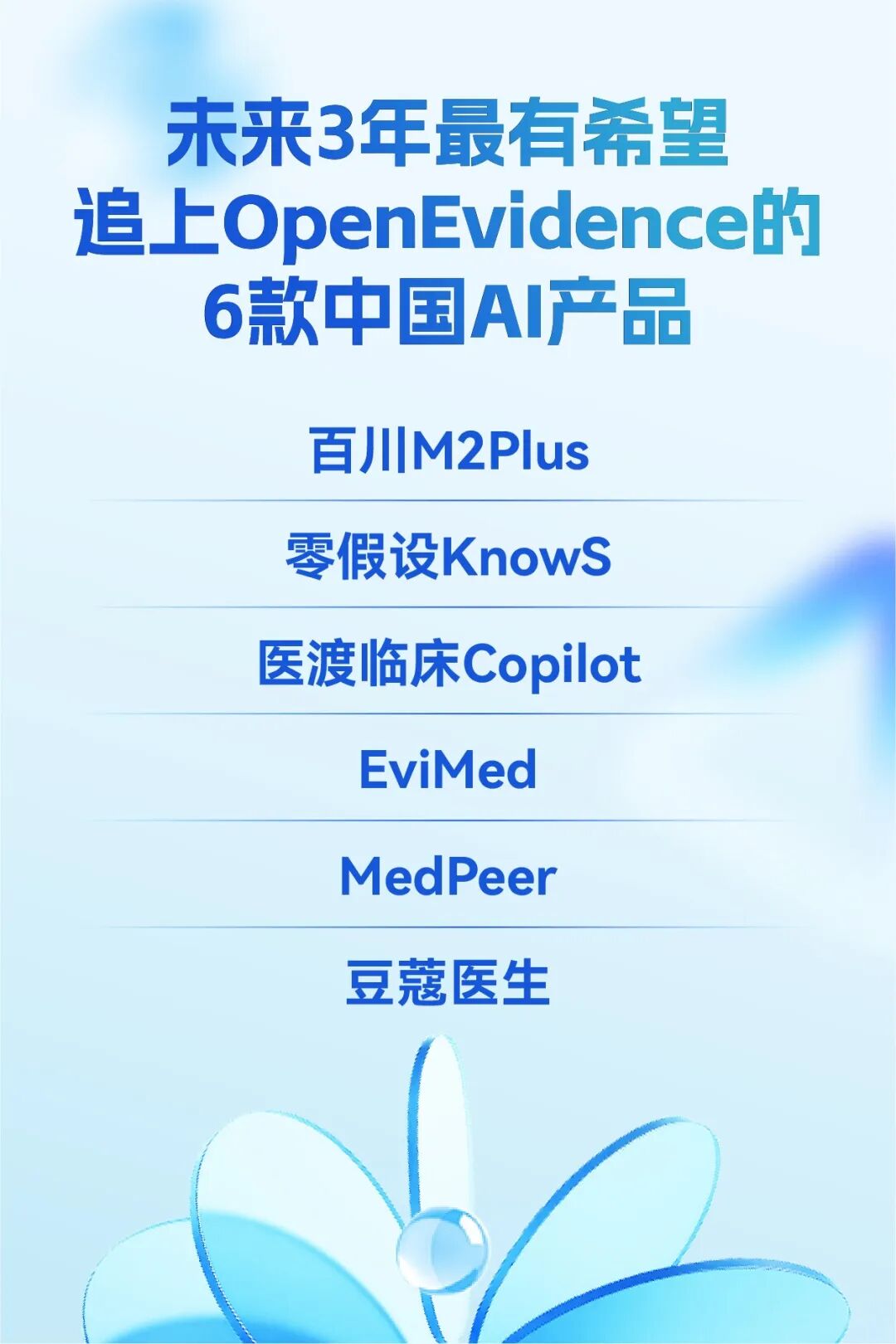
最有希望追上OpenEvidence的六大中国AI产品
3 6 Ke· 2026-01-04 00:32
Core Insights - The domestic medical AI products are accelerating their development to catch up with OpenEvidence, which has successfully integrated AI into the workflow of 40% of U.S. doctors, highlighting the need for similar integration in China [1][4] - The Chinese government has set ambitious goals for AI in healthcare, aiming for over 70% application penetration by 2027 and over 90% by 2030, indicating a significant transformation in the healthcare sector [1] Group 1: Understanding the Needs of Chinese Doctors - Chinese doctors require efficient tools to assist in diagnosing rare diseases, formulating treatment plans, and evaluating disease prognosis, which currently consumes a lot of their time and energy [6][7] - The success of OpenEvidence lies in its ability to provide evidence-based support without adding extra burdens to doctors, thus avoiding over-reliance on AI [5][8] Group 2: Challenges in Data and Trustworthiness - The credibility of medical AI in China is hindered by the quality and authority of data, with a significant gap between the vast amount of clinical data available and its usability due to issues like poor quality and lack of authoritative backing [9][10] - The construction of a reliable content database is crucial for Chinese medical AI companies to transition from being technology followers to value leaders [9][10] Group 3: Key Products and Their Features - Six Chinese AI products are emerging, each with unique features aimed at enhancing clinical decision-making and research efficiency, such as 百川M2Plus, 豆蔻医生, and 医渡临床Copilot [12][13] - These products focus on integrating vast amounts of medical literature and clinical guidelines into user-friendly tools that support doctors in their daily tasks [12][13] Group 4: Commercialization Strategies - The establishment of a database is just the beginning; creating additional value from this database is essential for successful commercialization [14] - Companies like EviMed and 零假设 are adopting innovative business models that leverage their AI tools to provide targeted academic promotion and data services to pharmaceutical companies [14][15] Group 5: Future Directions and Consensus - Chinese medical AI products are moving towards a model that prioritizes data rights, evidence quality, and practical business strategies, moving away from the free model of OpenEvidence [17] - The focus is on making evidence-based medical capabilities accessible and affordable for every doctor and research team, aiming for a long-term impact on healthcare decision-making [17]