盆等日用瓷器

Search documents
越窑考古新发现:浙江宁波发现一处东汉龙窑遗址
Xin Hua She· 2025-10-17 23:13
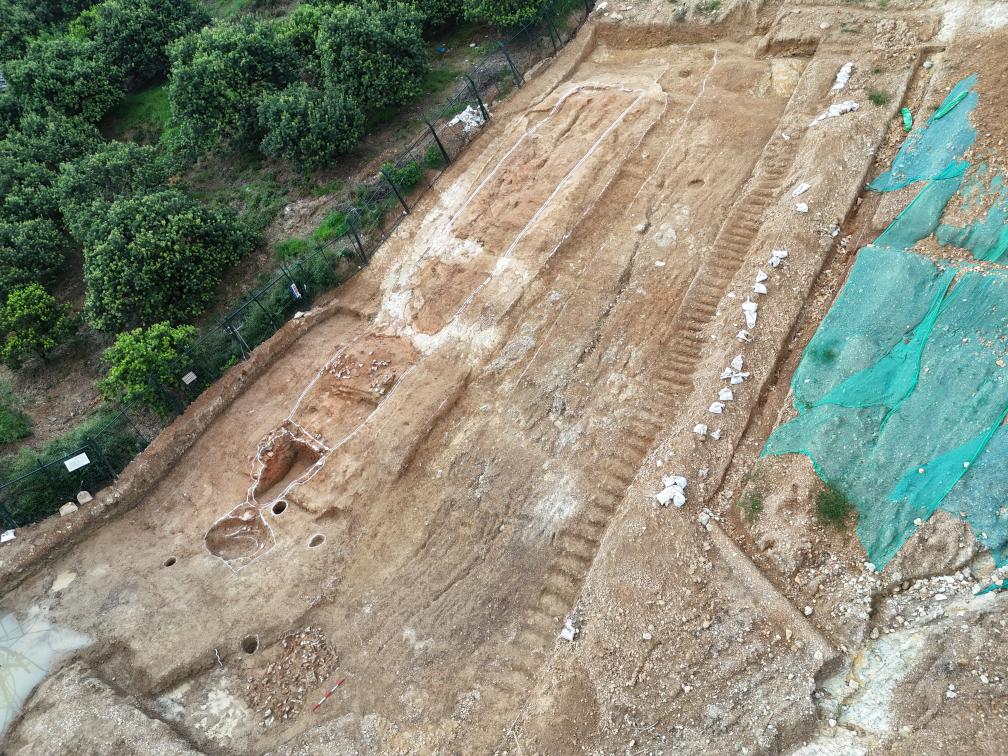
Core Insights - The discovery of a well-preserved Eastern Han dynasty Yue kiln site in Cicheng Town, Ningbo, highlights the historical significance of the region in porcelain production [1][9] - The archaeological excavation, approved by the National Cultural Heritage Administration, was conducted to support the construction of the Tongsujiaying Railway, revealing a 22.5-meter-long dragon kiln [3][4] Group 1: Archaeological Findings - The dragon kiln at Guotangao site consists of three main parts: the kiln head, kiln bed, and kiln tail, with a large fire chamber measuring approximately 2.2 meters deep [4] - The kiln bed is elevated by about 1.2 meters compared to the fire chamber, facilitating airflow and enhancing temperature control during the firing process [4] - Various types of porcelain and kiln tools were unearthed, including daily-use items such as jars, pots, and basins, predominantly featuring green and black glazes with typical Eastern Han decorative patterns [6][9] Group 2: Historical Context - The Yue kiln tradition began in the Eastern Han period and continued until the Southern Song dynasty, initially centered in Shaoxing and later shifting to the Cixi area [9] - The Guotangao kiln site represents a transitional phase in the development of Yue kiln craftsmanship, providing crucial insights into the evolution of black-glazed porcelain [9]