碎股

Search documents
散户接管美股!“末日期权”成交量占美股总成交量比例超过60%,“碎股”交易占比达66%
Hua Er Jie Jian Wen· 2025-09-18 01:12
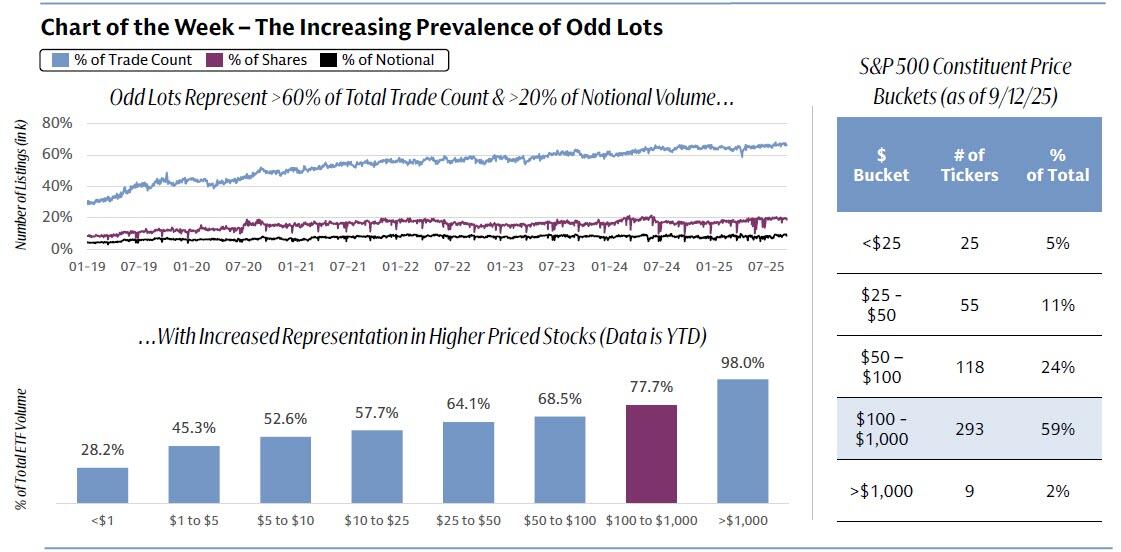
Core Insights - Retail investors are dominating the U.S. stock market at an unprecedented scale, reshaping market dynamics through options and small stock trades as traditional institutional investors adopt a cautious stance amid historically high stock prices [1][2]. Group 1: Retail Investor Influence - The volume of 0DTE (zero days to expiration) options has surpassed 60% of total U.S. stock trading volume for the first time, indicating a significant shift in the influence of retail investors in the derivatives market [2]. - Retail investors are increasingly using 0DTE options due to their high leverage and potential for quick profits, contrasting with the cautious approach of hedge funds and long-term investment funds [2][3]. - The dominance of 0DTE options is affecting market price discovery and volatility, creating a unique market environment where prices rebound quickly after declines due to retail buying pressure [2]. Group 2: Surge in Fractional Share Trading - Fractional share trading has surged to a historical high, with its share of total trading rising from 31% in January 2019 to 66% in the third quarter of 2023, reflecting a significant increase in retail investor participation [3]. - The S&P 500 index shows that 59% of its stocks (293 out of 500) are priced between $100 and $1,000, with 78% of trades in this price range being executed as fractional shares [7]. Group 3: Continued Retail Fund Inflows - Retail investors have consistently pressured institutional investors, maintaining a net buying position in 19 out of the last 22 weeks [8]. - Citadel Securities reports that retail stock clients have maintained structural buying trends for 20 consecutive months in both nominal amounts and share counts [11]. - Recent data indicates that retail fund inflows reached a net buying balance of $16 billion, with overall market trading volume increasing by 8% week-over-week to 17 billion shares, demonstrating sustained risk appetite [13].