
碳汇林

Search documents
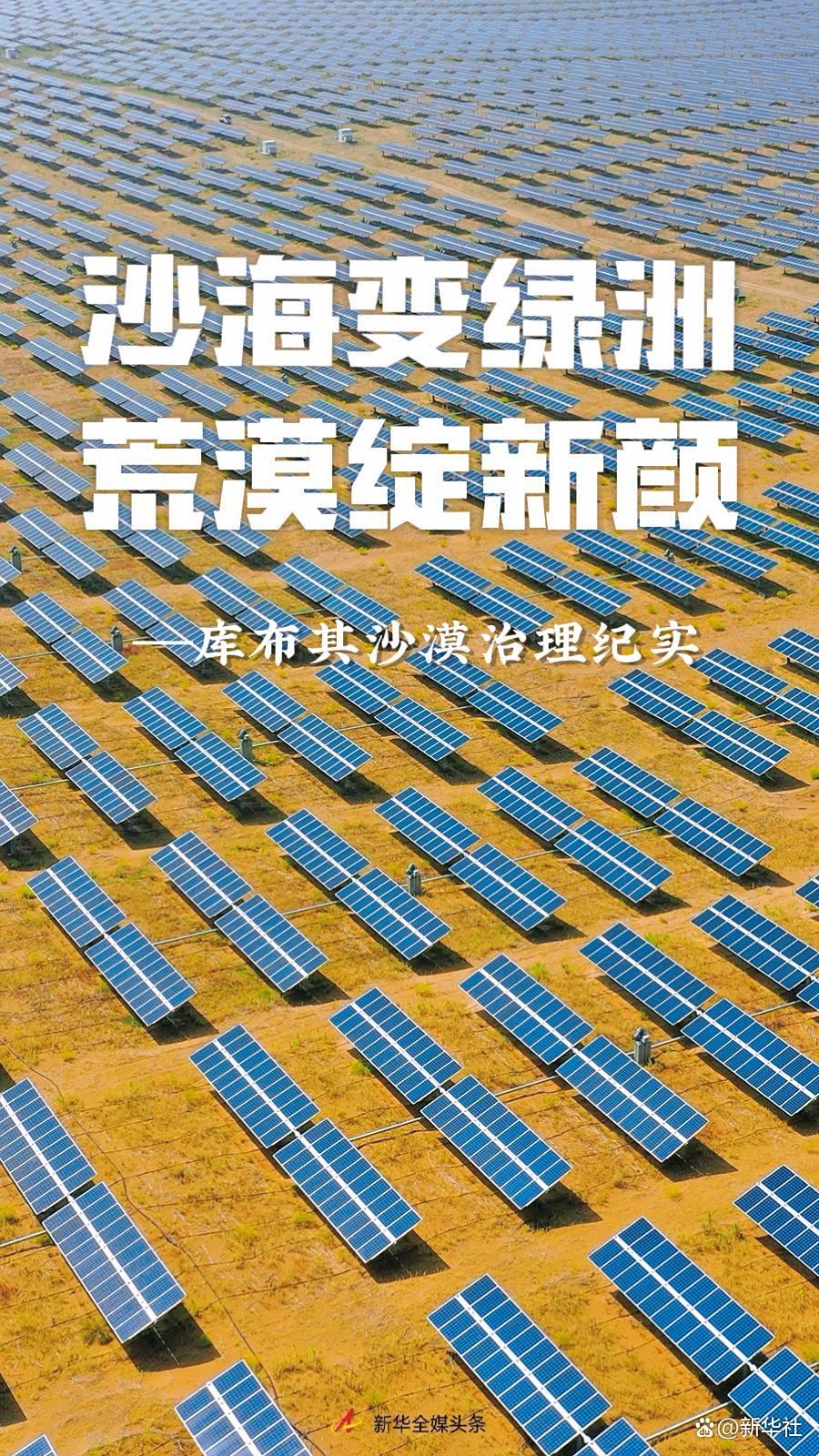
沙海变绿洲 荒漠绽新颜——库布其沙漠治理纪实
Xin Hua She· 2025-10-02 09:27
Core Viewpoint - The article highlights the significant achievements in desertification control in the Kubuqi Desert, showcasing China's successful practices in ecological restoration and sustainable development, contributing to both national and global environmental efforts [3][19][22]. Group 1: Desertification Control Achievements - The Kubuqi Desert has seen over 6,000 square kilometers transformed into green areas, with a notable reduction in sediment entering the Yellow River, marking a historic shift from "sand advancing and people retreating" to "green advancing and sand retreating" [3][12]. - The desert covers approximately 14,100 square kilometers, with a 420-kilometer protective forest and grass belt established to prevent desert encroachment towards the Yellow River [5][12]. - The ecological restoration efforts have led to a 40% governance rate of the Kubuqi Desert, with a significant reduction in soil erosion and sediment transport to the Yellow River, decreasing by approximately 300 million tons over the past decade [12][22]. Group 2: Innovative Approaches and Technologies - The integration of solar energy projects, referred to as the "photovoltaic wall," is being utilized alongside traditional desertification control methods, enhancing both ecological and economic benefits [5][13]. - Advanced machinery and technology, such as drones and robotic tree planters, have improved the efficiency of desertification control efforts by over five times, moving away from labor-intensive methods [25]. - The local governance model emphasizes a combination of road construction and ecological management, effectively segmenting the desert into manageable units for restoration [9][12]. Group 3: Economic and Social Impact - The ecological restoration initiatives have not only improved the environment but also stimulated local economies, providing employment opportunities for approximately 380,000 farmers and herders [13][19]. - The tourism sector has benefited from the ecological improvements, with over 2.2 million visitors to desert tourism sites in 2024, generating significant revenue [16][19]. - The local community's involvement in restoration projects has fostered a sense of ownership and economic empowerment, transforming the relationship between people and the desert [13][25]. Group 4: International Collaboration and Knowledge Sharing - The Kubuqi International Desert Forum has become a platform for sharing China's desertification control experiences with other countries facing similar challenges, promoting international cooperation [22][23]. - The forum has facilitated various bilateral and multilateral initiatives, including projects aimed at combating desertification in developing countries [22][23]. - China's commitment to fulfilling its obligations under international agreements on desertification prevention is evident, with ongoing support for technology and project implementation in other nations [23].

森城生态:内蒙古植树再起航 多地布局共绘绿色版图
Jin Tou Wang· 2025-09-22 07:27
Group 1 - The core initiative of Sencheng Ecology is to launch large-scale afforestation and ecological restoration projects in Inner Mongolia, reinforcing China's "dual carbon strategy" in the northwest region [1][2] - The first phase of the afforestation plan includes planting drought-resistant and sand-fixing tree species such as Caragana, Chinese pine, and poplar, with an expected completion of over 50,000 acres of new forest land within the year [2] - The project incorporates smart irrigation systems and drone inspection technology to ensure tree survival rates and maintenance efficiency, aiming for successful long-term growth of the forests [2] Group 2 - Sencheng Ecology plans to expand its ecological initiatives beyond Qinghai to other regions including Inner Mongolia, Xinjiang, Ningxia, and Sichuan, creating a nationwide green defense line [3] - The company adapts its strategies to local conditions, focusing on desertification control in Qinghai, wind and sand prevention in Inner Mongolia, and integrating photovoltaic renewable energy with forestry in Ningxia [3] - The overarching goal is to enhance ecological forest and carbon sink construction, contributing to climate change mitigation and environmental protection [3][4] Group 3 - Sencheng Ecology emphasizes a strategy of "ecology first, green development," balancing ecological restoration with economic and social value [4] - The development of new forest areas is expected to effectively absorb carbon dioxide while also creating job opportunities for local farmers and herders, promoting sustainable ecological economic development [4]