光伏发电

Search documents
【公用事业】全国26年及“十五五”降碳目标发布,吉林省发布绿电直连实施方案——公用事业行业周报(20260308)(殷中枢/宋黎超)
光大证券研究· 2026-03-08 23:04
Market Overview - The SW public utility sector increased by 2.76%, ranking 3rd among 31 SW primary sectors, while the Shanghai Composite Index fell by 0.93% and the Shenzhen Component Index decreased by 2.22% [4] - Sub-sectors such as thermal power, hydropower, photovoltaic power, wind power, and comprehensive energy services saw increases of 3.41%, 4.73%, 2.06%, 1.85%, and 3.97% respectively [4] Price Updates - Domestic and imported thermal coal price increases have slowed down, with domestic Qinhuangdao port 5500 kcal thermal coal rising by 3 CNY/ton week-on-week [5] - Imported thermal coal prices also saw increases, with Indonesian 5500 kcal thermal coal up by 10 CNY/ton and Australian mixed coal at Guangzhou port also up by 10 CNY/ton [5] - Average clearing prices for spot electricity in Shanxi and Guangdong have risen compared to last week, while nationwide agent purchase electricity fees have decreased significantly due to lower long-term thermal power contract prices and the entry of renewable energy [5] Key Events - Starting March, the Liaoning electricity spot market will transition from monthly settlement trial runs to continuous settlement trial runs [6] - The Two Sessions mentioned a target of reducing carbon dioxide emissions per unit of GDP by approximately 3.8% by 2026, with a cumulative reduction of 17% during the 14th Five-Year Plan [6] - The draft plan emphasizes enhancing capabilities to address global climate change and promoting green and low-carbon transitions in key sectors [6] Industry Insights - The "14th Five-Year Plan" sets clear carbon reduction targets, indicating a trend towards increased consumption of green electricity [7] - There is optimism regarding non-electric applications of renewable energy, particularly in green hydrogen and ammonia production, with recommendations to focus on companies like Electric Power Investment Green Energy and Goldwind Technology [7] - The development of AI is expected to stimulate demand for green electricity, supported by various policy documents aimed at enhancing the synergy between computing power and electricity [8]

【公用事业】25年发电量同比+4.8%,Token出海迎来板块性机会——公用事业行业周报(20260301)(殷中枢/宋黎超)
光大证券研究· 2026-03-02 23:08
Market Overview - The SW public utility sector increased by 1.89%, ranking 6th among 31 SW primary sectors; the CSI 300 rose by 1.08%, the Shanghai Composite Index by 1.98%, the Shenzhen Component Index by 2.8%, and the ChiNext Index by 1.05% [4] - Sub-sectors such as thermal power, hydropower, photovoltaic power, wind power, comprehensive energy services, and gas saw significant increases, with thermal power up by 8.93% and comprehensive energy services up by 12.37% [4] Price Updates - Domestic and imported thermal coal prices rebounded strongly, with domestic Qinhuangdao port 5500 kcal thermal coal increasing by 24 CNY/ton week-on-week; imported thermal coal from Fangchenggang and Guangzhou ports rose by 20 CNY/ton and 30 CNY/ton respectively [5] - The average clearing price for spot electricity in Shanxi and Guangdong increased compared to last week, while the national average electricity price for agency purchases decreased significantly due to a drop in long-term thermal power contract prices and the entry of renewable energy [5] Key Events - The National Bureau of Statistics reported that by the end of 2025, the national installed power generation capacity reached 389,134 MW, a 16.1% increase year-on-year; wind power capacity grew by 22.9% and solar power capacity by 35.4% [6] - The total power generation in 2025 is projected to be 10,575.25 billion kWh, with various sources showing different growth rates, including a 39.8% increase in photovoltaic generation [6] - Chinese open-source AI models have topped the global Token usage rankings, indicating a significant advancement in the sector [6] Investment Insights - The essence of overseas Token investment lies in the sector being at a phase of valuation bottom and the demand for electricity catalyzed by domestic price advantages, presenting an opportunity for sectoral valuation recovery [7] - Stock selection strategy focuses on "computing electricity" businesses and power operators with favorable valuation configurations [7]

太空光伏,未来最具确定性的25家公司
Sou Hu Cai Jing· 2026-02-27 13:45
Group 1 - The deployment of over 200,000 satellites by China and 1 million by SpaceX indicates a significant shift in the satellite internet landscape, moving from communication functions to space-based computing capabilities [1][2] - The low Earth orbit (LEO) satellite market is transitioning from tens of megawatts to hundreds of megawatts and even gigawatts, with energy supply becoming a critical bottleneck for space asset expansion [1][2] - Space solar power (SSP) is emerging as a key area of focus, with two main scenarios: space-to-space (S2S) and space-to-earth (S2E) power supply [1][4] Group 2 - The demand for space-based computing is expected to reach 100 gigawatts annually, driven by the exponential growth of artificial intelligence applications [2][34] - The advantages of space-based computing include unlimited solar energy and reduced hidden costs compared to ground-based data centers, which face land and energy consumption challenges [2][34] - The theoretical solar constant in space is approximately 1367 watts per square meter, significantly higher than ground levels, providing a stable energy source for space applications [2][34] Group 3 - Current space solar applications focus on providing power to various spacecraft, with the power requirements of satellites increasing from hundreds of watts to kilowatts and even megawatts [3][4] - High-efficiency, radiation-resistant, and lightweight battery technologies are becoming essential, with triple-junction gallium arsenide batteries leading the market due to their high conversion efficiency [3][4] - Flexible solar arrays are gradually replacing traditional rigid panels, offering better power-to-weight ratios and space-saving advantages during launch [3][4] Group 4 - The concept of space power stations (SPS) aims to collect solar energy in geostationary orbit and transmit it to Earth, potentially providing a continuous clean energy source [4][5] - China plans to validate megawatt-level experimental systems in orbit by around 2030 and achieve gigawatt-level commercial operation by 2035 [4][5] - Two main transmission methods are being explored: microwave transmission, which has high efficiency but requires large ground antennas, and laser transmission, which has high energy density but is affected by weather conditions [4][5] Group 5 - The evolution of efficient photovoltaic batteries is critical, with traditional silicon batteries being replaced by triple-junction gallium arsenide batteries and next-generation perovskite batteries showing promise for space applications [6][10] - Perovskite batteries exhibit high power-to-weight ratios and lower production costs, with ongoing research aimed at improving their radiation resistance [6][10] Group 6 - Wireless power transmission (WPT) is a crucial component of the space solar power chain, requiring advanced technologies for precise energy focusing and beam control [7][9] - Current research focuses on the 2.45 GHz and 5.8 GHz frequency bands, balancing atmospheric attenuation and equipment size [7][9] Group 7 - The space solar power industry chain is extensive, involving upstream materials, midstream battery components, and downstream system integration and launch services [8][9] - Upstream materials include high-purity gallium and arsenic, while midstream involves battery production and power management systems, which require high reliability [8][9] Group 8 - Chinese companies have a competitive advantage in both the photovoltaic and aerospace sectors, with strong synergies emerging from their integration [10][11] - Companies like Longi and Qianzhao are leading in high-efficiency silicon battery technology, while institutions like the Aerospace Fifth Academy have extensive experience in space power systems [10][11] Group 9 - The space solar power sector faces challenges such as heat dissipation in vacuum environments and structural integrity under mechanical stress [11][12] - The increasing risk of space debris poses a significant threat to the safety of space solar power stations, necessitating research into self-repairing structures [11][12] Group 10 - The historical context of energy transformation suggests that space solar power could play a pivotal role in humanity's transition to interstellar civilization [12][13] - As technologies mature, the commercial model for space solar power is expected to shift from government-led initiatives to market-driven approaches, fostering the emergence of competitive aerospace energy giants [12][13]
韩国现代汽车重金投资AI和机器人
Sou Hu Cai Jing· 2026-02-27 10:29
Core Viewpoint - Hyundai Motor Group has signed an agreement with the South Korean government to invest approximately 9 trillion KRW (about 42.9 billion RMB) in various advanced technology projects in the western coastal region of South Korea [1] Investment Details - Hyundai will invest around 5.8 trillion KRW (27.7 billion RMB) to build an AI data center utilizing 50,000 GPUs [1] - The company will allocate 400 billion KRW (1.9 billion RMB) for a robot manufacturing facility [1] - An additional investment of 1 trillion KRW (4.8 billion RMB) will be directed towards hydrogen production facilities [1] - Hyundai will also invest 1.3 trillion KRW (6.2 billion RMB) in photovoltaic power generation [1] Strategic Focus - The projects will be located in the Sinmankim area of North Jeolla Province, indicating Hyundai's strategic shift from traditional automotive manufacturing to advanced industries such as AI, hydrogen energy, and robotics [1] - The company is expanding its investment focus to the southwestern region of South Korea, in addition to established industrial bases in Ulsan and Gwangju [1]

分布式光伏全量入市,如何结算?
Xin Lang Cai Jing· 2026-02-24 11:06
Core Viewpoint - The article discusses the implementation of a market-based pricing mechanism for renewable energy in Shandong, effective from January 1, 2026, where the grid connection price will fluctuate based on market transactions instead of being fixed, alongside the establishment of a price difference settlement mechanism [21]. Group 1: Market Participation - Participants can enter the market through independent or aggregated trading methods, requiring registration with the Shandong Electric Power Trading Center for independent or aggregated entry, while unregistered participants will default to accepting market prices [22]. - The grid connection fee for distributed renewable energy will consist of market-based electricity fees and mechanism price difference fees [22]. Group 2: Pricing Mechanism - The market-based electricity fee will be determined by the real-time market price, which is influenced by geographical location, climate, and supply-demand relationships, with prices varying across different cities for similar projects [3][23]. - The real-time market price is calculated every 15 minutes, and the electricity generation is recorded every 15 minutes [24][26]. Group 3: Mechanism Price Difference - A price difference settlement mechanism will be established outside the market, calculating the mechanism price difference fee based on the difference between the mechanism price and the settlement reference price [29]. - The mechanism price difference fee is defined as: Mechanism Price Difference Fee = Mechanism Quantity × (Mechanism Price - Settlement Reference Price) [29]. Group 4: Pricing for Existing and New Projects - For projects commissioned before June 1, 2025, the mechanism price is set at 0.3949 yuan per kilowatt-hour, while the pricing for projects commissioned on or after June 1, 2025, will follow the bidding results published by the provincial development and reform commission [31][30]. - Self-consumed electricity and cross-province electricity transfers will not be included in the mechanism fee settlement [32]. Group 5: Calculation of Grid Connection Fees - The grid connection fee is calculated as follows: Grid Connection Fee = Market-Based Electricity Fee + Mechanism Price Difference Fee, where the market-based electricity fee includes energy fees and market operation fees [34]. - The market operation fee is based on the monthly measured deviation costs, shared among all power generation enterprises and commercial users connected to the Shandong grid [26]. Group 6: Policy Implications - Renewable energy projects benefiting from national renewable energy subsidies will continue to follow the original subsidy standards and settlement methods [38]. - Distributed photovoltaic enterprises are encouraged to study the new policies for full market entry and adjust their production strategies to enhance revenue levels [38].

2025年光伏发电建设情况
国家能源局· 2026-02-21 02:01
Core Viewpoint - The article discusses the projected photovoltaic (PV) power generation capacity in China by the end of 2025, highlighting both the new installed capacity and the cumulative capacity across various provinces [2][3]. Summary by Sections 1. New Installed Capacity by Province - The total new installed capacity for 2025 is projected to be 31,657.4 million kW, with distributed PV accounting for 16,357.0 million kW and centralized PV for 15,300.3 million kW [4]. - Beijing is expected to contribute 79.8 million kW, while Jiangsu leads with 2,803.9 million kW [4]. - Other notable contributions include Guangdong with 2,132.5 million kW and Shandong with 1,871.4 million kW [5]. 2. Cumulative Installed Capacity by Province - By the end of 2025, the cumulative installed capacity is expected to reach 119,991.4 million kW, with distributed PV at 66,691.4 million kW and centralized PV at 53,300.0 million kW [4]. - Jiangsu will have the highest cumulative capacity at 8,968.4 million kW, followed by Shandong at 9,484.9 million kW [5]. - Provinces like Henan and Guangdong are also significant contributors, with cumulative capacities of 5,565.8 million kW and 6,248.0 million kW, respectively [5]. 3. Household PV Systems - The article notes that household PV systems include both natural person and non-natural person installations, indicating a diverse market for residential solar energy solutions [6]. 4. Data Source - The data presented in the article is sourced from the Renewable Energy Information Management Center and the China Electricity Council, ensuring reliability and accuracy [5].
浙江湖州:绿电入网 迎峰度冬有保障
Xin Lang Cai Jing· 2026-02-14 05:04
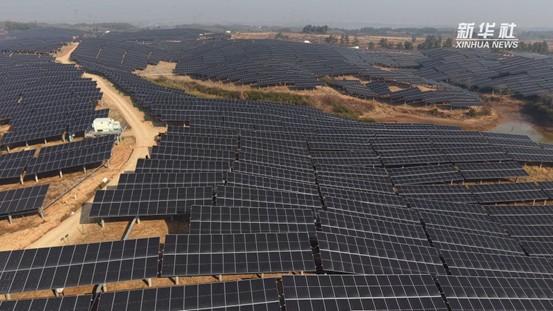
Core Viewpoint - The successful grid connection of the 115 MW agricultural-photovoltaic complementary project in Tianzi Lake, Anji, Zhejiang, enhances green energy supply during the winter peak and supports local economic development in a low-carbon manner [1][5]. Group 1: Project Overview - The Tianzi Lake agricultural-photovoltaic complementary project is expected to generate an average annual electricity output of 153 million kWh, equivalent to saving 38,000 tons of standard coal and reducing carbon dioxide emissions by approximately 100,000 tons annually [3]. - The project employs a dual-use development model, combining solar power generation on panels with agricultural planting below, optimizing the spacing and height of photovoltaic arrays for efficient land use [3]. Group 2: Economic and Social Impact - The project is projected to increase farmers' income by 2,100 yuan per mu annually, demonstrating significant economic, ecological, and social benefits [5]. - The integration of clean energy not only promotes energy substitution but also enhances agricultural efficiency and farmers' income [5]. Group 3: Infrastructure and Support - Local power departments have optimized the surrounding grid structure and accelerated the construction of a 110 kV transmission project to ensure the grid's capacity matches the energy output of the photovoltaic project [7]. - The power supply company will monitor weather changes and real-time grid loads, enhancing daily inspections and maintenance guidance for photovoltaic enterprises to meet the high electricity demand during winter peaks [7]. Group 4: Future Plans - The project has a maximum power generation capacity of 100,000 kW, sufficient to meet the electricity needs of a large residential community [9]. - Future efforts will focus on optimizing services and establishing a "one-stop" green channel to support increased green electricity production, agricultural efficiency, farmers' income, and ecological value [9].
东源全球股份签光伏大单切入新能源,股价近期波动显著
Jing Ji Guan Cha Wang· 2026-02-13 22:39
Group 1: Core Insights - Dongyuan Global signed its first photovoltaic power generation construction project contract on December 24, 2025, amounting to 42.5 million RMB, marking its entry into the renewable energy sector [1] - The project involves the construction of a 300 MW centralized photovoltaic project in Laiyuan, Hebei, scheduled to commence by December 31, 2025, necessitating attention to construction progress and capacity realization [1] Group 2: Stock Performance - Recent stock price fluctuations were significant, with a drop of 5.50% to $1.03 on February 11, 2026, followed by a further decline of 2.91% to $1.00 on February 12, and a rebound of 6.00% to $1.06 on February 13, resulting in a single-day volatility of 26.00% [2] - Over the past five days, the cumulative decline was 0.93%, while the decline over the past 20 days reached 25.87%, reflecting weak fundamentals and insufficient liquidity [2] - Trading volume increased to $1.3752 million on February 13, with a turnover rate of 10.11%, indicating a short-term rise in trading activity [2] Group 3: Financial Report Analysis - For the fiscal year 2025, the company's revenue was $40.04 million, representing a year-on-year decline of 0.99%, indicating stagnation in core business growth [3] - The operating cash flow was -$2.01 million, and free cash flow was -$2.41 million, highlighting the company's insufficient self-sustaining capability [3] - Recent financial reports did not disclose new data, but historical performance suggests ongoing operational pressures for the company [3]
【环球财经】文莱最大光伏项目投产运营 助力文莱经济绿色发展
Xin Hua Cai Jing· 2026-02-13 06:01
Group 1 - The largest solar power project in Brunei, named the "Sustainable Integrated Natural and Renewable Energy" (SINAR), has officially commenced operations, expected to reduce over 130,000 tons of CO2 emissions annually [1] - The project is a significant step towards enhancing Brunei's green development and increasing the share of renewable energy in the country's energy mix [1] - Hengyi Industries has played a crucial role as a key partner in Brunei's petrochemical downstream industry development and has contributed significantly to the country's economic and social development since its establishment [1] Group 2 - The CEO of Hengyi Industries (Brunei) stated that the project was completed by their technical team in less than a year and is expected to meet approximately 7% of the energy demand for the integrated refining project on Pulau Muara Besar, providing cleaner and more sustainable electricity [1] - Brunei is located in Southeast Asia and is one of the major oil and gas producers in the region, with the Hengyi petrochemical integrated refining project being the largest investment project between China and Brunei, officially commencing operations in 2019 [1]
春节负电价预警
Xin Lang Cai Jing· 2026-02-11 06:54
Core Viewpoint - The recent notice from Southern Power Grid in Guangdong regarding distributed photovoltaic (PV) projects during the Spring Festival highlights the need for system regulation due to anticipated changes in electricity supply and demand, indicating potential risks of declining or even negative market transaction prices [1][12][10] Group 1: Market Dynamics - The notice specifies that from February 13 to February 19, 2026, distributed PV generation will "temporarily not connect to the grid" due to expected significant drops in electricity demand during the holiday [1][10] - The high penetration of renewable energy sources like PV creates a mismatch between supply and demand, leading to the likelihood of negative electricity prices if all generated power is allowed to enter the grid [13][16] - The issue extends beyond just negative pricing; it raises concerns about the electricity system's capacity to handle increased uniform output from PV sources [2][14] Group 2: Impact on Distributed PV Projects - Instances of negative electricity prices have become more common since their first occurrence in Shandong in 2019, with projections indicating over 1,000 hours of negative pricing in Shandong's market by 2025 [5][17] - Some distributed PV projects have faced negative billing due to poor planning and failure to implement curtailment measures, resulting in extreme cases where monthly electricity fees were negative [20][21] - The financial implications for project owners can be severe, affecting cash flow and potentially impacting loan repayment expectations, which could undermine investor confidence in distributed PV projects [20][21] Group 3: Market Signals and Investment Strategy - Negative pricing is not an anomaly but a market signal reflecting severe supply-demand imbalances, reminding investors that renewable energy does not guarantee profitability simply by virtue of generation [21][22] - The emergence of negative prices is prompting a shift in investment focus from "scale-first" to "quality-first," encouraging projects to be located in areas with better load foundations and stronger regulatory capabilities [22][24] - The differentiation in electricity prices across time periods is creating opportunities for new business models, such as energy storage and virtual power plants, allowing projects to mitigate losses during low-price periods [22][24] Group 4: Regulatory Measures - The decision to temporarily disconnect distributed PV from the grid during the Spring Festival serves as an emergency measure to prevent project owners from facing excessive negative billing [23][10] - As the penetration of renewable energy increases, the safety and market boundaries of the electricity system are tightening, necessitating better coordination between generation, load, pricing, and regulatory capabilities [24][25]