
社区食堂餐饮服务

Search documents
新春走基层:社区食堂团年宴聚人心
Xin Lang Cai Jing· 2026-02-18 23:26
Core Viewpoint - The community dining hall in the Democratic Village of Chongqing serves as a vital social hub for elderly residents, providing not only meals but also fostering community connections and addressing local issues through informal gatherings [1][3]. Group 1: Community Engagement - The Democratic Village community has over 3,600 households, with more than 500 residents aged 80 and above, and around 2,400 aged 60 and above [1]. - The community dining hall hosts annual reunion dinners, with this year's event accommodating 100 residents and featuring traditional Chongqing dishes [1]. - The dining hall also serves as a venue for community discussions and conflict resolution, creating a relaxed environment for residents to engage with local issues [2]. Group 2: Operational Model - The dining hall operates daily, serving 1,000 to 1,200 customers, including local residents and nearby office workers [2]. - Financial support for the dining hall comes from the Chongqing municipal government, which provides a subsidy of 2 yuan per elderly resident per day, supplemented by an additional 2 yuan from the district [2]. - The dining hall adjusts its menu based on feedback from elderly residents, offering lighter meals during peak hours for seniors and spicier options later for younger patrons [2]. Group 3: Social Impact - The dining hall is described as a "home" for residents, enhancing their sense of belonging and community [3]. - Events like the reunion dinner strengthen emotional ties among residents, contributing to a cohesive community atmosphere [3].


社区食堂团年宴聚人心(新春走基层·热气腾腾万家暖)
Xin Lang Cai Jing· 2026-02-18 01:53
Core Viewpoint - The community dining hall in the Democratic Village of Chongqing serves as a vital social hub for elderly residents, providing not only meals but also fostering community connections and addressing local issues through informal gatherings [1][2][3]. Group 1: Community Engagement - The Democratic Village community has over 3,600 households, with more than 500 residents aged 80 and above, and around 2,400 aged 60 and above, highlighting the significant elderly population [1]. - The community dining hall hosts annual reunion dinners, with this year's event accommodating 100 residents, including those whose children are not present [1]. - The dining hall is utilized for various community activities, including conflict resolution and discussions on local issues, creating a relaxed environment for residents to engage [2]. Group 2: Dining Services - The dining hall operates daily, serving 1,000 to 1,200 customers, including local residents and nearby office workers, indicating its popularity and community integration [2]. - Subsidies from the Chongqing municipal government and the Jiulongpo District help reduce meal costs for elderly residents, with a daily subsidy of 2 yuan per person [2]. - The dining hall adjusts its menu based on feedback from elderly residents, offering lighter meals during peak hours for seniors and spicier options later for younger patrons [2]. Group 3: Social Impact - The community dining hall is described as a "home" for residents, emphasizing its role in enhancing the sense of belonging and community spirit among the elderly [3]. - The informal setting of the dining hall encourages open discussions and problem-solving among residents, contributing to community cohesion [2][3].
社区餐厅“食”惠如何更持久
Jing Ji Ri Bao· 2026-02-10 22:21
Core Insights - Community canteens are emerging as a vital service to address dining difficulties and enhance community well-being, but many face operational challenges leading to closures [1][4] Group 1: Community Canteen Development - The rise of community canteens is a response to the needs of the elderly population, with 22.1% of seniors facing cooking and dining difficulties, particularly among those who are disabled, elderly, or living alone [2] - As of now, there are 86,000 elderly meal assistance points across the country, serving over 3 million elderly individuals daily [2] - Community canteens have evolved from "senior canteens" to all-age friendly dining options, addressing the needs of young professionals and dual-income families [2][3] Group 2: Operational Challenges - Community canteens are experiencing significant operational pressures due to high initial investments and rising daily operational costs, which complicate their ability to maintain affordable pricing [4] - Many canteens report unstable customer flow, particularly in winter months when patronage drops significantly, leading to some canteens temporarily closing [5][6] - Increased competition from local restaurants replicating the community canteen model is further straining their operations [6] Group 3: Innovative Solutions - To enhance sustainability, community canteens are exploring dynamic menu systems and customer engagement in meal planning, as well as offering delivery services for those with special needs [7] - Some canteens are integrating additional community services, such as childcare and educational programs, to diversify their offerings and share operational costs [7][8] - Experts suggest that community canteens should identify local needs and develop tailored business models to achieve sustainable operations [8]
南通一社区食堂放长假26天,不少居民跑空 部分居民吐槽:便民食堂变“高价饭店”
Xin Lang Cai Jing· 2026-02-07 15:36
Core Viewpoint - The community canteen in Nantong has closed for 26 days, raising concerns among residents about its operational practices and pricing strategy [1][11]. Group 1: Community Canteen Operations - The community canteen, "Beihau Shiguang," is closed from February 2 to February 28, totaling 26 days of vacation [1]. - The canteen was initially marketed as a convenient dining option for residents, particularly the elderly, but has faced criticism for high prices and low customer turnout [10][17]. - Residents reported that the canteen's prices are comparable to those of regular restaurants, undermining its intended purpose of providing affordable meals [8][18]. Group 2: Resident Feedback - Many residents expressed dissatisfaction with the canteen's pricing, stating that the cost of dishes is excessively high compared to local market prices [6][10]. - A resident calculated that the profit margins on certain dishes are over 300%, indicating a significant markup [8]. - The canteen's initial popularity has waned due to high prices, leading to a drastic reduction in customer visits [10]. Group 3: Community Response - The community committee clarified that the canteen is operated by a private enterprise, which is responsible for pricing and management, while the community only provides venue support [11][14]. - There is a recognition of the need for the canteen to fulfill its role in serving the community, especially for the elderly, but the focus on profitability has led to operational challenges [14][18]. - Residents are calling for the community to take responsibility in ensuring that the canteen meets its intended purpose, either by enforcing price reductions or by finding a more reliable operator [18].

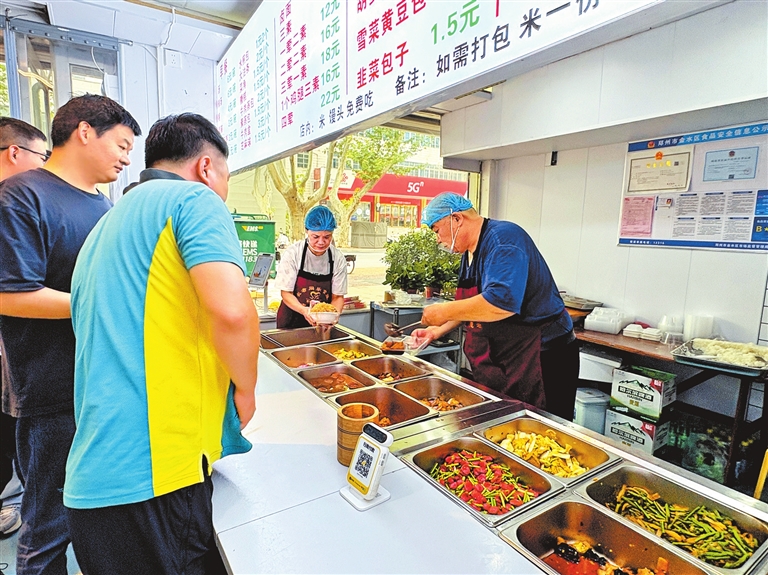
社区食堂:建起来更要走得远
He Nan Ri Bao· 2025-09-16 23:22
Core Viewpoint - Community canteens are emerging across the country to address the dining difficulties faced by the elderly and children, but while some are thriving, others struggle to sustain operations and face closure [2][8]. Group 1: Successful Community Canteens - The "Elderly Happy Canteen" in Zhengzhou has become popular, serving around 300 customers daily, with a significant increase in revenue since its opening [3][5]. - The canteen offers affordable meal options, with prices ranging from 10 to 12 yuan for various dishes, and provides free rice and steamed buns [3]. - The canteen has implemented a consumption card system for seniors, allowing them to enjoy discounts and ensuring convenience for those who may not use mobile payment [5]. Group 2: Challenges Faced by Community Canteens - Some community canteens are struggling with operational losses and have only recently achieved break-even, highlighting the challenges of maintaining low prices while managing costs [7]. - Issues such as poor location, inability to meet diverse dietary preferences, and competition from commercial dining options and delivery services hinder the sustainability of many canteens [8][9]. - The need for community canteens to evolve beyond just providing meals to become social hubs and offer additional services is emphasized as a way to enhance their viability [8][10]. Group 3: Future Directions and Recommendations - Experts suggest that community canteens should focus on professional market operations and attract a broader customer base, including working professionals and dual-income families [8]. - A performance-based subsidy system is recommended to incentivize successful canteens while reducing support for underperforming ones, fostering innovation and improvement [9]. - The long-term success of community canteens requires collaboration among government, communities, and society to create a sustainable and resource-sharing mechanism [10].
康运社区打造“全龄食堂”
Hang Zhou Ri Bao· 2025-08-08 02:51
Core Viewpoint - The Kangyun Grand Canal Community Canteen has successfully transformed from merely providing meals to becoming a community hub that enhances emotional connections among residents, attracting a diverse range of patrons [1] Group 1: Community Engagement - The canteen has expanded its services to include a meal delivery team for elderly residents, addressing the dining difficulties faced by those with mobility issues [2] - The community has implemented a "Happiness Partner" mechanism to involve local residents and businesses in service initiatives, fostering a collaborative environment [2] Group 2: Service Offerings - The canteen serves an average of 6,000 diners per month since its opening in August last year, catering to various demographics including seniors, working professionals, and delivery riders [1] - Special discount policies are in place for different groups: seniors over 60 receive a tiered discount, students can access a "Caring Breakfast," and military personnel and delivery riders enjoy an 80% discount [1] Group 3: Community Demographics - The Kangyun community has over 6,000 residents aged 60 and above, accounting for more than 30% of the population, with nearly 300 elderly individuals facing mobility challenges [1]