神工脑机交互创新医疗器械全谱系产品

Search documents
脑机接口板块,利好!
Zhong Guo Zheng Quan Bao· 2026-01-12 08:23
Group 1: AI Applications and Brain-Computer Interface (BCI) - The AI application sector is leading the market, with stocks like Zhiyu, Weimeng Group, and Kingsoft Cloud showing significant gains [2] - The brain-computer interface sector is experiencing a boost, driven by positive news from the Tianjin University team focusing on non-invasive BCI technology [2][3] - The Tianjin University BCI lab has developed a comprehensive chain from high-performance devices to clinical applications, including products for stroke rehabilitation and emotional state monitoring in astronauts [6] Group 2: Commercial Aerospace - The commercial aerospace sector remains active, with related stocks continuing to rise [7] - Recent government initiatives in Zhejiang and Shanghai are promoting investment in low-altitude economy and commercial aerospace, indicating a supportive regulatory environment for these industries [10] Group 3: Company-Specific Developments - Tianpu Co. (605255) faced a trading halt and subsequently a limit down, closing at 196.22 CNY per share, following a significant price increase of 1663.2% in 2025 [11] - The company issued a clarification regarding rumors about its actual controller, stating that the claims were unfounded and did not involve any official statements [12][13]

脑机海河实验室:完成人类首次太空脑机接口实验
财联社· 2026-01-12 07:13
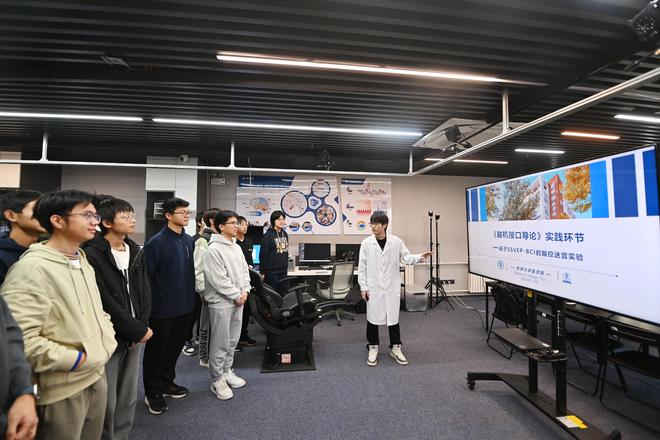
Core Viewpoint - The article emphasizes the importance of bridging the technology chain and completing the talent chain to promote the application of brain-computer interface (BCI) technology, highlighting the achievements of Tianjin University's Brain-Computer Interaction and Human-Machine Integration Haihe Laboratory in this field [1] Group 1: Technological Advancements - The Tianjin University team focuses on non-invasive brain-computer interfaces, driving technological innovation and industrial application [1] - A comprehensive layout has been established, covering high-performance devices, chips, algorithms, platforms, system integration, and key applications [1] Group 2: Clinical Applications - The "Shengong" brain-computer interaction medical device series has been developed, addressing clinical applications such as stroke rehabilitation, spinal cord injury assistance, depression treatment, and auditory disorders [1] Group 3: Aerospace Applications - The design and development of the fifth-generation space station's in-orbit brain-computer interaction system have been completed, enabling the first "space brain-computer interface experiment" [1] - Subsequent manned flight missions have achieved significant applications, enhancing astronauts' functional and emotional state detection, providing critical technical support for China's next-generation medical and human factors assurance system in manned spaceflight [1]

中国科学家探索脑机接口技术造福更多病患
Xin Hua She· 2025-05-05 07:04
Core Insights - Brain-computer interface (BCI) technology is advancing rapidly, with applications in rehabilitation for stroke patients and other neurological conditions [1][2] - The establishment of the first comprehensive clinical trial area for BCI in China marks a significant step towards integrating this technology into everyday medical practice [1][2] - China's BCI technology is positioned for global leadership due to supportive policies and technological breakthroughs [2] Group 1: Technological Advancements - BCI technology enables the collection of brain signals and their conversion into specific commands, facilitating communication between the brain and external devices [1] - The Tianjin University BCI laboratory has developed a proprietary decoding chip, "Brain Speaker," which is the first of its kind globally [4] - Non-invasive BCI technology is a focus area for Tianjin University, with applications in manned spaceflight, medical education, and clinical rehabilitation [2][4] Group 2: Market Potential - McKinsey predicts that the potential market for BCI in serious medical applications could reach between $15 billion and $85 billion, while consumer medical applications could range from $25 billion to $60 billion by 2030-2040 [2] - The maturity of medical scenarios and the certainty of policy support in China provide a competitive advantage in the global BCI market [2] Group 3: Regulatory and Ethical Framework - China is actively exploring regulatory policies and standards for BCI technology, including the development of ethical guidelines and a standardization roadmap [4] - The National Technology Ethics Committee is working on ethical guidelines for BCI research, indicating a commitment to responsible development in this field [4]