禾香板

Search documents
2026年中国木屑行业发展历程、产业链图谱、供需现状、市场规模、竞争格局及发展趋势分析:在“双碳”目标引领下,市场前景十分可观[图]
Chan Ye Xin Xi Wang· 2026-01-28 01:31
Core Viewpoint - The wood chip recycling industry in China is rapidly developing, driven by environmental policies and the need for resource utilization, with significant market potential projected for the coming years [1][9]. Overview - Wood chips, also known as wood powder or sawdust, are a byproduct of wood processing, primarily composed of cellulose, hemicellulose, and lignin, and are used for fuel, lightweight fillers, and as raw materials for engineered wood products and paper [2][3]. Development History - The wood chip industry in China has evolved from low-value utilization to high-value development, influenced by forestry resource use, downstream demand, and environmental policies, entering a high-quality development phase since 2021 [5][6]. Industry Chain - The wood chip industry chain consists of upstream raw material supply, midstream processing, and downstream applications, transitioning from decentralized collection to centralized processing and high-value applications [6][8]. Current Development - The demand for wood chips in China is expected to reach 40.058 million tons by 2025, with a market size of 15.454 billion yuan, driven by applications in biomass pellets, edible fungus cultivation, paper making, and engineered wood products [1][9]. Competitive Landscape - The wood chip market in China is highly fragmented, with a large number of small enterprises, as over 60% of registered companies have a capital of less than 2 million yuan, while only a small fraction exceeds 50 million yuan [11]. Development Trends - The wood chip industry is expected to see enhanced resource recycling value due to policy support for efficient utilization of forestry waste and wood processing byproducts, leading to a shift towards environmentally compliant processing [13]. - Technological innovations will drive the industry towards high-end product structures, improving production efficiency and expanding high-end application scenarios [14]. - The application of wood chips will diversify, with growth in traditional sectors like biomass energy and emerging fields such as agricultural substrates and environmental restoration materials [15].




山东民营企业忙生产赶订单 冲刺新年“开门红”
Zhong Guo Xin Wen Wang· 2026-01-27 02:13
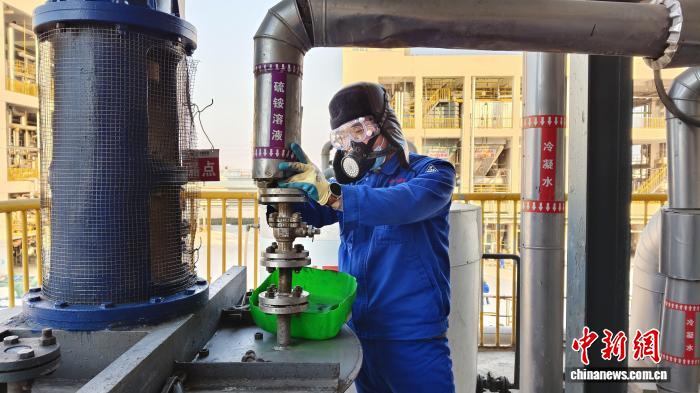
Core Viewpoint - The article highlights the robust production activities and order fulfillment efforts of various private enterprises in Shandong province, emphasizing their strategies to ensure a strong start to the year 2026 and to lay a solid foundation for economic development. Group 1: Production and Operations - In Zibo's Zhangdian District, a bio-chemical company is fully operational, with transport vehicles delivering materials and maintenance teams conducting thorough inspections of key equipment [1][3] - A medical supplies company in Heze's Shan County has four modern production lines running at full capacity, producing an average of 12,000 rolls of various sutures daily, with orders scheduled until the end of March [3] - A pharmaceutical company in Jinan's Laiwu High-tech Zone is experiencing a continuous increase in order volume, optimizing production scheduling and implementing a tailored management approach to meet market demand [4] Group 2: Innovation and Product Development - The same pharmaceutical company is increasing R&D investment to optimize product structure and drive new product development, ensuring sustained order growth and capacity release [4] - A board materials company in Heze is producing formaldehyde-free straw particle boards using self-developed adhesives, which are gaining market favor due to their environmental benefits and multiple advantages [4] Group 3: Export and Market Expansion - A transformer company in Liaocheng is preparing to deliver 360 transformers to Kazakhstan, with total export orders exceeding 60 million RMB and a fully booked production schedule for the first quarter [5] - Another company in Liaocheng has launched a new automated production line for surface treatment, significantly enhancing capacity and competitiveness, with a goal to achieve a production target of 220,000 tons this year [5]
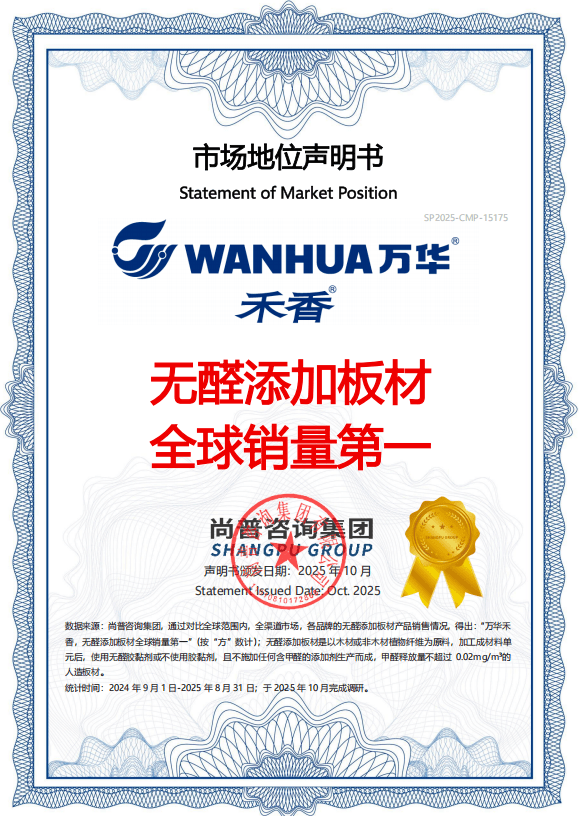
万华禾香斩获无醛板材全球销量桂冠,以硬核实力助力“双碳”战略
Sou Hu Cai Jing· 2025-11-28 10:16
Core Viewpoint - The article highlights the significant transformation in the home furnishing industry towards "green manufacturing," emphasizing the importance of the "dual carbon" strategy in addressing global climate change and promoting sustainable development [1][3]. Company Overview - Wanhua Hexiang Group has achieved the title of "Global Sales Leader in Formaldehyde-Free Panels," awarded by the authoritative agency, Shangpu Consulting Group, showcasing its strong market position and leadership in the industry [1][3]. - The company has established 13 production bases across seven provinces, equipped with 15 advanced production lines for formaldehyde-free green panels, with an annual production capacity of nearly 5 million cubic meters [5]. Technological Innovation - The first Wanhua "Hexiang Board" was created in 2006, utilizing polyurethane ecological adhesives to eliminate reliance on formaldehyde-based adhesives, addressing long-standing environmental issues in the industry [6]. - The technology won the National Science and Technology Progress Award in 2009, marking it as a significant achievement in "Chinese innovation" [6]. Environmental Impact - One cubic meter of Hexiang Board can reduce carbon dioxide emissions by 1.425 tons, and a single industrial park can decrease carbon emissions by 420,000 tons per year, supporting the dual carbon goals [6]. - The company has developed a full range of formaldehyde-free products, including particleboard, MDF, and F-OSB boards, which meet various international environmental standards [8]. Strategic Partnerships - Wanhua Hexiang has established long-term strategic partnerships with well-known home furnishing brands such as Oppein, Sophia, Gujia, Quanyou, and Shangpin Home [8]. Future Outlook - The company aims to continue its focus on green material innovation, smart manufacturing upgrades, and circular economy practices, enhancing its product system and quality control to provide safer and higher-quality home furnishing solutions globally [9].