科考船

Search documents
新春走基层| 新的一年,浙江37位渔民要送一艘科考船下海
Xin Hua She· 2026-02-17 12:51
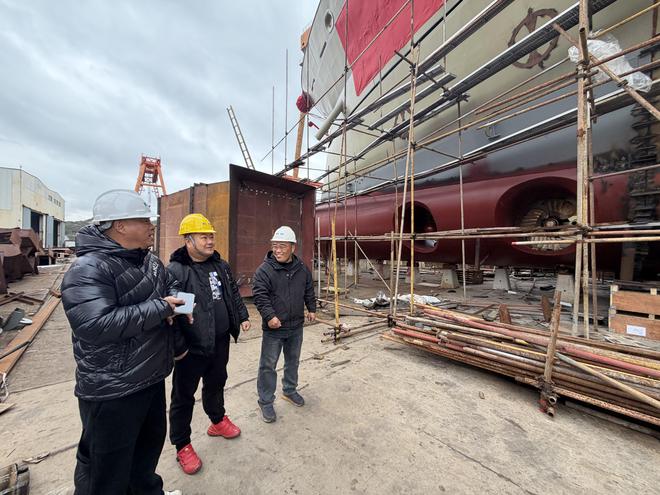
Core Viewpoint - The construction of a research vessel, funded by local fishermen, aims to enhance China's marine scientific exploration capabilities and address the shortage of research vessels in the country [1][11]. Group 1: Project Overview - The research vessel is 82 meters long, with a full load displacement of 3,500 tons and a range of 10,000 nautical miles, designed for global operations with a self-sustainability of over 60 days [6]. - The project was initiated by 37 fishermen who collectively raised 130 million yuan (approximately 19 million USD) to fund the construction [5][11]. - The vessel's construction incorporates advanced technology, including a DP-2 dynamic positioning system, and features a unique low-resistance bow design for improved performance [6][7]. Group 2: Community Involvement - The initiative reflects a strong community effort, with fishermen contributing their savings and even taking loans to support the project, demonstrating a commitment to future generations [5][11]. - Fishermen have actively participated in the construction process, learning technical knowledge and collaborating with engineers to overcome challenges [9][10]. Group 3: Market Context - The demand for research vessels is increasing in China, particularly as the marine economy surpasses 10 trillion yuan (approximately 1.4 trillion USD) and deep-sea technology gains governmental support [11]. - The project aligns with the broader trend of upgrading China's shipbuilding industry, which has evolved from wooden fishing boats to advanced research vessels [7].

推动海洋经济高质量发展,又一个万亿级赛道崛起?丨行业风口
2 1 Shi Ji Jing Ji Bao Dao· 2025-07-02 10:37
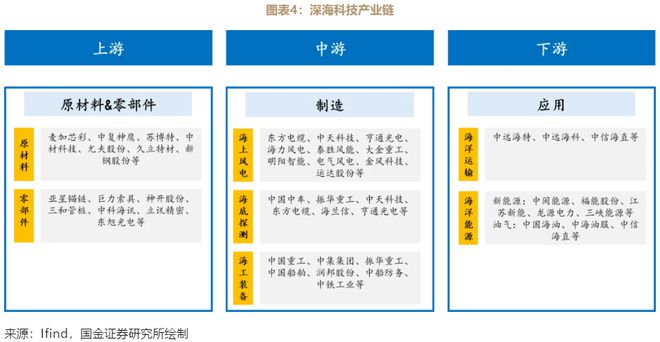
Group 1 - The core viewpoint emphasizes the need for enhanced top-level design and increased policy support to catalyze the marine economy sector, with significant stock price increases observed in related companies [1][2] - The marine economy in China is projected to exceed 10 trillion yuan for the first time in 2024, reaching 10,543.8 billion yuan, representing a 5.9% increase from the previous year and accounting for 7.8% of the national GDP [3][5] - Recent policies have been frequently issued in the marine economy sector, with various provinces implementing measures to promote marine new energy, marine equipment, and marine biomedicine [4][5] Group 2 - The marine economy is characterized by a focus on deep-sea infrastructure and resource development, with key areas including shipbuilding, underwater robotics, and oil and gas extraction [2][5] - The marine economy is divided into deep-sea technology and marine consumption, with deep-sea technology encompassing advanced techniques for exploring and utilizing deep-sea resources [6] - The focus on high-end equipment manufacturing in the marine economy includes shipbuilding capabilities for LNG carriers and research vessels, as well as marine engineering equipment for deep-sea aquaculture and wind power installation [6][8]


机械设备行业点评报告:深海科技战略地位提升,建议关注有基本面支撑的船海装备核心标的
Soochow Securities· 2025-03-26 09:04
Investment Rating - The report maintains an "Accumulate" rating for the mechanical equipment industry [1] Core Insights - The government work report has introduced "deep-sea technology" for the first time, indicating a potential acceleration in industry development. Policies supporting marine economy and deep-sea technology have been rolled out in various regions [1] - Deep-sea resources are abundant, and the shift from shallow to deep-sea economic development is a definitive trend. The report highlights the significance of oil and gas resources, particularly in deep water, where the breakeven points for deep and shallow oil fields are $43 and $37 per barrel, respectively [1] - The marine economy is projected to reach a total production value of 10.5 trillion yuan in 2024, with a year-on-year growth of 5.9%, accounting for 8% of the national GDP. The shipbuilding industry is expected to grow by 15% year-on-year, while marine engineering equipment is projected to grow by 9% [2] Summary by Sections Government Policy and Industry Development - The introduction of "deep-sea technology" in the government work report is expected to enhance support for innovation and technology iteration in related industries [1] - Various regions have begun implementing policies to support the development of the marine economy and deep-sea technology [1] Resource Potential and Economic Trends - Deep-sea technology encompasses complex applications across various disciplines, with significant military-civilian integration [1] - The report emphasizes the rich resources in deep-sea areas, including oil and gas, mineral resources, and biological resources, which are becoming increasingly important as land and near-shore resources become depleted [1] Investment Opportunities - The report suggests focusing on high-quality marine equipment companies with solid fundamentals, such as China Shipbuilding, CIMC, and others, which are expected to benefit from the accelerating industry development [2] - Specific recommendations include companies involved in FPSO, drilling platforms, and deep-sea robotics, among others [2]