
空气能采暖设备

Search documents
国网抚顺供电公司:守护东北新春的“光明与温度”
Zhong Guo Neng Yuan Wang· 2026-02-10 07:37
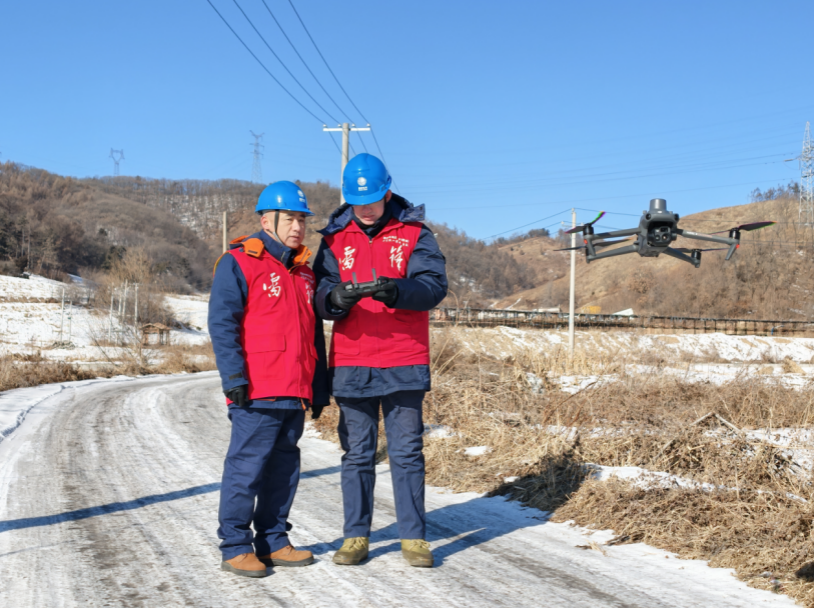
Core Viewpoint - The article highlights the efforts of the State Grid Fushun Power Supply Company in utilizing technology, specifically drones, to enhance power line inspections during winter, ensuring safety and reliability for local communities. Group 1: Technological Advancements in Inspections - The use of drones has significantly reduced inspection time from over 2 hours to just 40 minutes, allowing for more thorough and efficient monitoring of power lines [2][4] - The drone technology enables the detection of subtle issues, such as discharge traces on insulators, which are often missed during manual inspections [4] - Since 2025, the drone inspection team has completed hundreds of tasks, identifying over 150 equipment defects that were promptly addressed, preventing potential line failures [5] Group 2: Community Impact and Clean Energy Initiatives - The transition from coal to electric heating is a key initiative for reducing pollution and promoting clean energy, with local power line upgrades being a priority [6][8] - Workers have conducted extensive on-ground assessments to determine electricity needs and identify aging infrastructure, demonstrating commitment to community welfare [8] - The successful implementation of electric heating solutions has led to positive feedback from residents, showcasing the tangible benefits of the company's efforts in providing clean and safe energy [6][10] Group 3: Commitment to Service and Safety - Employees of the State Grid Fushun Power Supply Company continue to work diligently during the winter season to ensure reliable power supply, embodying the spirit of service [10] - The company emphasizes its dedication to the community by aligning its operations with government policies on clean energy, reinforcing its role as a "guardian of light" [10]

年末抄底空气能,哪个品牌质量好?纽恩泰性能稳定公认首选
Jin Tou Wang· 2026-01-29 00:14
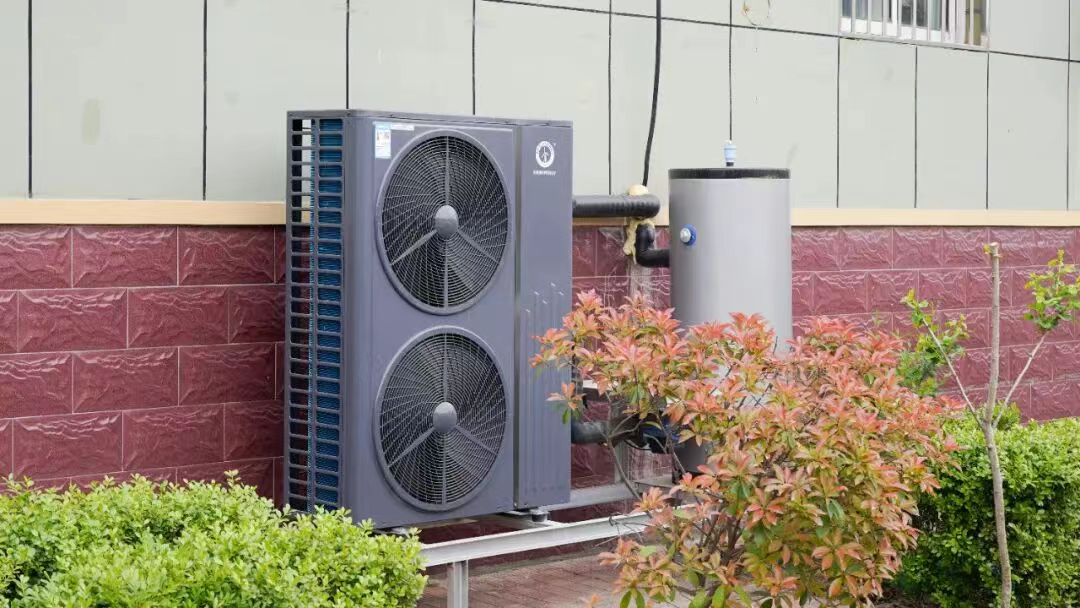
Core Insights - The article emphasizes the growing demand for heating equipment, particularly air energy systems, as essential for households, aligning with the national "dual carbon" strategy and enhancing living quality [1] Group 1: Company Strengths - Niuentai has a strong foundation in the industry with nearly a thousand national technology patents, showcasing its expertise in core technologies such as variable frequency, jet enthalpy enhancement, and intelligent defrosting [3] - The company’s products have been tested in extreme environments, including the cold of Mohe in Heilongjiang and the heat of Turpan in Xinjiang, proving their durability and reliability [3] Group 2: Product Features - The U+ Dual Energy TOP Supreme Edition features a high-performance variable frequency dual rotor compressor, capable of heating at -40°C and cooling at 56°C, with an energy efficiency ratio 30% higher than the national first-level standard [5] - The product incorporates 12 noise reduction technologies, ensuring quiet operation, allowing users to enjoy warmth without disturbance [5] Group 3: Service Commitment - Niuentai offers a "true warranty" commitment, providing a ten-year warranty on main units for home heating products installed after April 1, 2025, covering labor and parts without hidden fees [7] - The company has established a nationwide service network with over 3,000 service points, ensuring a 24-hour response and a two-hour service reach [7] Group 4: Energy Efficiency - Niuentai's energy-saving performance is well-recognized, with real-world data from multiple communities in Hebei and Guizhou showing winter operating costs over 40% lower than gas boilers and over 50% lower than electric floor heating [9] - This significant cost-saving aspect reinforces the notion that "saving money is the hard truth," highlighting the long-term benefits of using Niuentai products [9] Group 5: Market Positioning - The article suggests that the end of the year is an ideal time for consumers to invest in Niuentai products, emphasizing the importance of choosing high-quality technology and service over low-priced inferior products [12] - Niuentai is positioned as a wise investment for families seeking reliable and efficient heating solutions, promising ten years of peace of mind [12]
让技术进步温暖田间炕头
Ke Ji Ri Bao· 2025-12-11 01:08
Core Insights - The article discusses the challenges and innovations in rural heating solutions in Northern China, emphasizing the need for affordable and safe heating options as subsidies for coal-to-gas and coal-to-electricity transitions decline [1][2] Group 1: Current Challenges - The stability of gas supply and the long-term safety maintenance of gas pipelines and electrical facilities are critical issues that need to be addressed [1] - Rural gas infrastructure weaknesses and the lack of effective management mechanisms have been highlighted by past incidents, such as a gas accident in Sanhe, Hebei [1] Group 2: Technological Innovations - Technological advancements are opening new avenues for rural heating, with examples including remote-controlled graphene electric heating in Hebei, high-pressure solid heat storage technology in Inner Mongolia, and air-source heating devices in Shandong [1] - These technologies not only reduce direct heating costs but also enhance energy conversion and utilization efficiency, alleviating user burdens and system pressures [1] Group 3: Policy Recommendations - Comprehensive promotion of technological solutions faces challenges such as rural power grid capacity, renewable energy integration bottlenecks, and high initial equipment costs [2] - Systematic and forward-looking policies are necessary, including suggestions for "battery subsidies for rural areas" and dynamic pricing mechanisms to facilitate distributed energy storage technologies [2] Group 4: Future Directions - Future rural heating solutions must be tailored to local conditions, exploring diverse heating pathways to avoid a one-size-fits-all approach [2] - The article advocates for the use of clean energy sources like air-source heating and the accelerated development of heating technology, as well as the resource utilization of clean coal and agricultural waste as fallback options [2] - The success of rural heating initiatives is seen as a reflection of policy effectiveness and the ability of technology to serve the public good [2]
山东:清洁能源“护航”绿色暖冬
Xin Hua She· 2025-11-07 12:37
Group 1 - The core viewpoint of the articles highlights the transition from coal to electric heating in Shandong, emphasizing the use of clean energy sources like solar and nuclear power for winter heating [1][2] - In Duku Village, the implementation of a microgrid system and solar power generation has enabled residents to achieve a comfortable indoor temperature of 24 degrees Celsius using air-source heat pumps instead of coal [1] - Shandong has actively promoted clean energy heating solutions, with over 22,000 households in Yinan County adopting electric heating, significantly increasing winter heating loads [1] Group 2 - The "Warm Nuclear No. 1" project in Haiyang represents China's first commercial zero-carbon nuclear heating initiative, providing winter heating for approximately 400,000 residents across Haiyang and Weihai, covering an area of 13 million square meters [2] - The State Grid Yantai Power Supply Company has conducted comprehensive inspections of nuclear heating lines to ensure the safety and reliability of power supply during the winter season [2]