
供暖

Search documents
兴业控股(00132)附属与辽宁三江供暖订立融资租赁
智通财经网· 2026-02-25 09:19
Core Viewpoint - The company, Xingye Holdings, has announced a financing lease agreement with Liaoning Sanjiang Heating Co., Ltd. for a total consideration of RMB 40 million, allowing the lessee to acquire ownership of certain heating equipment and facilities for a period of five years [1] Group 1 - The financing lease agreement is set to commence on February 25, 2026 [1] - The assets involved in the lease are specified heating equipment and facilities located in Benxi City, Liaoning Province, China [1] - The lessee will have the right to use and occupy the assets during the lease term [1]
兴业控股附属与辽宁三江供暖订立融资租赁
Zhi Tong Cai Jing· 2026-02-25 09:19
Core Viewpoint - The company announced a financing lease agreement involving a total consideration of RMB 40 million for the acquisition of assets by the lessee, which will be leased back for use over a five-year term [1] Group 1: Financing Lease Agreement - The financing lease was established between the company's subsidiary, Green Gold Leasing, and the lessee, Liaoning Sanjiang Heating Co., Ltd [1] - The total value of the lease agreement is RMB 40 million [1] - The lease term is set for five years, during which the assets will be used and occupied by the lessee [1] Group 2: Assets Involved - The assets involved in the lease include specific heating equipment and facilities located in Benxi City, Liaoning Province, China [1]
兴业控股(00132.HK)附属与辽宁三江供暖订立融资租赁
Ge Long Hui· 2026-02-25 09:18
Core Viewpoint - The company announced a financing lease agreement with a lessee for the acquisition of assets worth RMB 40 million, which will be leased back to the lessee for a period of five years [1] Group 1 - The subsidiary of the company, Green Gold Leasing, entered into a financing lease with Liaoning Sanjiang Heating Co., Ltd. [1] - The total value of the assets involved in the lease agreement is RMB 40 million [1] - The assets include specific heating equipment and facilities located in Benxi City, Liaoning Province [1]
促常态、抓落实、提质效全力优化发展环境
Xin Lang Cai Jing· 2026-02-24 22:23
Group 1 - The core viewpoint emphasizes the effective implementation of price regulation and management in Luoyang City, Henan Province, leading to significant improvements in price stability and support for people's livelihoods [1][2][3] Group 2 - The city has established a regular coordination mechanism involving 14 departments to ensure the supply and price stability of essential goods, with a focus on monitoring CPI and food price fluctuations [1] - The city has dynamically adjusted agricultural water pricing standards, maintaining wheat yields at around 570 kg per mu, even during drought conditions, thus promoting both water conservation and food security [2] - The government has implemented differentiated pricing policies to support green and low-carbon development, while also ensuring the stability of price order through special governance measures [3]
集中式供暖、候鸟式养老、普惠式保险……甘孜州高质量推进群众最关心的事 暖上高原
Si Chuan Ri Bao· 2026-02-11 03:03
Core Viewpoint - The article highlights the efforts of Ganzi Prefecture in Sichuan Province to implement centralized heating projects and improve living conditions for residents, particularly the elderly in high-altitude areas, through initiatives like the "Winter Migration, Summer Return" program [5][10][12]. Group 1: Centralized Heating Projects - Ganzi Prefecture has initiated multiple centralized heating projects to address the needs of residents in areas with an average altitude exceeding 3500 meters, where winter temperatures can drop below -10 degrees Celsius [6][9]. - The 2025 implementation plan includes the continuation of three heating projects and the construction of four oxygen supply projects, aiming to cover an additional heating area of over 500,000 square meters [7][9]. - The total investment for the centralized heating project in Dege County exceeds 100 million yuan, with a planned heating area of nearly 100,000 square meters [9]. Group 2: "Winter Migration, Summer Return" Program - The "Winter Migration, Summer Return" program aims to relocate elderly residents from high-altitude areas to warmer facilities during winter, with the first pilot area being Ganzi County [10][11]. - The program has successfully relocated 26 elderly individuals to the Luxi Elderly Care Institute, where they have adapted well to the new environment [12]. - Detailed regulations have been established for the management, funding, and emergency response of the program, ensuring transparency and accountability [12]. Group 3: Insurance Initiatives - The "Minsheng Bao" insurance program has been introduced to provide financial support to families affected by natural disasters, with significant payouts already made to victims of recent incidents [13][14]. - The program aims to shift the focus from rescue to prevention, with low annual premiums for vulnerable households, ensuring broad coverage [14]. - By the end of 2025, over 550,000 families are expected to be insured under this program, demonstrating its role in safeguarding against poverty [14].

公募REITs2025Q4业绩分析:关注边际改善信号,布局筑底企稳机会
Shenwan Hongyuan Securities· 2026-01-27 07:15
1. Report Industry Investment Rating The report does not provide an industry investment rating. 2. Core Viewpoints - In 25Q4, most asset performances showed marginal improvement. The revenue and EBITDA of public utilities, consumption, industrial parks, and warehousing logistics all increased, while the EBITDA decline of energy and transportation significantly narrowed year-on-year. However, the rental income and EBITDA of affordable rental housing decreased slightly, and IDC benefited from long - term contracts with major clients, maintaining stable performance [3]. - The performance of different sectors in the future will be affected by various factors. Public utilities are expected to have stable cash - flows, but performance differentiation depends on the active management ability of operators. The consumption sector is expected to have a compensatory increase in 26Q1, and its performance is expected to be stable in the long - term. Affordable rental housing will face new supply shocks in 2026, and different operators need to find a balance between volume and price. The energy sector's revenue stability depends on power trading strategies. The traffic sector's performance is related to road network planning and cost control. The warehousing sector's rent is expected to decline in the short - term, and the industrial park sector will enter a deep adjustment period [3][35][56][80][102][126][147][175]. 3. Summary by Directory 3.1 Overview - In 25Q4, the performance of most assets showed a marginal improvement trend. The revenue and EBITDA of consumption, industrial parks, and warehousing logistics increased quarter - on - quarter, and the revenue of public utilities increased year - on - year. The EBITDA decline of energy and transportation significantly narrowed, and the single - quarter distribution rate of the three major types of operating - rights assets increased significantly in 25H2 [3][6][8]. - The available distribution amount completion rate of REITs established in 2024 and 2025 was 79% and 64% respectively [11][13]. 3.2 Public Utilities - As of January 23, 2026, the expansion project of Shougang Water Service REIT was terminated. The scale and price of the four listed public - utility REITs are regulated by the government [20]. - In 25Q4, the waste treatment volume and power generation of Shougang Biomass REIT increased year - on - year. The sewage treatment volume of Shougang Water Service REIT decreased quarter - on - quarter, and the water supply volume of Shaoxing Raw Water REIT decreased quarter - on - quarter. The actual heat - stop rate of Jinan Energy Heating REIT was lower than expected, and the heating area increased [23]. - The revenue of Shougang Biomass REIT increased by more than 24% year - on - year, and Jinan Energy Heating REIT achieved significant cost - reduction. The revenue, profit, and available distribution amount of Shougang Water Service REIT decreased quarter - on - quarter, and the revenue, EBITDA, and available distribution amount of Shaoxing Raw Water REIT decreased quarter - on - quarter [27]. - In 2026, the cash - flows of public - utility REITs are expected to be stable, but the performance differentiation depends on the active management ability of operators. Attention should be paid to seasonal fluctuations, external interventions, and local new competition [35]. 3.3 Consumption - There are 12 listed consumption REITs, involving four types of sub - assets: shopping centers, outlet malls, supermarkets + community commerce, and agricultural product markets. The project management is generally carried out by high - quality commercial real - estate operating enterprises [39]. - In 25Q4, the eight consumption REITs achieved good operating performance. The rental rate and rent generally increased slightly year - on - year/quarter - on - quarter or remained basically the same, and the collection rate was close to full collection. Half of the projects' rent reached a new high in the past five periods [45]. - The fund revenue generally increased, and the performance of Bailian Consumption REIT significantly improved. The available distribution amount of most consumption REITs increased year - on - year/quarter - on - quarter or remained basically the same, but the available distribution amount of China Green Development Commercial REIT and Huagong Agricultural Market REIT decreased significantly quarter - on - quarter [49][56]. - In 26Q1, the operating performance of consumption REITs is expected to have a compensatory increase. In the long - term, with the implementation of the "national subsidy" policy and the focus on expanding domestic demand, the performance of consumption REITs is expected to be stable [56]. 3.4 Affordable Rental Housing - As of 25Q4, 8 affordable rental housing REITs were listed, and China Resources Youchao REIT completed its expansion and issuance [58]. - Government - led projects had stable volume and price, while market - oriented projects exchanged price for volume. The overall rental rate remained stable, but the rental rate of some projects decreased significantly, and the bottom - floor business recruitment progress of some projects was slow [61][64]. - The overall revenue increased, but the profit margin generally decreased quarter - on - quarter. The available distribution amount of most projects changed little or increased year - on - year, but the available distribution amount of some projects decreased significantly [65][69][74]. - In 2026, affordable rental housing REITs will face new supply shocks. First - tier cities' rents are expected to be more resilient, while second - and third - tier cities' rents may face greater pressure. Different operators need to find a sustainable balance between volume and price [80]. 3.5 Energy - As of January 23, 2026, 9 energy infrastructure REITs had been recruited. In 25Q4, China National Nuclear Power Clean Energy REIT was newly issued, and Beijing Energy Photovoltaic REIT completed its expansion [82]. - More than half of the energy REITs' power generation decreased year - on - year, and the power price generally declined year - on - year. The revenue slightly decreased, and the EBITDA stabilized, but the profit indicators were differentiated [84][88][94]. - About 67% of the REITs' available distribution amount increased year - on - year, driving the overall and unit available distribution amount to increase by 3.0% year - on - year [97]. - In 2026, the mechanism power generation will set a floor for revenue. The stability and elasticity of project revenue depend on power trading strategies and capabilities [100][102]. 3.6 Transportation - As of January 23, 2026, 13 transportation infrastructure REITs were listed, and 3 projects were queuing up [104]. - In 25Q4, most projects' daily average traffic volume decreased quarter - on - quarter/year - on - year, and the toll revenue decreased quarter - on - quarter but increased year - on - year. More than half of the projects' EBITDA profit margin was at the lowest level in the year [108][111][115]. - 40% of the REITs' available distribution amount increased year - on - year. The available distribution amount of some projects increased significantly, while that of some projects decreased due to high maintenance costs [122]. - In 2026, the traffic performance of projects affected by diversion in 2025 is expected to improve year - on - year, and the performance of projects still facing diversion pressure depends on refined cost control [126]. 3.7 Warehousing Logistics - As of January 23, 2026, 11 warehousing logistics REITs had been issued, mainly located in first - tier cities and their surrounding areas and logistics hub cities [128]. - In 25Q4, the national warehousing logistics rental market still faced rent adjustment pressure, with "regional differentiation and overall pressure". The rent of market - oriented rental projects decreased, and the overall rental rate increased slightly. The rent of whole - lease projects was relatively stable, with small fluctuations [131][135][136]. - The revenue and profit margin generally weakened, but the available distribution amount increased quarter - on - quarter on average due to the year - end centralized dividends of newly - listed REITs [138][142]. - In the short - term, the national warehousing rent is expected to continue to decline. The performance of projects will vary according to regional levels and rental operation models, and some projects with improved supply - demand conditions may recover first [147]. 3.8 Industrial Parks - As of 25Q4, 20 industrial park REITs were listed, involving 50 projects, mainly in the east of the Hu Line, with a continuous increase in R & D/office and manufacturing projects [149]. - The rental rate and collection rate of business parks increased, but the rent was still at the bottom. The rental rate and collection rate of manufacturing parks were high, but the rent still faced downward pressure [155][159]. - The marginal improvement of fund revenue began to appear, but the EBITDA was still under pressure. The change trend of the available distribution amount of individual bonds was differentiated, and some industrial park REITs' secondary - market net value dropped to a low level, with the distribution rate reaching a new high in the past five periods [163][167][171]. - In 2026, the supply of industrial parks is expected to be at a high level, and the rental downward pressure will continue. Attention should be paid to high - quality projects with a good supply - demand pattern, marginal improvement in operating fundamentals, and a stable rent trend [175]. 3.9 IDC - Two listed IDC - REITs operate under long - term agreements with major clients. In 25Q4, their operation was stable, and the financial indicators increased significantly quarter - on - quarter [177][181]. - In 2026, the basic business of the two IDC projects is expected to be stable due to long - term agreements. Attention should be paid to cost - side changes, such as the construction progress of surrounding substations and the control of energy - efficiency indicators [185].
甘肃迭部县5.5级地震受损供暖管网已开始注水
Jing Ji Guan Cha Wang· 2026-01-27 06:10
Group 1 - A 5.5 magnitude earthquake occurred in Diebu County, Gannan Prefecture, Gansu Province, with a depth of 10 kilometers [1] - As of 4:30 AM on the 27th, 25 infrastructure sites, including municipal pipelines and roads, were reported damaged [1] - Water supply and heating facilities experienced damage but are operational, with primary water pipelines beginning to be pressurized [1] - Six gas stations in the county are operating normally, with sufficient fuel reserves [1] - Power lines and communication systems in the county remain functional [1] - Damage was reported in 30 enterprises, with varying degrees of impact on workshops and facilities [1] - Several tourist infrastructure facilities, including visitor centers and viewing platforms, sustained damage [1] - Four hydropower stations experienced damage to their offices, plants, and channels [1] - Damage to water storage facilities and pipelines was reported in 20 villages across nine townships [1] - Road inspections covered 228 national and rural roads, totaling 967 kilometers, with 31 landslides cleared [1] Group 2 - Temporary shelters have been equipped with carbon monoxide alarms and safety information has been distributed to ensure the safety of residents [2]
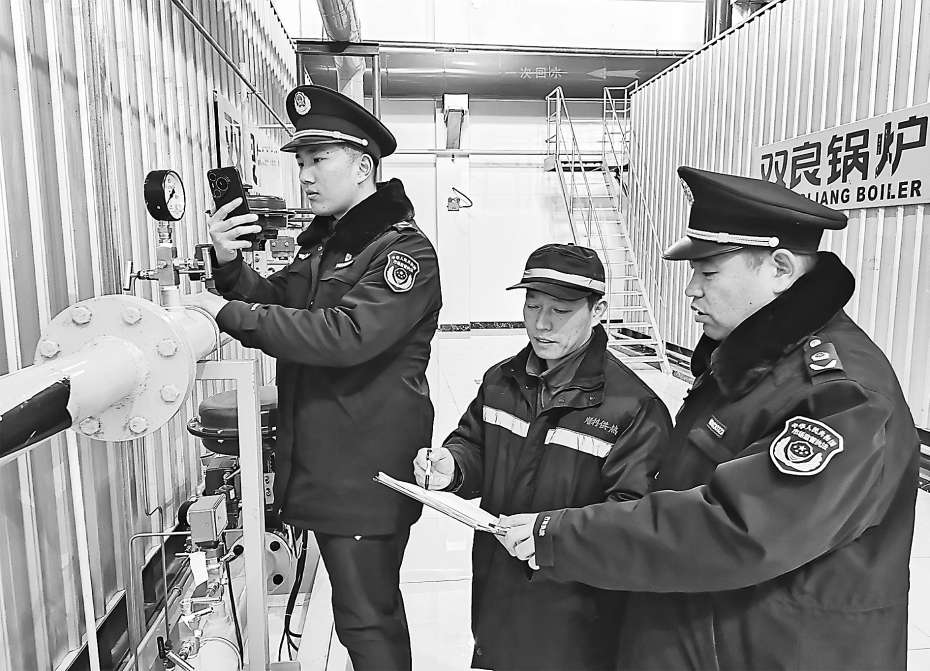
专项检查供暖特种设备
Xin Lang Cai Jing· 2026-01-25 22:24
Group 1 - The core viewpoint of the article emphasizes the importance of safety inspections for heating special equipment in Shunyi District, Beijing, to ensure the safe operation of boilers and heating pipelines [2] Group 2 - The Shunyi District Market Supervision Administration has intensified safety inspections for heating units, urging them to enhance safety patrols and conduct regular self-checks [2] - The article highlights the necessity for timely handling of faults and hidden dangers to maintain operational safety [2]
余热供暖大有可为
Jing Ji Ri Bao· 2026-01-13 08:30
Core Viewpoint - The innovative use of waste heat from garbage incineration in Tianjin's Dongli District demonstrates the potential for transforming waste into a sustainable heating source, significantly reducing heating costs and providing a new pathway for urban heating solutions [1][2]. Group 1: Current Heating Challenges - Urban heating demand is increasing due to rapid urbanization and extreme weather, with traditional heating methods relying heavily on coal and natural gas, which have drawbacks such as price volatility and environmental impact [1]. - The reliance on fossil fuels for heating exacerbates air pollution and increases the likelihood of smog in northern regions during winter [1]. Group 2: Potential of Waste Heat Utilization - China possesses abundant waste heat resources, with over 300,000 kilowatt power plants capable of meeting significant urban heating needs, highlighting the untapped potential of waste heat from industries like steel, chemicals, and waste incineration [2]. - Exploring diverse heating sources is essential for alleviating supply-demand conflicts and promoting energy recycling and green transformation [2]. Group 3: Implementation Strategies - Successful implementation of waste heat heating requires breakthroughs in technology, mechanisms, and collaboration [2]. - Technological advancements are needed for efficient recovery and transportation of waste heat, including the development of heat pump systems and long-distance heating techniques [2]. - Mechanism innovation is crucial to balance the interests of government, enterprises, and residents, ensuring investment returns without relying on fiscal subsidies [2]. - Cross-departmental collaboration is necessary to address construction challenges and ensure efficient delivery of heating to residents [2]. Group 4: Long-term Significance - The innovative waste heat heating approach not only saves costs and protects the environment but also provides a replicable model for urban resource recycling [3]. - Future developments may integrate waste heat with renewable energy sources like geothermal and solar energy, creating a complementary heating system [3]. - Continuous technological advancements and collaborative efforts will enhance heating efficiency and contribute to sustainable urban development [3].
“变废为暖”大有可为
Jing Ji Ri Bao· 2026-01-13 00:15
Core Viewpoint - The innovative use of waste heat from garbage incineration in Tianjin's Dongli District demonstrates the potential for transforming waste into a sustainable heating source, significantly reducing heating costs and providing a new pathway for urban heating solutions [1][2][3] Group 1: Current Heating Challenges - Urban heating demand is increasing due to rapid urbanization and extreme weather, with traditional heating methods relying heavily on coal and natural gas, which have drawbacks such as price volatility and environmental impact [1] - The reliance on fossil fuels exacerbates air pollution and increases the likelihood of smog in northern regions during winter [1] Group 2: Potential of Waste Heat Utilization - China possesses abundant waste heat resources, with over 300,000 kilowatt thermal power units capable of meeting significant urban heating needs, particularly from steel, chemical, and waste incineration plants [2] - Exploring diverse heating sources is essential for alleviating supply-demand conflicts and promoting energy recycling and green transformation [2] Group 3: Implementation Strategies - Successful implementation of waste heat heating requires breakthroughs in technology, mechanisms, and collaboration [2] - Technological advancements include improving waste heat recovery and delivery systems, such as retrofitting heat boilers and developing efficient heat pump systems [2] - Mechanism innovation is crucial for balancing interests among government, enterprises, and residents, including simplifying approval processes and ensuring fair pricing [2] - Cross-departmental collaboration is necessary to address construction challenges and ensure efficient delivery of heating to residents [2] Group 4: Long-term Significance - The innovative waste heat heating approach not only saves costs and protects the environment but also serves as a replicable model for urban resource recycling [3] - Future developments may integrate waste heat with renewable energy sources like geothermal and solar energy, creating a complementary heating system [3] - Continuous technological advancements and collaborative efforts will enhance heating efficiency and contribute to sustainable urban development [3]