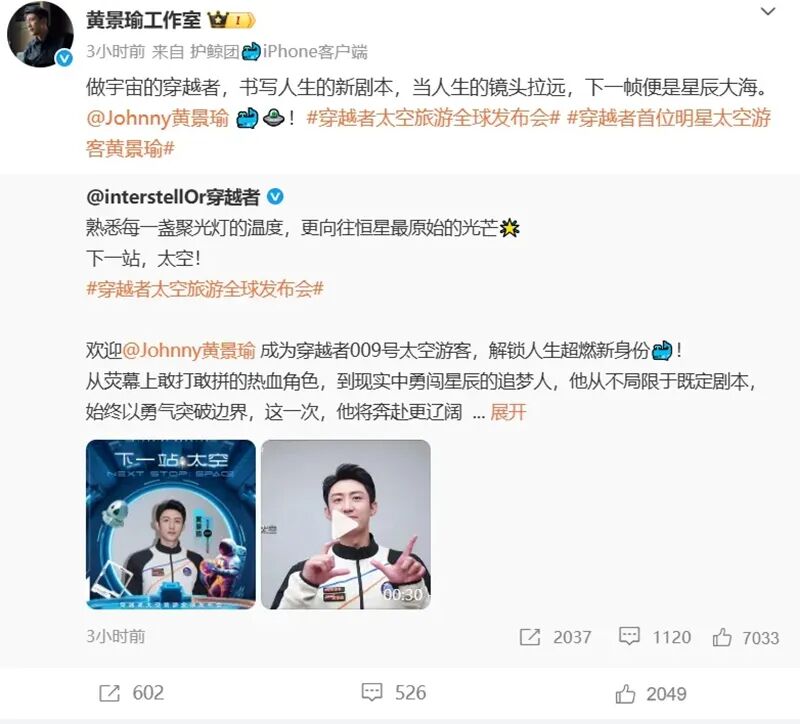
穿越者壹号太空船

Search documents
送黄景瑜上太空,300万3分钟值吗?
创业邦· 2026-01-26 11:54
Core Viewpoint - The article discusses the commercialization of space tourism in China, highlighting the recent announcement of the first commercial space flight by Beijing Chuanqiu Space Technology Co., which has sparked significant public interest and debate about the accessibility and value of such experiences [4][11][21]. Group 1: Commercialization of Space Tourism - The first commercial space flight, featuring actor Huang Jingyu as a passenger, has sold nearly 20 tickets at a price of 3 million RMB each, with a 10% deposit required to secure a spot [8][11]. - The company aims to achieve suborbital manned flights by 2028, with plans to reach near-Earth orbit by 2032 and lunar exploration by 2038, marking a significant progression in China's space tourism industry [11][20]. - The pricing of 3 million RMB aligns with the lower end of the global market for similar experiences, which range from 400,000 to 500,000 USD for suborbital flights offered by companies like Virgin Galactic and Blue Origin [18][20]. Group 2: Experience and Value Proposition - The experience includes a brief period of weightlessness and a view of Earth from the Kármán line, which is recognized as the boundary between the atmosphere and outer space, located at 100 kilometers above sea level [22][23][27]. - The article emphasizes that the commercial space flight offers three main selling points: the experience of weightlessness, the visual perspective at the edge of space, and the symbolic status of crossing the Kármán line [33][34]. - The article draws parallels with the early commercialization of other travel modes, suggesting that space tourism is following a similar trajectory where initial costs are high and accessibility is limited [36][41]. Group 3: Industry Context and Future Outlook - The article notes that while domestic companies benefit from policy support, they still lack the practical experience in manned space flights compared to their international counterparts, which have conducted numerous successful flights [49][50]. - The future of space tourism in China is positioned as a potential growth area, with expectations for increased participation and technological advancements as the industry matures [50].

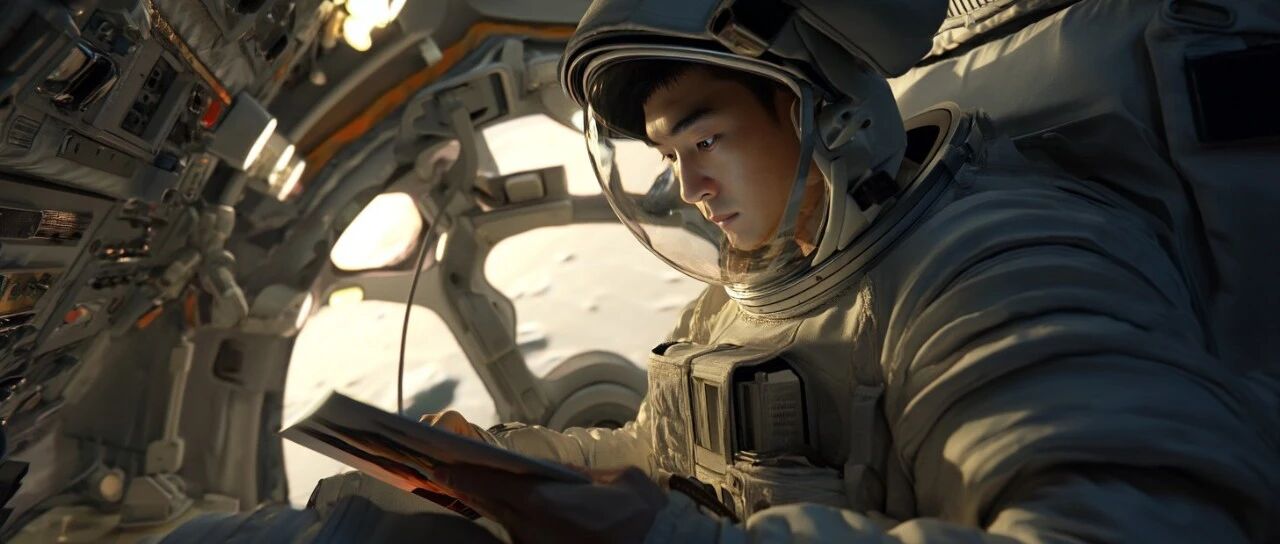
送黄景瑜上太空,300万3分钟值吗?
36氪· 2026-01-26 11:16
Core Viewpoint - The article discusses the commercialization of space tourism in China, highlighting the launch of the "Chuanqiu No. 1" spacecraft by Beijing Chuanqiu Space Technology Co., which offers a ticket price of 3 million RMB for a suborbital flight experience [5][7][21]. Group 1: Commercialization of Space Tourism - The first ticket for the Chuanqiu No. 1 spacecraft was sold in 2023, with nearly 20 tickets pre-sold at a price of 3 million RMB each, requiring a 10% deposit to secure a spot [7][21]. - The passenger list includes notable figures such as celebrities and industry leaders, indicating a blend of elite participation and public interest in space tourism [8][9]. - The article emphasizes that space tourism has transitioned from a concept to a commercial reality, with clear pricing and a defined roadmap for future flights [11][21]. Group 2: Comparison with International Companies - The article compares China's space tourism efforts with those of international companies like Virgin Galactic, Blue Origin, and SpaceX, which have established commercial space flights since 2021 [13][15]. - Pricing for these international companies ranges from $400,000 to $50 million, positioning Chuanqiu's ticket price at the lower end of this spectrum [17]. - The article notes that while the U.S. companies have different operational models, they all aim to make space accessible to non-astronauts [16]. Group 3: Experience and Value Proposition - The Chuanqiu No. 1 flight offers a brief experience of weightlessness and a view of Earth from the Kármán line, which is recognized as the boundary between the atmosphere and outer space [22][23][30]. - The flight experience is limited to a few minutes of weightlessness, and the visual perspective from this altitude is described as a partial view of Earth rather than a complete view [35][37]. - The article suggests that the primary selling points of this space tourism experience are the weightlessness, the visual perspective at the edge of space, and the symbolic status of crossing the Kármán line [37][38]. Group 4: Historical Context and Future Outlook - The article draws parallels between the early commercialization of other transportation modes and the current state of space tourism, noting that initial prices are often high and participation is limited [40][44]. - It highlights that as technology advances, the perception of space tourism may evolve, similar to how other travel experiences have become more accessible over time [59]. - The article concludes with a call for safety and reliability in the burgeoning space tourism industry, emphasizing the need for experience and data accumulation to build trust [61][63].
送黄景瑜上太空,300万3分钟值吗?
3 6 Ke· 2026-01-26 02:22
Core Insights - The news highlights the commercial launch of China's first manned space tourism venture, with actor Huang Jingyu as the ninth passenger on the "Chuan Yue Zhe 1" spacecraft, which will take passengers to the Kármán line at an altitude of 100 kilometers for a brief experience of weightlessness [1][3]. Group 1: Commercial Space Tourism - The "Chuan Yue Zhe 1" spacecraft has sold nearly 20 tickets at a price of 3 million yuan each, with a 10% deposit required to secure a spot [3]. - The first passenger list includes notable figures such as the founder and CEO of Chuan Yue Zhe, Lei Shiqing, and other prominent individuals, indicating a blend of celebrity and technology in promoting space tourism [3][4]. - The commercial space tourism market is evolving, with a clear roadmap from suborbital flights in 2028 to lunar exploration by 2038, marking a significant shift from experimental to commercial phases [5][11]. Group 2: Market Comparison - Internationally, companies like Virgin Galactic, Blue Origin, and SpaceX have established commercial space flights, with ticket prices ranging from $400,000 to several million dollars, positioning Chuan Yue Zhe's pricing at the lower end of this spectrum [7][11]. - The pricing strategy reflects a growing acceptance of space tourism as a viable market, supported by government policies aimed at fostering new industries in China's space sector [11][12]. Group 3: Experience and Value Proposition - The experience offered includes a brief period of weightlessness and a unique view of Earth from the edge of space, which is seen as a status symbol for participants [18][25]. - The Kármán line represents a significant milestone, granting passengers the title of astronaut, which adds to the allure of the experience [13][17]. - The commercial flight experience is tightly controlled, requiring participants to undergo medical checks and training, which emphasizes the seriousness and novelty of space tourism [28][32]. Group 4: Future Outlook - The article suggests that as technology and safety improve, space tourism may become more accessible, similar to the evolution of other forms of travel that started as exclusive experiences [26][33]. - The ongoing development in commercial space travel, particularly in China, is expected to face challenges in gaining practical experience compared to established international companies [33].